Healthcare AI and Rare Disease Caregiving: Why Patient Advocates Deserve a Seat at the Table
with Amanda Roser
Caregivers function as the connective tissue that holds fragmented healthcare systems together, and their role is frequently undervalued in technology discussions. This conversation with Amanda Roser examines how human connection serves as the bridge between clinical teams, patients, and organizatio...
Show Notes
AI applications in healthcare succeed or fail at the connective tissue of care delivery, the caregivers, patient advocates, and family members who hold fragmented systems together. Amanda Roser, who has spent 5 years navigating her son's rare genetic disorder across endocrinology, genetics, metabolic medicine, and gastroenterology, joins Chris Hutchins to examine what responsible AI in healthcare requires when the actual users are families, not specialists.
What We Cover
- How rare disease caregivers become the de facto data stewards, record keepers, and medical translators the system requires but rarely recognizes
- Why interoperability failures create a "Groundhog Day" problem where patients retell their history at every appointment, and what AI could actually fix
- How Amanda trained an AI tool on her son's daily health patterns and lab history, and the clinical conversation that shifted in real time when she showed it to a physician
- The gap between what caregivers expect from healthcare systems and what systems actually deliver
- Why patient advocacy panels belong at every healthcare innovation conference
Key Takeaways
- AI in healthcare that ignores caregivers is not responsible AI. Every system decision about interoperability, documentation, and coordination lands on the family in the waiting room.
- Caregivers are the operational infrastructure the healthcare system depends on. Any AI strategy that does not account for this inherits the fragility the system already has.
- Rare disease care is the stress test for healthcare innovation. If your AI tool does not work for multi-system patients, it will not work for anyone.
Frameworks & Tools Mentioned
- Care coordination across multi-specialty clinical teams
- Healthcare interoperability standards (and where they fail)
- AI-assisted patient advocacy and symptom tracking
- Rare disease care models (glycogen storage disease type zero)
- Digital health tools for caregiver-physician communication
Chapters
- 00:00 – Amanda's story: an ER dismissal that became a turning point for caregiver advocacy
- 02:12 – What caregivers expect vs. what the healthcare system actually delivers
- 05:18 – Becoming the coordinator: when parents realize the system depends on them
- 10:12 – The invisible operational burden families carry between appointments
- 13:30 – Gaps in patient tracking, documentation, and clinical communication
- 16:21 – Learning medical terminology as a non-clinical caregiver
- 21:10 – Interoperability failures and the "Groundhog Day" problem
- 26:55 – The emotional and physical toll of caregiving in a fragmented system
- 30:04 – Two real scenarios where care coordination broke down
- 35:22 – How Amanda uses AI to translate, analyze labs, and prepare for appointments
- 40:37 – What healthcare systems should change first to recognize caregivers
- 43:29 – The signal healthcare leaders are missing from patient advocates
- 48:42 – Why patient advocacy panels belong at every healthcare conference
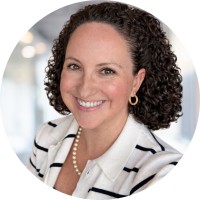
About Amanda Roser
Amanda Roser works at the intersection of healthcare innovation, emerging technology, and responsible transformation. Her career spans digital health, artificial intelligence, and strategic innovation, with a focus on helping healthcare leaders navigate practical realities of adopting new technologies while balancing trust, safety, and operational impact. She is the mother of a child with glycogen storage disease type zero.
Related Resources
From The AI Health Pulse:
- Episode: AI Can't Replace Language Access with Carol Velandia
- Episode: Healthcare AI Fails Without Complete Medical Records with Aleida Lanza
- Episode: Balancing Human Judgment and Clinical Trust with Dr. Mark Gendreau
- Topic: Clinical AI & Patient Care
Amanda Roser Shorts
Short clips featuring Amanda Roser from this Signal Room episode.
Guest
▶ Full Episode Transcript ~9,287 words
Amanda Roser: ER dismissed him and said, nothing's wrong with him. He's fine. Just give him some Zofran, give him some sugar. He will be fine. And completely dismissed, didn't read the notes from the doctor. It was in that time that I realized I'm not just a mom and a marketing professional. I have a new job title. I'm now also a caretaker and I am the records keeper. I've been able to utilize AI to help me communicate with them by taking their notes, having AI help me decipher them. I've trained up the AI tool to know what our days is like, what our healthy days are like, and what our unhealthy days are like. When I used this AI tool for those labs for that hospital visit, I plugged it in. The physician came in probably an hour or two later and I showed it to her. It gave her a different way of thinking. It gave her another option of a treatment that we could do.
Chris Hutchins: Today's guest works at the intersection of healthcare innovation, emerging technology, responsible transformation. Amanda Roser has spent her career helping organizations understand not just what new technologies can do, but how they can be implemented in ways that create real value for patients, clinicians, and health systems. Amanda brings deep experience across digital health, artificial intelligence, and strategic innovation. Her work focuses on helping healthcare leaders navigate the practical realities of adopting new technologies while balancing trust, safety, and operational impact. She's been closely involved in conversations around how organizations evaluate emerging AI capabilities, how they manage risk, and how they translate technological possibility into meaningful improvements in care delivery. What makes Amanda's perspective especially valuable is that she approaches these questions from both a strategic and an operational lens. She understands that healthcare transformation does not happen through technology alone. It happens through governance, thoughtful implementation, and leadership that is willing to ask difficult questions about how innovation should be introduced in complex care environments. In a moment where artificial intelligence is moving faster than many institutions are prepared for, Amanda has been part of the effort to ensure that healthcare does not simply adopt new tools, but adopts them responsibly. Amanda, welcome to the Signal Room.
Amanda Roser: Thank you so much, Chris. Thank you for welcoming to the call.
Chris Hutchins: Well, it's my pleasure, and I've been looking forward to our conversation. We've had some some really good uh insights we've been both uh seeing lately and a lot of the topics that are being discussed are actually encouraging for a variety of reasons. But one of the reasons that we're talking today is because you've you've had some experiences that are actually identifying areas where we just need to do bet do much, much better. And in particular when we're dealing with concepts like informed consent, we we kind of think about it in a checkbox kind of way, but we don't necessarily think about all the different perspectives that we have to account for. And this leads us to what your personal experience has been. You you have a child who's had some very complicated uh care uh due to having some rare conditions. So I want to talk about that. And I'm really excited for the audience to hear this perspective, particularly if you're out there and you're doing development and design. This is a conversation for you. So, Amanda, when you your child first entered the healthcare system, what did you expect the experience to look like?
Amanda Roser: Yeah. So um, first off, thanks, thank you so much for such a wonderful intro about my background, who I am, and also my experience within the healthcare system. That I kind of just we got thrown into it because just like anybody with any medical disorder, you you're not planning for it. It's not part of your agenda of from in my case of being a mom. I was my original thought was I would be going to the doctors for the the colds that hit the the household or the tummy bugs that hit. But our world was became a little bit different back in 2021 when we experienced healthcare in a way I just never imagined. And so I originally, when I, when we my son got his diagnosis, when he was diagnosed back in 2021, I had so much trust in the healthcare system. I was naive in that process of systems are in place for the people, but I quickly came to learn that systems are in place to work within silos and it's not built to work within more of that complex, complex medical space of a person. And so in my son's case, we have a multitude of physicians that we have seen over the years, and each physician works within their specials, in within their specialty as they should. That is what they practice, that is what they they know through and through. And that's how they truly become that deep expert within that area, whether it's endocrinology, neurology, the gastro area as well. And so everybody has a specialty, specialty, just like myself. I have a specialty in marketing. I am not a medical professional. And so I put my trust in the healthcare system that they can do this for my son. They can make him healthy, they can balance him. But in actuality, it does take more than just the physicians. It takes the the caretaker. And in my case, the being the parent to be able to jump in, roll up my sleeves, and help manage where where I can to make movement happen.
Chris Hutchins: Well, you've already framed something that I don't think most people think about. It's really the role that you're talking about. I think it's not something that is it's certainly not laid out as is as a a purposeful exercise that you have to deal with in terms of taking ownership, like you just kind of indicated, that the the health system's expecting you to do. But I think that we have uh really done a poor job, honestly, of designing these very systems for workflows that are that reflect reality for both clinicians but also for patients. And I think both have been sadly not uh focused enough on it when it came to the initial original designs that we were now living with. So at what point did you realize that you were becoming the coordinator of your son's care? Meaning clearly you just stated that this is something that you've been focused on.
Amanda Roser: So it kind of became clear early on. We discovered my son there was something going on with my son in 2021. And it was it started with an ER visit. Something was off. And so um we brought him to the hospital just like any parent would do when something seems off. And you go through the beginning stages of them trying to understand him as a person. And then they start going through the questions of, well, what is going on? We we can put the band-aid on and give him the D10 fluids that he needs because his glucose is low, but what what's really going on? Because a band-aid would only lot last so long. And it's it's in that time that the the tests start to roll, right? And over time, um, within the in 2021, remember that this was back towards the COVID times. And so things were running a little bit differently if you weren't in critical emergency needs uh within the COVID area, right? And so um things were a little bit slower, lab tests were slower back then to get results. And so they started to run genetic tests at that time to understand him a little bit more because they realize this isn't your typical low glucose case. There's something else going on. And they ran genetic panels in that time frame. And months go by, we finally get results back from the endocrinologist who called us at 6:45 at night. I will never forget that that time frame and never have received a phone call from a doctor at that time, but she took the time because it was real. And she explained to us what the test said. From there, we were connected with the geneticists, and this is all up in in Boston. We're connected with a geneticist up there. That was our second doctor. We had an endocrinologist, then a geneticist, and then we were introduced to a nutritionist, and then we were introduced to a metabolic specialist. And so the list began to grow at that point. And in that, it was in that time that I realized I need, I'm not just a mom and a marketing professional. I have a new job title. I'm now also a caretaker and I am the um the record keeper. I am the man, I'm the person who is managing. I'm my son's nurse. I am the person who has to provide the symptoms of the day-to-day to the physicians, to multitude of physicians. And I'm the person that has to keep all of these systems in order and placed to where the physicians can all properly care for my son. And I have to be that person who's pushing as well to get the physicians to speak to each other each other. And that's it was in that time when I learned that it when I be had to start pushing for people to speak to each other, that I realized there is there's a gap in the system. While these people are incredibly smart, there's a gap within the system of communication.
Chris Hutchins: Well, and it's evident from just what you shared in these last few seconds, you had to become a translator. I mean, it's not normal for people to talk about having to have genetic panels, for example. It's a lot of stuff. I mean, a lot of what you're talking about is a language that you had to learn in order to be able to take care of your son and advocate for him. It it's my way, first of all, that's extraordinary. And I'm really glad that your family has you there. And you know, your son in particular has got a mom who's figuring it out ready to roll up your sleeves and dig in and figure out what you have to. That that's remarkable. But at the same time, I hope that we'll really learn from your experience and this conversation that we're having will be helpful to a lot of people. Um, if you're out there, you're doing design of systems. I hope you really uh take a good listen to to what Amanda's gonna talk to us about today. So we'll step over and assume, okay, yes, this is an official thing that you've got to deal with as a caregiver. What does this coordination work actually look like week to week? I don't I don't know that people think about this coordination activity from the perspective of a caregiver.
Amanda Roser: Yeah, so there's a lot of behind the scenes that happens, as there's a lot of behind the scenes that happens within our all of our physicians' offices and their clinics. I recognize that through and through. But the day-to-day, it's a whole nother level because I like I mentioned just a minute ago, we're tracking so much information. Um, one, we're tracking because we need to be able to manage and respond in the moment, in the day-to-day. But two, I need to be thorough, especially in those early days in the discovery stage of what's going on. I need to be very thorough with our tracking to allow for the physicians to have a better understanding of what's going on. That's an area another, um, I feel like over time I've been catching lots of gaps within the systems. But being able to provide what's happening day day to day from my son's glucose dropping because let's say he was incredibly active on the playground. Physicians not going to see that. Or let's say his ketones are going up because he's got a stomach bug and um what's going on with him with uh the genetic test that came through of glycogen storage disease, which we can get into in a little bit, but it uh creates high ketones and low glucose. And so I have to monitor whether is it food that's causing it? Is it activity at home? Is it a bug that's hit him? Has does he have a cold or flu? I'm tracking all those details to where over time we can have a full understanding of how his metabolic system works because every person's metabolic system works differently. I have a twin brother, and just because I have a twin doesn't mean our body works the exact same way, right? And just like my son, just he has this genetic disorder, and there's somebody else that has a genetic disorder with that same diagnosis, but their bodies will never work the same. They it will act differently in different activities and different different scenarios of life. And so I have to be that record keeper of that information and provide that to the physicians. Now, this is where the gap is in that providing of information. Everybody tracks information differently. And that's how data and information can get missed and diagnoses can become slower. Because while I'm tracking what I feel is right and needed to track, I'm tracking it in a spreadsheet. And it's great that works for me. The deck the doctor's able to get the insights, but it's not going to help the doctor understand um through and through because there's not enough specific data in that kind of tracking. So if there is a tracking system for any child or adult that has a um whether it's a genetic genetic disorder or something that is just happened over time, there needs to be a better system in place for me to be able to easily provide you that information. Just like doctors order labs, if there's a specific list and way they're getting that insight, there should be something for that for the patient as well to be able to properly provide the insights beyond your typical what is their temperature, you know, insights, right? A more uh detailed, through thorough tracking system. There's so many acts these days that can be implemented. And there we use Epic within the children's hospital system, which is a great system, but um it I feel like it's an underutilized system from a patient's perspective.
Chris Hutchins: This is it's becoming clearer to me as as you're you're talking. We're talking about a really significant gap. And you're the one that's discovering where these gaps are. This is something that we have to do better. There's no there's no question about it. We we just we have to do this. Now you're you've talked about a lot of stuff that goes on outside of the medical record, your own documentation and figuring out what it is that you actually have to track. What are some things that might surprise healthcare leaders about how much operational work families are doing?
Amanda Roser: What might surprise them is probably one, the amount of tracking that I just kind of that I went through uh with the spreadsheets, but every family is doing something different in order to be able to manage their day-to-day. And that that makes sense. I think of my own team within my marketing department. I have some teammates who are going to be using, you know, old school notebooks to keep things in order. I have other ones that are using spreadsheets, and then I have other ones that are using project management systems. While I can, I always just really push people to work within the similar system to where information be can be easily shared, they're still going to revert to what is natural to them. And so with patients, I think that's what's happening where people are reverting to what is natural to them, whether it's a spreadsheet, a notebook, whether it maybe it's an app that's helping them keep up with information. But there's different ways that patients are tracking information. And I don't think physicians realize those different ways to where if they did realize, they would be able to help guide to where information can better get to the physician to make better, faster decisions. Not bet, not necessarily better decisions because their decisions are great, but faster decisions because anything with health, with uh health, time is of the essence and can't wait, you know, weeks and months and years to get answers because I'm tracking differently than you work from a day-to-day to be able to make your discoveries. I creating more efficiencies with processes for patients will help support not just the patient, but the physician as well.
Chris Hutchins: I I don't think that we can o overstate the significance of what you're talking about here. You actually done done some some writing recently, talking about how rare disease caregivers have to learn often it's almost like learning in brand new language in order to advocate effectively. I think there's there's no doubt I remember, you know, learning very, very early on in my my own career basic medical terminology, but I was working in in a in a health system. As as a parent, it's not obvious that you have to, you know, go ahead and start learning how to translate the things that you now understand better than most. Talk about what that learning curve looks like. I know it it cannot be a comfortable place as you're just starting out. What does that look like?
Amanda Roser: Yeah. No, that's a really great question. I feel like it's not a question that is ever really addressed with people that do work in the healthcare system. I recognize the reason of that. I think of myself, I'm in marketing and I can speak the marketing world language through and through. But if I go talk to a nurse, it's not all gonna click. It makes sense of what I'm saying. So I recognize that there is going to be a learning curve. But I think, especially at the beginning, in my son's case with the uh genetic disorder that came in, there wasn't much information on it. There was one clinical publication or clinical journal that was out there. I felt like I was going back to high school biology class and relearning things that just were even foreign to me back in high school. There were words and acronyms and diagrams that were just way beyond my knowledge set or my interest at the time, but couldn't let that be the reason I to absorb the information because this was and is our reality at the end of the day.
Chris Hutchins: And so um the learning it's not just a grade you're going for here. It's just but my stakes are much higher.
Amanda Roser: Yeah, I'm not trying to impress any teacher here. I am trying to help my son. I my ultimate goal in life as his mother is for him to grow and thrive and live a healthy, happy life. So he's six years old now. I want him to be running around with his friends and not have to worry about maybe any major medical things or worry about going to the hospital again. So back then, gosh, five years ago, it's just wild to think it's been that that long. It feels, it does feel like yesterday and it feels like a lifetime ago. But I had to pick up that medical clinical journal and I read it, whether I knew it or knew what I said or not. And over time I did a lot of Googling. What does this mean, word mean? What is this term? Tell me what this acronym means. What does this mean for a two-year-old boy? Lots of Googling, lots of just trying to find more papers to help me. And the learning curve was real. But to overcome that learning curve, I'm a writer. I've always been. I've been writing since I was a kid. And what I would do is I wrote blogs in the beginning to help me process what I'm reading, to help me decipher. And over time, it it evolved from a blog to writing a caretaker guide to being very vocal on LinkedIn and sharing uh more about my LinkedIn, Instagram, Facebook, but sharing about our journey has helped me understand the language.
Chris Hutchins: How does this kind of affect people in in a situation where maybe a family hasn't figured out the medical terminology or not even sure, you know, what to do about it? How does that impact the communication in your in your experience between you as a caregiver and the clinicians? I mean, are there moments that that communication was problematic? I mean, how does it impact it? Do you feel like sometimes there's a miss and it's not, you know, what you're saying isn't being heard?
Amanda Roser: So I think just again, thinking more in the rare disease space, what we deal with day to day, it's it's in the rare disease area, glycogen storage disease type zero. And so back then, what would have been very helpful to help with that learning curve for myself or any future patients of a rare disease is for the physicians to encourage the parents to get involved and jump find there's Facebook groups out there. And physicians are learning more and more that these Facebook groups are very powerful groups. And especially the rare disease community, the Facebook groups, they're pretty small. And so it's easy to make connections and have people that have gone before you who have been walking this road for five, 10, 20 years to help you understand this world and understand that while in the moment, in the thick of it all, it feels incredibly scary. You feel scary, you feel like you're the only one, you feel like you're the only one that needs to go back to high school biology to help learn these terms. But the reality is you're not the only one. There's so many people out there. Tapping into the Facebook communities, I think is a valuable tool that can support parents. And then from there, there's organizations out there that I didn't realize in the beginning. It took me a few years to find these organizations, but there are organizations out there that um are helping with patients. So for us, there's the ketotic hypoglycemia international group. And that that organization has been a wealth of knowledge for me, and especially in the early days. They were they've been able to connect me with the right people to understand what this all means and then to understand that this isn't as scary, it is scary. I'm not going to diminish that, but it's not as overwhelming as it feels when you're in the thick of it.
Chris Hutchins: This kind of stuff it's it flies under the radar so much when we talk about things like interoperability. I know it's a type of conversation anytime I have a conversation with a physician, but I think we're talking about an aspect of that that's just not accounted for. So one of the challenges I hear, and I think you you mentioned this specifically to me, is that there's oftentimes you go into an appointment and it's groundhog day. You've got to explain everything from the beginning. What's the whole story? Just start the conversation in in with a new person that's involved in the care team. Why do you think that happens so frequently?
Amanda Roser: So um, it's funny you say that because I was actually talking to a family member. She has a twins that that have a um a rare disorder as well. And we were both venting to each other about having to retell. The story. And that's that's a pretty common exhausting feel of many caretakers of retelling the story because you have to retell the story from the beginning. We've had physicians who will, my son is six years old. I'll have a physician ask me a question of when did he take his first step? When did what was his first food? It's been six years and it's been a, I feel like I've lived 60 years with the amount of medical things that we've lived through. And so I have to retell those stories from sometimes those very minute details all the way to the hospital visit to or to the ER visits. And we've had a multitude of ER visits. We go through, he, I will get asked about labs that he had done five years ago or four years ago or last year. I have to remember and recall all of this. And um, from a parent point of view, a caretaker of an adult person as well, anybody, it is exhausting and you're going to miss information. I am not perfect. I am not a robot. Um, I do not have photographic memory. It will take me, I will miss information. It's the reality of um retelling stories over and over. And um, while it's not intentional that I'm missing a piece to the story, it's very, it's another gap within the system of there not being a place to have, let's call it an executive summary of somebody's health. There's no place for an executive summary for you, the my new physician, to jump on the portal and just see that synopsis of my son over the last five years. And I'm sure you you're the same way, Chris. Executive summaries can be adjusted over time. There should be a place within every portal, especially for somebody of any medical complexity or rare disease. There should be a place where there is that summary. We don't need to necessarily house a 20-page or a 20-page document or a novel of somebody's story. There should be some kind of placement of an executive summary that provides that synopsis of what's been going on over the last five years to where somebody can quickly click that, read it, get a high-level understanding, and then deep dive with whatever that moment scenario is needed to deep dive into.
Chris Hutchins: So what are some of the types of things that that you know kind of get lost in in between specials, even when you're having to see so many people or clinicians to get over time? It just seems like there's gotta be some things that are lacking in terms of what is captured in those conversations that in order for it to be retained. I don't know if it's a structural issue, workflow issue, but I mean, what what's your sense of what that what that problem really is? What I'm thinking is that you know, there's there's clearly something that's missing because you're having to repeat the same things over and over again. What are the what are some of the things that are coming up where you actually have to go through and rehash it because there's no clearly there's no indication that's been passed from one physician to another, the specifics that you recited the very last time you were there. So I don't know if it's maybe a pl they just don't have a place to capture it, or is it just simply that there's just so much that you just possibly can't you can't possibly remember everything?
Amanda Roser: Yeah. I think it's a bit of both, in all honesty. Um there is, I d uh to my knowledge, I haven't seen anything within a system. And I'm I'm just gonna use Epic because uh everybody knows the Epic system and it's in a lot of hospital systems as well. But there's a lot of areas within that portal, and there's a lot of information that it starts to gather over time. And so I think what's missing is that there needs to be a way for them to easily aggregate some of the information that's being provided to create, going to keep us simple in business terms, because I work in B2B all the time, but um there needs to be summaries. There needs to be just like I have to do a one-page summary on any project that I do for a client, there should be something like that for the patients to where information isn't missed. I think information can be missed from whether it's one physician orders a lab from from, let's say, Quest Diagnostics, and the other physician ordered does labs internally within their clinic. And so sometimes information doesn't fully get across because there's other areas that you have to click into, or maybe the physician received it via an email document or a fax, and the information just doesn't get fully into the system. And so I think it's more it's a bit of both of what your question was of information is getting missed by handover by different systems being used, and just everybody documents a little bit differently.
Chris Hutchins: This is a I don't even know how to describe it. I I just I can't help but feel like this is just a an an additional strain on a family who's obviously already dealing with some things that are incredibly difficult. So I mean, w I mean I don't mean to make you think about this stuff any more than necessary, but I mean talk about what's that, what's the impact of having to deal with that repetition? I mean, when you're already dealing with things under stress, you're you're a mom, now you gotta wear this other hat. I mean, well, how does this really impact you as a caregiver?
Amanda Roser: Yeah. So there's actually a lot of um, there's more studies and information that's coming out from a care caretaker's point of view. And there isn't a um, there's an emotional toll that comes into play when you are a caretaker, but then there's that heaviness and that kind of burden feel where you're having to manage every little entity. And I wouldn't change it for the world because what I'm doing from the day to day because I see my son thriving. And that means the absolute world. We have gone, we went um, my what before my son got a G tube uh gastro button. He, we, my husband and I were constantly waking up every three to four hours checking his glucose. His Dexcom was going off in the night, checking why is that happening, giving him his nighttime medicine to help with his glucose. So the exhaustion that naturally happens with certain complexities of medicine, it's real. So take that layer right there and then add the layer of the exhaustion of calling the insurance companies to make sure things are being covered and a doctor is in network to doing the research about a new medicine that they that the doctor wants to start, or maybe a new test, a fasting study, or a lab, new labs that need to be run, doing the research to understand what the doctor is talking about, the heaviness of being able to juggle all of the there's a time schedule that my son has to be on. And the exhaustion of keeping up with that, making sure doses aren't missed. It's a lot to juggle from a caretaker point of view. And the the heaviness and emotional weight, it can take a toll on a caretaker taker over time.
Chris Hutchins: Yeah, and you know, listening to this, you know, it it's clear that families are having to take on a a role. It and it's not necessarily recognized and sanctioned as part of a care team, but it really, really is. We have to think about it differently for sure. I mean, you you're talking about having to keep track of so many things in between appointments. I mean, what happens when the coordination breaks down? I mean, that's the that's the reality, even under a normal circumstances, there's challenges with that, with a care team that's working inside of a a health system. But this is a whole different level that you're talking about. I mean, what are some of the things that that you've seen really kind of go sideways because this is not really a process that's that's understood or well coordinated from both sides? I mean, you shouldn't know half you shouldn't have to know how to do do all of this stuff. And there's so much of it that maybe isn't even understood by the care team.
Amanda Roser: Yeah, really great question. So I actually have two great scenarios of instances where I saw a major breakdown where it took, you know, myself, I had to really roll up my sleeves to cut to ensure that my son wasn't affected by that breakdown. And so what earlier instance with my son's genetic disorder, it is on the rare side. It's a little the way of his genetic disorder is a little bit complex and different than the average. And so there, we had a hospital visit, and um we we were out of town on vacation. We were not near our typical hospital and um brought him to the ER and the R ER dismissed him and said, it's nothing's wrong with him. He's fine. Just give him some, give him some Zofran, give him some sugar, he will be fine and completely dismissed, didn't read the notes from the doctor from our other location, our our main hospital system, our main physicians. Doctor did not read that information. He just he knows what low glucose means. He treated him for that, he treated him for a stomach bug, and he sent us on our merry way. And what ended up happening is the, I think it was later that it was later that day, it turned into a even bigger emergency where um I we couldn't keep my son awake. And so we had to, we brought him to a different hospital who took the time to read his chart, who actually reached out to our doctors up in Boston when we lived up in Boston. Um, the doctors and um residents, it was a mixture of people. They took the time to read about my child, even though they never had cared for someone like my son, they took the time. And they didn't just go off of, you know, typical clinical in the moment ER, let's put a band-aid on it. They took the time to understand what truly is happening. They did not dismiss my son and he got the proper care he needed to balance him to where once we did leave the hospital, I think it was three days later, my son was run running in the sprinklers with his with the other kids. He was totally fine. But if it wasn't for that, it could have been a different story. And um, I think that's one break in the system is is knowledge and understanding that we need to think one step further than just putting that band-aid on that patient that comes through those ER doors. So that's one scenario for you. The other scenario is more on the administrative side, where there's a breakdown in understanding for myself to know what the process is for I was trying to move my son from one hospital to another hospital. And um hit could because we had a few doctors within one hospital system, and I was trying to bring everybody together because working with two different systems, that's exhausting and making sure information's getting across. And so I thought I was doing the right thing, moving them from one hospital to the other hospital for regular clinical physician care. Well, the way I was going about it wasn't the right way. And so it took us three weeks to actually get movement to get my son to be transferred because while I was calling it a what was the word I was calling it? I was calling it a transfer of care. They were calling it a referral or no, they were calling it a second opinion. They were calling, they were saying that I was looking for a second opinion. And when you're looking for a second opinion, it's a different process of levels of priority of when you get that next appointment. Yes. And so because we were speaking two different formats of words to be able to get my son with that other that clinic within that hospital with the with our endocrinologists, it took a longer amount of time. And it did take me to become vocal on LinkedIn for people to hear me and see me. And that's a break, a break in the system because I do marketing every day. I don't know the administrative system. I don't know the processes. And then once we were in, the doctor told me what I should have done to get him moved. It was I should have just reached out to our endocrinologist, and the endocrinologist at that clinic could have done the move for us versus me doing this other this other way that seemed like the right way, but it wasn't the right way. So there's a break in the understanding for the patient to understand processes of administration systems.
Chris Hutchins: Yes, and clearly there's a there's a gap in our understanding of really how to coordinate things effectively. We think about interoperability a bit like a checkbox, and sadly uh most provider or clinicians understand that we're it it's really an obstacle. They're very frustrated by it. And at the same time, on the other side of it, you're very frustrated by it. So the the clinician and the patient are not being well served by these disparate systems and the fact that we're not doing the integrations to to make sure that you have the information that you need when you need it. This is a gap I've not heard explained the way that you're you're explaining it. I think it needs to be heard. We do have to do better. So I guess interesting that if one of the ways that you and I connected to begin with was talking about, you know, what what's the role that AI has can play. Um you've mentioned it's helped you more than you expected. Uh maybe talk a little bit about how you're actually using tools like that to prepare for your appointments or to communicate with your your physicians.
Amanda Roser: Um so AI has really I feel like it's really evolving the way that parents and caretakers are able to communic communicate with physicians and clinicians because I'm not an expert. I am not, I do not have an MD, and I I have no science background. And so speaking their language has been difficult over the years and has been time consuming. And there's so many late nights that I spend till 1 a.m. trying to get the right way to speak to the doctor to have them think a little differently or think outside the box when it comes to care. And so I've been able to utilize AI to help me communicate with them by taking their notes and helping having AI help me decipher them, taking labs, helping that, helping um having AI help me decipher through that as well. And one of the unique things that I have within my within my AI tool that I'm using, I also have within there our day-to-day. I have what the symptoms that we see that the doctors don't see. I have information in there about what the day-to-day looks like for my son, what the what uh the labs look like from what we just had yesterday, but I also have in there what the labs looked like four years ago. I'm asking it for, I'm help having it asked provide information that helps me understand what the doctors are doing, but I'm also have having it help uh the doctors understand where I'm coming from and how I want to get the right care and movement for my son to where he's not put into a box like the kid next to him. He's his own box. And uh we need to open that box to be able to think a little differently for the day-to-day care.
Chris Hutchins: It just seems like there's layer after layer of of additional things that are just uh being put on your shoulders as a as a caregiver. This is mind-blowing to me. Um there things that that you're using the capabilities for that you think would be surprising to clinicians at this point?
Amanda Roser: So um I my son was actually in the hospital back in August. It was about a five-day hospital stay. And the the doctors were really trying to figure out what was going on. And because it was it was different from the typical reason we were there. And so what I ended up doing was it was taking forever to see a physician because they were packed that day. I think there was some kind of cold or bug that was hitting the hospital pretty hard. That and um I was getting the labs. The labs were coming to me through the through the portal. So I saw everything that was coming through. And what I was doing was I was taking those labs, I was putting it into the AI that I've already trained up over the years or over the last couple, probably two years, two or three years, two years. Um, I've trained up the AI tool to know what our what our day is is like, what our healthy days are like, and what our unhealthy days are like. And so when I say unhealthy, sick sick days. And so I was able to take those labs and plug it into my AI tool to have it help me, one, understand what's going on. Two, I would ask it, think outside of the box on other things that could be going on. I would ask it for things like what are some Western medicine approaches to helping? What are some holistic ways of approaching it? This I was, I truly take it to go incredibly beyond the box because um we can sit here and think like we do every for, you know, the other person, but my everybody is different. I can't stress that enough. Every human is different. And I'm so grateful for one of our physicians who's who thinks just like like we do. He's actually our endocrinologist, uh, Dr. Paul Thornton. He has been a gift to us when it comes to day-to-day care, but he thinks outside of the box with us. And so when I used this AI tool for those labs for that hospital visit, I plugged it in. The physician came in probably an hour or two later and I showed it to her. Well, I first heard what she was, what her thoughts were. After that, um I said, Can you take a look at what this AI just told me? She read through the entire thing. She was impressed. She was incredibly impressed. Now, a lot of what it was saying was very similar to her diagnosis as well. Um, but there were some other additional supports that it suggested to think about and to try. If because AI always says, I'm not a healthcare, I'm not a doctor, I can't tell you to do this. So I respect that and appreciate that little note is there. But it gave her a different way of thinking. It gave her another option of a treatment that we could do. And um, I think her surprise really opened my eyes, my personal eyes, to I don't think physicians know that patients are using it in this way. And I think the physicians that recognize that patients are using it in this way and don't dismiss it and use it as a supportive tool in their diagnosis. Gosh, we can move mountains with time in time, you know, and we can cut cut time in half and move mountains for people's health by utilizing a tool that can move at lightning speed to support the doctors who have been studying us in practicing medicine for years.
Chris Hutchins: Right. Yeah. It's I've I remember seeing different scenarios year years ago when I was actually working inside of a hospital. And people at that point in time, I mean, frequently they they looked like they were carrying their weight of the world on their shoulders. And they don't they didn't have any of the things that you've been talking about. But now, even with all of this stuff, there's just an additional level of uh weight that you have to carry because of these things that you have to be aware of. And I'm glad for the technology is catching up. But at the same time, I don't want us to be continuing business as usual and uh leaning on this stuff as a crutch. I think there's some things that need to be need to be changed in terms of how we think about this. So talk about kind of how things really ought to be designed around the realities. So if healthcare systems truly recognize caregivers as part of a care team, which you've talked a little bit about, what would you change first?
Amanda Roser: That's a really great question and a really great point as well, because I have, while in the earlier days, I did not feel like I was that right support, supportive team for that position in the early days because I was naive in the early days to healthcare in general. And over time, um, especially being a mom to a child with a with a genetic disorder and that has some complex needs, I've become an expert in my child. I I joke sometimes that I I have a medical degree. It's my medical degree is in my son. I have I'm a have a mom medical degree, right? And while I can't talk to you about heart disease, I can't talk to you about broken bones or uh neurological problems. I can talk to you through and through about one very specific thing, and that is my son's health. I can talk through and through about ketotic hypoglycemia and how his liver works. And so over time, I have become an expert. And I think one of my messages to clinicians and healthcare professionals is that parents, parents as well as caretakers, they have that operational side because we see the day to day. We go beyond the clinical moment. We we see the day to day of what's going on with that patient. And so our see of the table should be seen and valued just as much as the physician who has years of practice in healthcare. While I am never going to say my knowledge is more than a physician because goodness gracious, their knowledge set in medicine, in, you know, Latin, even to understand all of these very complex medical terms, they are the true experts. But experts can only go so far if they don't have a sidekick. And parents and patient advocates can be that sidekick in that specific patient's medical journey.
Chris Hutchins: Yeah, I think this is a this is an important thing for us to really be focused on and make sure our healthcare system leaders and physicians are are really hearing about this perspective. You know, you've been inside the healthcare system and navigating it in a way most people only see from the outside. If leaders are who's who are really responsible for designing health care, particularly during this transformational period that we're in, if they truly listen to caregivers, what signal would they hear that today is really missing it? the system.
Amanda Roser: Yes. So um families, families, patients, we're living in a system. But we're we're not just living in a system, we're operating within it every day. And that really needs to be recognized because when you when you have the operator be able to provide you with insights and guidance on what's going on, actual change can happen. We're able to see where the gaps are because we're not in the day-to-day of your business. We're in the day-to-day of where the end user is. We are your end user, right? And so we see where the breakdowns are happening in a different way that you would have seen working within the hospital system, working within your clinic. And so being open and receptive to being able to get guidance and insights from a different point of view, it can make change within within your system and it can help the next patient that comes in with and has no clue about health the healthcare system or has no clue about a genetic disorder.
Chris Hutchins: Amazing. This conversation for me has been very very eye-opening and I I know it maybe it seems like I'm a little bit maybe not feeling great about the situation and because of the way it's impacted your your family and I'm sure it impacts other caregivers. At the same time I'm encouraged in in what in what I'm hearing from you. And I think it's an important very important thing that you're you're getting out there and you're talking about this. It's so important that people hear from you and and what your experience is and so it's you know this advocation that you're talking about every patient deserves to have that. And we are really good in building technologies but there's a lot of things that we forget about. And what it really comes down to is we're talking about human beings at the end of the day. All of this stuff is about the relationships between people and you know that's you know whether it's a family member or it's you and your clinician or or however you want to think about it, everything that we're doing needs to be wrapped around wrapping around everything to do with care. And we've got to do a much better job. And I I am excited about what can be done and where we can go from here. And I sincerely appreciate you know you reaching out to me and we've had some really good conversations and I'm I'm hoping we can have some more I'll be I'll be looking for some opportunities where maybe we can create a vehicle that allows you to to really talk to some people who are in the throes of designing and planning because this really needs to be something we think about. The care team does include family members and includes the you know the the caregivers especially in scenarios where people are not in a such in a position to be able to handle everything all by themselves. I was talking to a clinician earlier and just the whole idea informed consent when you're talking about technologies. What about in emergency services if when a patient's not able to give consent? How do how do that that's a gap we have to think think about, which is not top of mind in every specialty, but it is in an emergency situation. The activities that have to be coordinated between a caregiver, a mom like yourself and the clinicians who are taking care of your son, these are things that we we just need to make sure that we're thinking about that as we design and we're not going to get bit by it after the fact. We have our probably a very narrow window to to get some things right when it comes to how we're implementing you know these AI capabilities from a foundational level. But we've been going at a very, very rapid pace. Yeah. And I know people have been worried about it. I for you know I think there's been some voices that said we we we should slow down. Unfortunately I don't know that that's going to be the case, which just means that people like you and I, we we've got a tag team and and really try to push these conversations forward to make sure that the patient and the providers are not the last ones we think about when it comes to what we're designing for. They've got to be first and again amazing and I respect so much what you've done thus far and and and I think you can count on me to to continue to be supportive in any way I possibly can and I can't thank you enough for taking the time to to spend with me today and for this conversation. And I certainly look forward to more conversations in the future and not just the talking but the actual delivery of some results. I think we we can we can have an influence but we got a tag team and make sure that people are listening.
Amanda Roser: Well I appreciate so much of your time and inviting me to your podcast. I think there's you know so much opportunity for patient advocates to have a seat at the table. And it's a patient advocates are very much a underutilized tool within the healthcare system. And I'm starting to see a lot more movement. I saw the a conference that incorporated incorporated a patient advocacy panel, which I thought was such a unique thing because physicians got to hear from a different point of view, a different perspective. And I so I I truly believe the more we open up the doors to that group, uh change can move because the patients are the end user of the healthcare system, right? And we want to make sure that the healthcare system is built for the end user.
Chris Hutchins: Absolutely that's the whole point right Amanda thank you so much. It's been been you know awesome to have you on the show and I I I I can't wait to have you back because I'm pretty sure there's going to be advancements going on and I'll be looking forward to hearing updates on on how your son is doing as well. He's fortunate to have a great mom and a great family around him. We'll pray for his uh continued recovery and really we'll look forward just to to hearing the good things as as the days progress.
Amanda Roser: Thank you so much. Appreciate that and I look forward to future conversations as well. I think we have a lot more to talk about thank you so much.
Chris Hutchins: That's it for this episode of the Signal Room. If today's conversation sparks something in you an idea a challenge or a perspective worth amplifying I'd love to hear from you. Message me on LinkedIn or visit Signalroompodcast.com to explore being a guest on an upcoming episode. Until next time stay tuned stay curious and stay human