Healthcare AI and Leadership Challenges with Medical Records
with Aleida Lanza
Incomplete medical records undermine nearly every healthcare AI initiative, and most organizations don't fully appreciate the scope of the problem until they try to deploy AI models into production. This conversation with Aleida Lanza examines how documentation gaps propagate through AI systems, why...
Show Notes
Healthcare AI fails silently when the medical records it trains on are incomplete, and most organizations do not feel the scope of that problem until production. Aleida Lanza, who spent 35 years as a medical malpractice paralegal before founding CaseDok, joins Chris Hutchins to examine why interoperability efforts that stop at the core clinical record leave every AI initiative exposed, and what data governance looks like when every image, claim, and note has to be in scope.
What We Cover
- Why patient portals only surface a small fraction of a patient's actual health record, and what is missing when AI models train on the rest
- How CaseDok enforces interoperability across the full record, clinical notes, imaging, itemized billing, and claims history, not just the fragment every vendor calls "interoperable"
- The economic argument: if a patient's insurance paid $113,000 in claims, that is $113,000 of health data the patient does not have
- Why the antecedent matters: how we got to the hospital is the missing story that reshapes treatment plans and malpractice exposure
- The regulatory path through Medicare.gov's Connected Apps Registry and what it takes to reach 65 million members
Key Takeaways
- AI readiness in healthcare is bounded by record completeness. A model trained on partial records inherits every blind spot in the documentation chain.
- Healthcare data analytics that exclude claims and imaging are incomplete by definition. The most consequential clinical patterns live outside the core EHR data most AI platforms touch.
- Static medicine ends when patients own their full record. Data governance that starts with patient access reshapes every downstream decision.
Frameworks & Tools Mentioned
- CaseDok full-record acquisition platform (clinical notes, imaging, itemized billing, claims history)
- Medicare.gov Connected Apps Registry (conditional approval path)
- United Healthcare, Aetna, and Florida Blue member data integrations
- Patient-owned health data models
- Antecedent-first clinical documentation framing
Chapters
- 00:00 – Live from Data First Conference
- 01:20 – Why interoperability is more than clinical data
- 03:40 – Fragmentation, static medicine, and broken incentives
- 05:55 – Why AI needs complete patient history
- 08:10 – Missing data as invisible bias
- 10:55 – Emergency care and inaccessible records
- 12:40 – Patient ownership and transparency
- 14:30 – Precision medicine and AI safety
- 16:10 – Why patients should own what they paid for
- 18:30 – How to connect with Aleida Lanza
About Aleida Lanza
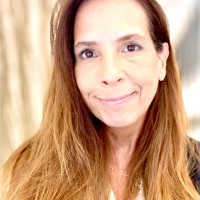
Aleida Lanza is the founder of CaseDok, a platform that solves the acquisition and cost of complete medical records. She spent 35 years as a medical malpractice paralegal before leaving her career to build the interoperability infrastructure modern AI and clinical decision-making actually require.
Related Resources
From HDSC Insights:
From The AI Health Pulse:
- Episode: Caregivers as the Connective Tissue of Healthcare with Amanda Roser
- Episode: The Hidden Infrastructure of Trust with Amit Shivpuja
- Episode: The Scary Truth About AI in the ER and Why Clinical Judgment Still Wins with Dr. Natasha Dole
- Topic: Clinical AI & Patient Care
Guest
▶ Full Episode Transcript ~2,462 words
Aleida Lanza: Wow, what an incredible moment. Um, yeah, so CaseDok C-A-S-E-D-O-K. You can find us at CaseDok.com, okay? And we solved uh enforced interoperability and we basically have uh solved the acquisition of medical records and the expense involved in the acquisition of medical records. Look at how we got to the hospital instead of sort of what happened at the hospital. Now the antecedent is the story that we're missing to solve a lot of the issues in healthcare that we think's during.
Chris Hutchins: Well, I want to welcome everyone to the Signal Room. Uh this looks different because we are in Las Vegas at Play at Hollywood at the Put Data First Conference. Um, I'm really, really excited about our next guest. We we've met over the last uh 24 hours or so. Um welcome you, Aleida, to the Signal Room podcast. Uh it it's been fun so far, but uh I'm most excited because you told me you just launched your business. Um, but maybe we could talk just a little bit, just tell me a little bit about your background and kind of talk about the company and what your what your mission is. Um, but also want to kind of dig into the juicy stuff that we're getting here because this has been a fun event. I've never been to an event where there's so much excitement and passion. Welcome and l let's let's hear about you.
Aleida Lanza: Wow. Well, first of all, it's such an honor to be here. Thank you so much for having me under show. I am so excited to be here. And I wouldn't miss it for the world because clearly, in the midst of lunch, I I wanted to be here because I couldn't miss an opportunity because I know that Chris puts together that that I get to meet the John Wake survey. And I don't know how else to say it, but it's uh it's incredible. And um, and as well as meeting you. And I was so thankful. And um about me, I've been a uh master and medical malpractice paralegal for 35 years. Oh, that sounds like AI. Yeah, exactly. Until you realize that um, you know, I had to use uh a lot of uh tools and uh learn how to program to be able to manage the campaigns that I did at the scale and re-handers. And, you know, uh I had to learn quickly. And in doing so, I definitely leverage AR in in a lot of the uh, you know, processing and and rule connections and things like that, right? Uh and you know, my love for AI, I'm still looking to uh potentially integrate AI safely over to our just launched product which leads us to the most important thing is tell us about the product.
Chris Hutchins: What is the name of your company? And by the way, for you listeners, she really wanted to be here because her company actually launched officially yesterday, and she's here with us. Unbelievable.
Aleida Lanza: Um wow, what an incredible moment. Um, yeah, so CaseDok, C-A-S-E-D-O-K. We can find us at CaseDok.com. And we solved uh Ad Force interoperability, and we basically have uh solved the acquisition of medical records and the expense evolved in the acquisition of medical records. Uh and when I talk about medical records, I'm talking about the whole corpus of medical records because currently every patient portal only reports a very small fraction of your right keel. And we we needed to solve that because at least from my perspective, I know health information is powerful and it can mitigate malpractice and certainly better inform our loves. So I set out to solve the patient's access and transparency more than anything. Absolute transparency in medical records. If you're not seeing exactly what your doctor sees, then come to CaseDok because we can fix that.
Chris Hutchins: You are composing a masterpiece for the ears of the clinicians that are wanting to do AI, but they're scared because chief data officers like me really have not uh done a good job of proactively listening to where their pain points are. And you're talking about one of the things I hear most frequently is interoperability. Um my friend Barry, I think you might have met yesterday, he's been a physician for a number of years, and one of his his beefs with us is that we talk about interoperability, but we really haven't solved it yet. And until we do, we're just continuing to keep people at risk.
Aleida Lanza: Absolutely. And then more importantly, when we talk about interoperability, currently, anytime we see the word interoperability, they're really only having a conversation about interoperability of the core clinical record. Our goal is to solve interoperability for the entire corpus of the medical under. That's all medical records, all images, and all itemized girls. And um, you know, they come in different forms, especially because when you work with a hospital and they can afford a very CF tool at software versus, you know, a practitioner in in a rural area may still be working with paper. And so we receive all of the information for the patient record in native format. So if it's in HL7, we receive an HL7. If it's in PVF, we receive a media. And what we are looking for is to collaborate in uh in AI with uh in a way that's safe because you can't necessarily put privileged information, absolutely can't put privileged information into and and we're very interested in building a pipeline to avail the entire crack clinged record history of a patient so that uh AI can be unleashed on, you know, ending static medicine. Look at how we got to the hospital instead of what happened at the hospital. You know, the antecedent is this story that we're missing to solve a lot of the issues at health birth of sister.
Chris Hutchins: And you you you refer to it as people treating it as static. We're we've been measuring performance by the picture of an average person that no individual on earth actually fits the profile. And we either penalize or we incentivize a physician based on how they care for their patient against that profile. It doesn't work from an economic standpoint, does it work from a quality standpoint in terms of care? How is it going to work if we treat AI with the same approach? Because they're still calling it a practice of medicine, which means it's an ever-evolving science and we're always learning. If our legislation and our policy making does not have that same approach, we are going to exacerbate a problem that's already very, very disruptive. So tell me, you know, from your perspective, how what are some of the things that you're seeing and and how are you working to address uh this evolution of it and building the flexibility into what you do? Because I mean there is change. I mean, I I hope to God we don't ever have another COVID, but that was eye-opening for a lot of us because it was massively disruptive and we had to adapt so fast that we we did make some mistakes. Unfortunately, but how do we mitigate that and and how are you thinking about it?
Aleida Lanza: Uh well, I I think that objective information is uh our best because in informing the inforty cent um we have a duty to inform for our practitioners. And you know, they have a duty to inform the patients and but they rely on uh an accurate medical district and we are all in terrible historians of our health and of our health history. And e you know the fragmentation that we face today in healthcare is you know causing us, if you want to do the math, uh we've been paying for the same yarrow guys our entire lives is every time we go to a doctor and we have to report him a medical history of there to fill out another full high low level history about if you're thinking about the cost of the encounter, we pay for 15 minutes, okay, and those fifteen minutes are what we have to be able to solve our challenge. And uh five but generally five of those minutes can be served on trying to relay a dollar in history and and where else you know they're coming up that stripes to build churn that relay. We hope to solve it with precision lexa because we know that there's a complete record that we adaptate the cocaine dust you want to unleash AI safe to be able to curate a precision medical history and the oral history so AI can help uh not in uh adding to fragmentation or hallucination because Jella just uh produced an article uh I think this was in May of 2025 that showed that the uh reliability, there was urgency rooms was 33% and the riddle, that's a very um uh alarming rate to be relying on in those instances. And so whereas we can at least interject and inform um uh providers on an emergency basis, a clear, precise medical history when the patient may not be available to report it themselves can save lives.
Chris Hutchins: Right. You bring up a another really interesting point because I don't know what everyone else's experiences like in their medical history, but I'm old enough that there's a lot of things I can't even remember. And if it's not in the the record, how's a physician going to be able to help me uh in with with an informed prognosis or or treatment?
Aleida Lanza: And and we aren't we aren't um doctors. We don't know if that has relevance or clinical significance to the challenge that we have today that would that might you know might change you know their their clinical plan.
Chris Hutchins: We don't know what we don't know. And and is it important, right?
Aleida Lanza: I mean And isn't isn't it just time that we unleash AI to ask those to ask them those questions?
Chris Hutchins: I think you're right. I mean, and the the challenge that we have to be mindful of and the flexibility we have to have um in our models has to account for the fact that things are still evolving. And if you don't know what you don't know, AI is not gonna bridge that gap for you completely. There's always going to be the possibility that there's missing information. And to me, that's the most dangerous kind of bias because you can't detect it, because there's nothing to detect.
Aleida Lanza: Right. And and interestingly in Lilf, uh, healthcare is the only industry where we have to pay to get the receipts for for what we paid for. And, you know, that's another problem that we we wanted to solve because in accessibility, in true accessibility, when you can look at your complete record history in one place, I've never been able to do that in my life. And I'm and I'm the CEO of this company. Right. I I haven't, you know, used it myself yet. Currently, we're only serving currently enrolled members for United Healthcare, Aetna, and Florida Blue. We are conditionally approved for Medicare.gov's Connected Apps Registry, but we have to wait for the government shutdown, hopefully to end soon, so that we can be able to serve 65 million Medicare enrollees so that they could, scanning their uh license and health card, they can uh access their medical or complete medic Medicare record history in one click.
Chris Hutchins: You seem to have this go big or go home approach because you're not starting small. You you mentioned two of the biggest insurance companies on deployment.
Aleida Lanza: I didn't leave um a very successful career as a paralegal. I can assure you, I I have about a trillion dollars in recovery. Um I uh have uh been privileged in being able to work with titans of law. And um educated by um, you know, very uh amazing uh geniuses in law. And you know, being able to support what you know they're advocating for gave me a great sense of reward. But I will share that, you know, I left this career because after 35 years in medical malpractice, I left. Um my um family member was involved in an incident uh of medical malpractice, and I couldn't stop it, even though it was occurring, and I knew it was occurring as it was occurring. And um, so I decided to leave my career and try to mitigate this by better informing and engaging patients so that they not only access their entire medical record history or claimed history that exists in the carrier uh claim history, um, but you know, to own it, download it, keep it, get every CT scan that appears there, every MLI, whatever you paid, whatever the insurance company paid for that record, if it's $113,000 worth of money, you're looking at $113,000 worth of data that you're not that you don't have. If I paid $113,000 for anything, you can be sure I'd have that in the safe.
Chris Hutchins: Yes. Yes.
Aleida Lanza: I'm just saying go get while you can.
Chris Hutchins: Wow. No, that this is exciting. And you know, I I wish we could talk for like two more hours. So I would love to have you back um if you'd like to. I'm sure next time we we have a conversation, there's gonna be a lot more leg-breaking news because what you're doing is so exciting. And I I know your your passion is gonna get results. And I am so grateful for you to you're joining me today on on the Signal Room. And let's stay in touch. How how do people reach uh reach you if they want to want to get in touch with you?
Aleida Lanza: Um well, I'm on LinkedIn, of course, Aleida Lanza. That's A-L-E-I-D-A-L-A-N-Z-A. Um, my website is or our website is CaseDok.com, C-A-S-E-D-O-K.com. And my email is Aleida at CaseDok. Anybody who's interested in bettering health, please reach out and collaborate.
Chris Hutchins: Yes. And if you're if you're trying to figure out how to get excited about AI, definitely follow up with this lady because she's got passion and she's excited. So thanks again, Aleida. It's been a pleasure to have you on this. Thank you so much. That's it for this episode of the Signal Room. If today's conversation sparks something in you, an idea, a challenge, or perspective worth amplifying, I'd love to hear from you. Message me on LinkedIn or visit signalroompodcast.com to explore being a guest on an upcoming episode. Until next time, stay tuned, stay curious, and stay human.