AI Leadership, Polymathy and Collective Intelligence
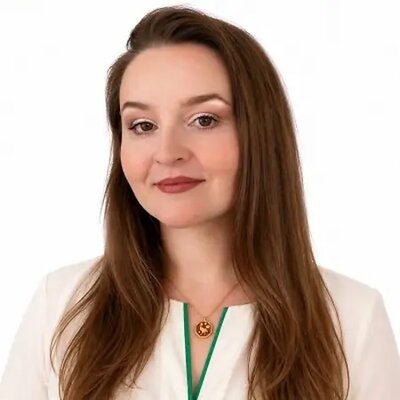
with Dr. Angela C. Meyers · Founder, The Polymathic Method
As AI automates specialized knowledge tasks, the management playbook built for an age of specialization stops working. Dr. Angela C. Meyers makes the case for polymathy: cultivating humans who think across disciplines, ask big questions, and connect the dots. She and Chris explore collective intelligence, the warning signs of premature certainty, skill decay and cognitive overload, and the people skills leaders need when the hard technical work is increasingly automated.
Show Notes
As AI automates specialized knowledge tasks, the management playbook built for an age of specialization stops working. Dr. Angela C. Meyers — founder of The Polymathic Method and author of Versatile: Human Intelligence in an Artificial Age — makes the case for polymathy: cultivating humans who think across disciplines, ask big questions, and connect the dots. She and Chris explore collective intelligence, the warning signs of premature certainty, skill decay and cognitive overload, and the people skills leaders need when the hard technical work is increasingly automated.
What We Cover
- What polymathy means (“many learnings”) and why the age of specialization is ending
- How automation can either weaken human capacity or free it, and why AI should reduce the burden
- Leaders who listen, and learning through AI amid data uncertainty
- Keeping the capacity to learn, and guarding against skill decay and cognitive overload
- Collective intelligence and better group decision-making
- The warning sign of early certainty, and why premature conviction is dangerous
- Bottlenecks, human capacity, and creative thinking
- Participation in organizational change, and what frontline experience really reveals
- Expertise and the people skills of leadership
- Premature launches, realistic expectations, and rebuilding trust
- Connecting knowledge across silos
Key Takeaways
- Specialization is giving way to polymathy. As AI automates narrow, specialized tasks, Meyers argues organizations need big-picture thinkers who ask big questions and connect the dots across disciplines — and the management, leadership, and HR practices built for specialists don't translate.
- AI should reduce the burden, not just add tools. Technology alone doesn't drive change; leaders have to listen, protect people's capacity to keep learning, and design for participation rather than imposing change from the top.
- Watch for premature certainty. Early, confident conviction is a warning sign; collective intelligence, realistic expectations, and rebuilding trust matter more than a fast, certain launch.
Examples Angela Used
- The origin of “polymath” — Greek poly (many) + manthanein (learning), in English since the 1800s — set against the modern age of specialization
- Her Polymathic Method toolkit: the Knower-Learner Assessment, the Collective Intelligence Laboratories, and Versatile Leadership Training
- Skill decay and cognitive overload as the hidden costs of over-automation
- Frontline experience as the real signal of how a change effort is actually going
These examples reflect Dr. Meyers's perspective and research, offered as leadership insight rather than clinical or organizational advice for any specific situation.
Chapters
- 0:00 Welcome, and Beneath the Signal
- 0:19 Meet Dr. Angela C. Meyers
- 1:19 What polymathy means
- 3:29 When automation weakens or frees human capacity
- 6:27 AI should reduce the burden
- 8:43 Leaders who listen
- 10:08 Learning through AI and data uncertainty
- 14:52 Keeping the capacity to learn
- 21:37 Collective intelligence and decision-making
- 24:21 The warning sign: early certainty
- 29:15 Bottlenecks, human capacity, and creative thinking
- 38:37 Participation in organizational change
- 44:13 Expertise and the people skills of leadership
- 49:54 Premature launches and realistic expectations
- 53:43 Rebuilding trust
- 58:49 Connecting knowledge across silos
- 1:02:48 Resources and closing
About Dr. Angela C. Meyers
Dr. Angela C. Meyers is the founder of The Polymathic Method and the author of Versatile: Human Intelligence in an Artificial Age. She holds a doctorate in human and organizational learning, with doctoral research focused on polymathy, and has spent more than 15 years in Federal Service and leadership development. Connect with her on LinkedIn.
Related Resources
Guest
▶Full Episode Transcript
Welcome back to The Signal Room. I'm your host, Chris Hutchins, and my guest today is Dr. Angela C. Meyers, founder of The Polymathic Method and author of Versatile: Human Intelligence in an Artificial Age. Angela holds a doctorate in human and organizational learning, with doctoral research focused on polymathy. She has spent more than 15 years working in federal service and leadership development, studying how people build versatility, learning agility,
and the integrative thinking required to operate in complex environments. Today we're going to be applying the human-capacity framework to clinical AI. It's not another conversation about whether the model works, so don't be nervous about that. It's really a conversation about whether humans working alongside the model can remain capable of questioning it. Angela, welcome to the show.
Thank you so much, Chris. I'm glad to be here.
Well, I've been looking forward to this. Right out of the gate, maybe talk to us a little bit about The Polymathic Method. It's the first time I've heard that term, and I might be the only one, I don't know.
Well, the word polymath is actually an ancient term from ancient Greece. Not a lot of modern people know it; it's only been used in English since around the 1800s. But polymath means many learnings. Poly means many, and math is short for manthanein in Greek, which is learning. So, many learnings. It's basically like being a Renaissance person, someone good at lots of things, good at learning.
And it's really in contrast to being a very narrow specialist. We've lived in an age of specialization where the dominant ideology was that everybody should specialize. Now we're in a different world, because AI is automating specialized knowledge tasks. So The Polymathic Method is my answer to how to manage talent in the age of AI, because the management behaviors, the leadership approaches, and the HR practices that worked for the age of specialization don't translate very well in the age of AI, where we need humans who can be big-picture thinkers, ask big questions, think in creative ways, and connect the dots. There's a different profile of human we need for the age of AI.
So The Polymathic Method is my set of services to organizations. It's an assessment tool called the Knower-Learner Assessment, it's the Collective Intelligence Laboratories, and it's the versatile leadership training based on my book that just came out this summer, Versatile: Human Intelligence in an Artificial Age. This book was written for managers, supervisors, leaders, and HR professionals, because even if humans are ready to blossom and take off the blinders and get out of their swim lanes and their cages of specialization, if management doesn't understand how to help that happen, it's not going to go very well. So this is for the gatekeepers in organizations who really control the culture, create psychological safety, and impact how humans show up.
Yeah, the humanity in the healthcare space has been squashed a bit over the last several years, and there's certainly a need for us to have a better understanding, and there have to be vehicles we can use to get the teams upskilled who have to use this kind of capability. I want to talk a little bit about the automation piece of this, because there are a variety of things it can mean. I found out that I was actually doing RPA about 20 years ago, when I was doing auto write-offs. I built a routine to do auto write-offs for small balances. The way you describe it is interesting, because a lot of the technology is not necessarily new. The processing piece of it is at an accelerated pace, obviously, but this is a pretty cool time to be living, I think.
So we know from aviation and other high-reliability environments that automation can actually create complacency and skill decay. What's the mechanism, from your side?
Yeah, it can create skill decay. It's happened already, for example, with GPS. As the masses have had GPS available, our ability to memorize street names has waned. But the way I think about it is that our brain only has so much capacity.
So we need to prioritize what we really want to spend our brainpower on versus what we don't. That's a really important question for all of us to look at, because we should use tools to alleviate drudgery if it's not useful, if it's not helpful, if we can't add unique human value to it. I'm fine to have fewer skills navigating, because GPS has just always worked for decades. It's not a new technology, so I don't need that brainpower there.
So I think we have to be really discerning about where we lean on AI, because our capacities may decline. But it also opens up possibilities for us to use that bandwidth in other areas. Skill decay is a thing, but maybe it's okay in some areas.
Yeah, it makes sense. It's been the same story for such a long time now. I remember when visualization software came online, everyone was telling me specifically what they needed in it, and it had to be a dashboard because they saw somebody else's dashboard. The similarities in this space are interesting, but a lot more costly if we don't really solve for it. You've actually been focused a bit on helping organizations upskill and get ready for the things they need to do. Talk about how a capable professional becomes less capable when a system handles more of the cognitive lifting.
If a system is doing some of the specialized tasks, and I know your audience is mainly healthcare, so there may be doctors or medical professionals who are spending a lot of time on, I don't know the right word, charting. I doubt many people just love doing charting.
But that's the kind of thing where AI can really be a huge reliever of that unpleasant burden. Does it mean humans might become less effective at charting the old-fashioned way? That may be the case. But then it opens up more energy and space for them to connect with the humans they're working for and with, and the patients they're trying to help.
I think there's a tremendous opportunity with AI to relieve us from routine drudgery. We don't have to be so robotic now that the robots are here, now that the AI is here. Did that answer your question?
I think the interesting component of what we're talking about is that we have historically not done a great job supporting the clinical workflows for doctors, nurses, and other medical staff. At this point, the worst thing we can do is sleep on this. There has to be a fair amount of focus. We've talked about interoperability for a couple of decades, and we're still at a point where we don't have it. But now we've got a burning platform, so we should be able to get our heads wrapped around it and start figuring out what we're going to need in order to do it.
Historically, we have a track record of doing things in a way that essentially adds more layers onto existing roles. Maybe talk a little bit about what you're seeing in that space, because it's important for people to start thinking about it differently. Data analytics and AI is not traditional IT, it's very, very different, but we've been dealing with that legacy approach for many years.
I'm just curious what your experience has been with organizations as they're starting to put together their game plan to implement something. How often do you see whatever the duty is falling onto the same people who already have full-time responsibilities?
Yeah, here are two jobs now instead of one, just making more work. If anything, AI should be relieving burden off of humans, not adding more. A lot of executives, leaders, managers, and supervisors, a lot of the people shaping organizations, have been really focused on getting the tech, on implementing the tech tools.
And they haven't been as focused on the human side of that transition. That's where the real game-changer is, because we're all going to have access to the same tech tools. You and your competitors are going to have access to the same AI tools. The real differentiator is the humans using those tools and how empowered they feel. Is there enough psychological safety to ensure there's room for experimentation?
If you just keep adding responsibilities onto people's plates, that's not a good formula for employee engagement, retention, or satisfaction. It's just not good. The goal should be to create an environment where people can experiment. Okay, I've got all this on my plate, all this work needs to be done, so how can we think differently about some automation, some AI workflows, even agentic AI now, to relieve the burden off of humans? Then the role of the human can really be the orchestrator. You see the big picture, and you get AI to relieve burden, not just keep piling more on humans and expecting them to do it all the old-fashioned way. There's already enough overwhelm, I think.
The harsh reality is they've been dealing with this for such a long time, and when we identify something like this to work on, particularly for clinical people, it just adds more layers of complexity. It's not actually improving things, because there's too often not the right clinical perspective offered in the room when the designs are occurring. I've heard that quite a few times in the last few months from guests I've spoken with on the show. My good friend Barry has been unbelievably patient; he's been working on AI stuff since maybe three jobs ago, so it's been a number of years. But these issues are very real, and the pieces are not clearly understood, from what I'm hearing. Tell me if this is similar to what you're seeing.
Organizations are in fact taking the same route they always have historically. And with 85-plus percent of pilots failing, maybe this is the impetus to actually have a very thoughtful conversation about what other skill sets we need. We can't just keep adding to these same people; we're going to burn them out. We want to make sure we're arming them to be as effective and efficient as they can be.
I think it's so important for leaders to really listen. The best leaders are the best learners. They don't just sit on high at the top of the org chart and command what they think is best, because our world is way too complex for one person at the top who's not even on the front lines, not even dealing with patients, to understand what's really happening.
So the best leaders are going to be listening to their staff, to their patients, to any stakeholders, trying to understand what's going on and how we can use our own intelligence, our own creativity, and AI tools to make everything smoother and better for our patients and for the staff who are working there. You should want staff who are energized and excited to be at work, who love what they're doing,
who aren't feeling burned out and overwhelmed. In healthcare that's a challenge, because you may be dealing with life-and-death situations. So anything you as a leader can do to make things easier on the staff matters, because it's already going to be hard, already intense and potentially overwhelming. I think that's the role of the leader: how can they remove roadblocks, simplify, streamline, alleviate, and support?
It's important from a vision standpoint as well, because people are really apprehensive. That's a general way to put it, but the general consensus among people working on the front lines of healthcare is that they really want to be using it. The challenges are largely because of some historical firewall-type scenarios, where behavioral health, for example, is always carved out. Most people can't even look at it outside of the service line. But there are a lot of nuanced areas where it's really important to understand that people are going to be developing this stuff. They're going to be playing around with it on their own. So it behooves us all to take a step back, look at exactly where we are, and have some hard conversations. Maybe it's that Dr. Meyers needs to be getting a phone call, just so we understand where she's seeing things.
That perspective is invaluable, and sadly it's just not at the right level when we really need it to be. The CEOs and their finance executive teams are usually the ones at the table when we're talking about public policy, whether it's state or local government or federal. So it's a significant area. The other piece, from my standpoint, is the regulatory agencies themselves,
and now what we're hearing from different state legislatures that want to get involved and actually build some standards at a state level. I'm curious to hear your thoughts about that, because it's an interesting thing to navigate, but I'm still not convinced they're going to be able to. I think they're going to hurt more than they help in that scenario.
Well, I spent 15 years in government, so regulations are from the government. Unfortunately, government, especially with anything tech-related, seems to be really behind. In general, government lags behind private industry. So I really think it's time for government to get smarter and modernize too, not just the private industry it regulates.
There's a lot of room for improvement that the government also has, in terms of keeping up with private industry and understanding their struggles, their opportunities, and the strengths they bring to the table. I know it's not easy to keep up with all the regulations either, so that's a real challenge. But maybe that's the kind of thing AI could help with.
When you're talking about the guidelines, they're going to be updated from time to time, probably quarterly or so, and that's probably about as long as we can wait between those exercises, just because this isn't traditional IT development. It's a very different thing altogether. But it's also a very smart thing, if you're running an organization and you're not quite sure where you stand, what you're prepared for, or what you need to be thinking about next. This is one of those times where you want to phone a friend. I'm not saying call all your friends, but I happen to know Dr. Angela Meyers is pretty savvy, so I think I might want to talk to her, because I'm sure she has some stories from the front line that can help me bypass some of the hard lessons we learned the first time.
I think the critical competency for all of us now, in an era of exponential change, is just to keep learning, to be less of a know-it-all and more of a learn-it-all. The old world really prized being an expert, having an opinion, pretending you know it, and staying strong in that. But now, as there's so much complexity, knowing what to ask, being aware that you don't really know,
being aware that there's information beyond your purview that could be relevant, knowing to ask good questions, knowing to phone a friend, as you said, knowing to verify and search out and use AI to help you with that, that's a really important skill set now, because we live in such a complex age.
Can we double-click on this a little bit? The things people are most concerned about in the public arena are the protection of the data, keeping it safe, not letting it go places it shouldn't go. But there are probably some things going on. You and I have talked a little bit about the whole concept of shadow AI. It's basically shadow IT, but with a whole other set of risks attached to it. Can you talk a little bit about what that looks like, and how you go about assessing where things are in an organization, just trying to get to that very first point where you know you can make some progress and help get them along, and hopefully get some additional buy-in from the executive teams?
For data protection?
Well, both data and AI, honestly.
Well, it's a learning journey. AI is advancing on an exponential curve, which a lot of people don't understand, and this is so important. Tech advances on an exponential curve; it builds off of itself. It doesn't just advance in a slow, linear fashion.
So keeping up with AI changes, data protection, and the shadow AI and IT stuff, that's a real part of our world now. And in healthcare there are unique issues, because health information does need to be protected and private. At the same time, we live in a world where there's more and more surveillance and more and more hackers.
It's a tricky world to be swimming in, which is why we've got to keep learning, keep phoning a friend, belonging to communities of practice, making space in people's workloads to learn about these kinds of issues so they're not moving blindly and maybe making mistakes or harming people inadvertently. So keeping up with tech is a major core competency for us modern professionals.
For sure. Something that's always been top of mind for me is that when we're implementing something, historically it's the same small group of people driving implementation. And historically, when I've been working with data analytics functions, the structures necessary to answer the questions often aren't even native in what they're starting with. So the coordination is a really significant issue, and I don't think there are going to be many data engineers you run into who have actually done some of the stuff we're talking about at scale. It's relatively new.
I know people have their favorite colleague they lean on for everything. Let's get Bob to do it, because Bob's a smart guy. Has he done it before? Well, no, but I trust him. That kind of decision-making is where I think there's significant risk, and it's why I'm excited about what you're talking about: really getting people to use it in a way that's trustworthy. And it's only trustworthy because we keep verifying it over and over and over again.
And we keep learning. What you just said about people being expected to do work without the proper training, if you zoom out to a societal level, this shows that we often have a pipeline problem. We need professionals with a certain skill set, but our educational system really didn't prepare them for that. And the world is changing so quickly now that it's not enough just to go get a degree 20 years ago and think that's going to last you, that that's all the learning you need to do. We all have to keep learning.
That's part of why I love polymathy as a lens for understanding human potential; it's basically lifelong, life-wide learning. By life-wide, I mean not just a narrow field. It's great to become a specialist, go deep, and become really masterful, but it may be the case that that's not enough in the new, AI-and-tech-driven world, where we've got to keep learning beyond our specialties and maybe become multi-specialists.
One of the unique things about healthcare is that it's intensely specialized, at least historically, which has some benefits and some drawbacks. But it's also profoundly human, and often human in a difficult time for patients. So it's a good proving ground for practicing versatility with AI, because if AI can relieve some cognitive burden off of healthcare practitioners, it allows them to show up more as a human, because they're not having to spend so long doing their charting or whatever.
We're already owing them a lot of time back for all the things we kept layering onto the EHRs. I love what you're saying, because to me that's one of the main criteria to look at before you decide what you're going to work on. Really understand what the nature of the needs are in the organization, because they can vary from specialty to specialty; some of it could be a leadership preference.
But we at least want to have some framework that allows us to understand and locate exactly where we are, so we can start to make the plan to move forward. Readiness is a challenge too, because organizations that are growing by acquisition are bringing in these ugly matrices of all the systems in the ecosystem and how they connect. You've got spiderwebs going in every direction. That's a significant challenge, because we're not quite at a place where everyone's realizing they need to shift how they're learning and what specifically they're learning.
But I want to get into this a little bit with you. What are some of the signs that there's atrophy going on? I think this is one of the bigger risks. We've proven it in so many different ways, but this is different; the stakes are higher for sure. Will you talk a little bit about that and what you see there?
Learning, like any other skill, can atrophy. If you don't use it, you can lose it. The act of learning can become more difficult. If you stop stretching and exercising your brain, it can lead to some cognitive decline, even for professionals. If you get stuck in a rut where you're just going through the same motions every day, year after year, it can make doing something differently feel really exhausting.
That's why, especially for people who value healthcare and wellness, we should care about our own brain health. Studies have shown that even doing crossword puzzles can help stave off cognitive decline, because it gives you some challenge that asks different questions of you. So signs of atrophy: if it feels really exhausting to have to change, that's a sign that someone doesn't want to learn, doesn't want to grow. Part of what can lead to that kind of atrophy is if changes are imposed from on high onto professionals who had no say. Then it could just be easy to resist the change. In that case it might not even be that their ability to learn and stretch and grow has atrophied; it may just be, I'm going to resist this change because I don't agree with it, or I feel not included in the decision-making.
Other signs of atrophy are just not being as with-it, not being as adaptable, not being as versatile. That's why it's so important to practice that skill, even outside of work. You may have some routine and stability at work, but why not go take up pottery or karate, or just keep trying new things outside of work?
Robert Root-Bernstein is one of the preeminent polymathy scholars in academia. He wrote a really interesting article years ago where he studied Nobel laureates. He looked at Nobel laureates who were nominated, and then asked what the difference was between who won and who didn't. He found that the people who had that extra edge that helped them win tended to have hobbies outside of work, in the arts, things you'd think are totally unrelated. It just helped keep their brain more alive.
There's also sometimes unexpected inspiration. You might get an inspiration from your pottery class and realize it could be useful in your work as a medical doctor. You never know the cross-pollination of ideas that can spread, the thought viruses that can spark inspiration, because nowadays a lot of the innovations we find are at the intersection of multiple disciplines. Specialization worked for a long time; it allowed us to develop deep knowledge in different areas of expertise. But now a lot of the payoffs really come when you combine different disciplines.
I think this is also important in healthcare in particular, because sometimes practitioners are so specialized that they don't really see the whole person. There could be major downsides because of fragmented, specialized thinking. It can be a great strength to have a specialist, but it can also mean they're only seeing things through a cardiologist's lens, or whatever their lens is, so they may miss the bigger picture and the bigger interconnections. I think this is an opportunity where AI can maybe help with more integration of those specialized lenses in healthcare.
This is another area too, with your staff. Are they ready for this? The pressures are very real. We've been down volume-wise across the country since COVID; we still haven't returned to the full case load we were used to, for a variety of reasons. The other piece is the staffing component you mentioned. There's a shortage of primary care physicians, a shortage of nurses. It's not just a US problem, it's a global problem.
For me, and I'd love to hear how strongly you land on this, I don't want to touch anything until I've sat down and listened and understood what the pain points are for our clinicians and our nurses, because if we don't do that, we're going to miss the mark. It's a certainty, because clinical people are not going to be honorary MDs. That's just not a thing.
So it's definitely an area that's going to need some focus, and this isn't the time to step back and do things the same way we always have. We have these discussions, you talk about projects you want to do, you get an approval, and three months later, when you're trying to ramp it up, they don't want you to move that fast, which is just a bizarre dynamic that lives inside a lot of different organizations.
This is where I think about how government could do a better job. There's the pipeline problem: we need more primary care physicians, we need more nurses, we also need more electricians. There are certain jobs we're just short on as a people. And AI is also changing the world of work drastically. When robotics are fully implemented, it's really going to change things.
So I think we as a people need to do a better job of looking at where we are now, where we're short, and how that can inform education, the grants the government is giving away, policy, or marketing about opportunities to young people who need to pick a major and want to know what's in demand. Where there are shortages, we shouldn't just keep that to ourselves in our discipline; that should ripple out and inform the key players who can help alleviate the issue, so it doesn't persist.
And we shouldn't just be looking at where we're at today. One of the thinkers I really love is Ray Kurzweil. He's a futurist, and for more than 30 years he's been predicting, with something like 86% accuracy, what tech we'll have and when. We're going to have robot surgeons. That's going to happen. So it might behoove us, especially in healthcare, to look at what advancements we can anticipate from AI and robotics, and how we can pre-plan and pre-strategize so we meet the moment where it's at, rather than lagging behind and having problems because we didn't look to the future.
And this is not woo-woo psychic predictions, by the way; these are tech predictions. In general, across all industries, I wish more people would pay attention to what we can expect of tech and what that means for how we prepare for the future.
Precisely. One of the challenges is that when you're talking about something with this much impact and complexity, it's going to require more expertise, in terms of the time commitments needed. From a governance-body standpoint, at the last organization I was at, we actually put together a list of the key individuals who own a particular data domain, and we started educating them on what it means to be really standardized at governing the data.
But that's still an area where there's debate going on inside organizations. Do you need a chief AI officer, or is it another role or title? I don't know that there's a one-size-fits-all in that space. What are your thoughts, and how do you see organizations working through this and hopefully changing the pace they're moving at?
As a general rule, whenever there are challenges we have, or we just don't know the answer, do we need a chief AI officer? The way we get from where we are now to a world where we've answered that question and feel confident in the answer is through learning. And it's not through my own solo learning, where I figure it out for all of us. We have to co-learn.
We have to engage in collective sense-making. Things are way too complex for some leader at the top to know it all and do it all. So that's a paradigm shift we all need to engage in: the world is complex, it's advancing exponentially, and it's going to continue; it's actually going to speed up. Change will speed up even more from AI and robotics. So what we humans need to do is get together and figure out how we're going to learn our way through this as a group, as a networked collective.
That's collective intelligence. That's why I created the Collective Intelligence Laboratory, one of the offerings as part of The Polymathic Method, because I could see that we don't really have a good way, in organizations, of tapping into the intelligence of a networked collective. We have email, we have meetings, we have Slack channels, we have direct messaging, but it's still clunky. We need some method to really understand diverse viewpoints. We don't need to jump to conclusions and decide what the answer is. We've got to co-learn and land on the answers through informed collective sense-making.
That's a totally different mindset from the age of specialization, where we deferred to experts and to leaders on high. That worked okay and didn't lead to too many disasters. But now we're in a world where we have to learn our way to new solutions and new answers, because we're in new territory. We've got issues we've never dealt with before. So learning is the key competency.
It's apparent by the traffic I see coming into my LinkedIn account; I'm sure you're seeing this too. Things move along at a particular pace in an organization, and then some of this atrophy starts, because people think it's not a problem. It's actually because we trust it more. Well, the issue may be that you're trusting it too much. I don't know what that balance looks like.
What would you tell a CEO that he needs to be on the lookout for, so he can help support the teams to get what they need without having to recreate the wheel?
I would be on the lookout for early certainty about complex issues. If there's something really complicated happening and they're just like, okay, here's what we're going to do, maybe that needs a little more exploration and co-learning. I don't think it's a good idea to rely on AI without oversight. We need to keep our own mental faculties really working. It can augment,
but we need to verify, and at the end of the day we humans are accountable for our own judgment calls. AI can't be held responsible, at least not now. So it's not that every healthcare professional needs to become a genius Renaissance polymath. The goal is just: how can you keep learning? How can you expand your range, expand your understanding, remain curious, and collaborate better across disciplinary boundaries? How can you remain agile and adaptive, because the environment is changing quickly?
AI presents a real opportunity for us to think more holistically, to collaborate differently, to have relief from things we don't want to do, and to bring more of our human selves. I think it's a tremendous opportunity in healthcare, because you're dealing with humans who might be going through something difficult. Not everybody has had great bedside manner in healthcare. Some people are great at it, some aren't. Some people just don't have the energetic bandwidth to give that to people, because they're just trying to survive their workload and get through their charting,
without having to work 60 or 70 hours a week. So there's a tremendous opportunity, but the leaders inside organizations need to create space for this transition to happen intelligently and humanely: how they support staff, how they create a culture of continual co-learning, empowering people to experiment. Because there's maybe some experimentation needed too. As we begin working more with AI tools, we may try things and realize this isn't working so great, we need to pivot, we need to modify. So just creating a culture where learning is central is really important for organizations and leaders now.
It's so important, what you said. We don't need everyone to be a data scientist or an AI guru. Well, if they're already well on their way and that's what they care about doing, hopefully there's a role they can play inside the organization they're at. But I think it does have to be called out, and we talked about this a week or so ago: it's this unbelievably fast pace we're moving at, and how quickly people start to understand it and start to trust it.
I don't know about you, but when I first started using the Waze app, from time to time I'd get really confused, because it was showing me the turns I needed to take as I was going by them, instead of before. But it didn't take long before they straightened that out. So the tendency we have is to trust a lot sooner than we should.
That's one thing about tech. Imagine you're driving somewhere and GPS tells you to keep driving up a gravel road that's thinning and narrowing, and before you know it there's not even a road, and you don't even have room to turn around. At what point do you say, I remember, tech isn't perfect, this could be wrong, there's room for improvement with the tech?
Humans aren't the only flawed things in the world; tech is also imperfect sometimes. So we've got to use our human judgment. We've got to keep our own critical thinking skills alive. Practice that. Don't just blindly defer to technology, because it can lead you astray.
I think there are two different factors. One is the team that's actually building. They're passionate, they've got a lot of great ideas, they can build things that could be really effective. But are they the right areas to be focused on at the given time we're doing them? That's always been a challenge in all the organizations I've been part of: keeping up with the demand and making sure we're prioritizing the right things.
It's a hard reality sometimes. Is what we're talking about going to actually enable a different decision at the source? If no, then probably it's not as urgent as we think, unless there's something underneath it that we think is going to be necessary. But it's very different from how we've been managing these types of projects before. How many times have we had arguments about whether it should be agile or not?
Exactly. One of the most powerful things people could do is just ask a really smart question. You might not know the answer, but the asking of it can be a game-changer. So keep your mind active. Keep exercising it, even outside of work, and it doesn't have to feel like work. It can feel like following your curiosities, following your passion, just staying a fully alive, vibrant being.
You could ask yourself a question. You could ask someone else a question. You could ask AI a question. The question is how we stretch and how we explore. So keep wondering, keep being curious.
That's such an important point. While we're going through these transitions, there are going to be news stories and things that will feed whatever fear you have. If you're focusing on something, chances are pretty good you'll find it, especially when it comes to things that are artificially worrying you that don't need to.
Just using ChatGPT and other models on my own, I've seen the tendencies it has to keep chasing something to the end, where I may think it's already been resolved several steps before. But the barriers we've traditionally had are people barriers; somebody has control of a database and can provision access. This is much, much different than that, because it keeps evolving. There's a reason we still call it practicing medicine, which is kind of funny when people are wanting to pay doctors less, or wanting not to do certain things because it's going to impact their job in a way they're not comfortable with. But the reality is it's going to change for everybody. It already is.
You mentioned people barriers. This is one of the things I'm hopeful about with AI. I've had my own experiences inside organizations where things break down because we were relying on a human to remember to do something, to do it on time, to do it competently, and to follow up quickly, and because people are stretched thin, maybe distracted, maybe sick, maybe on vacation, it could be any of those things.
But there are opportunities to automate manual processes, or even to connect databases so they're more holistically intelligent and integrated. So even just being aware: where are things breaking down, where are processes very slow, where are the pain points? This is where we have to be vulnerable and open as professionals. What parts of your job do you hate doing? What parts of your job do you suck at doing?
Where could we automate those things, relieve your burden, make you love your job more, and then use your brainpower to add new value and stretch? There's a really interesting model called organizational ambidexterity. It talks about two main things all organizations should do. One is to exploit what they're already good at; you keep what you're good at going: your bread and butter, the basics, the core mission. But if that's all you do and the environment around you is shifting, you may go out of business because you lag behind your competitors.
So in addition to exploiting what you're really good at, we should also be exploring what we could do differently, how we could grow, innovate, modernize processes and databases. If we can automate more of the exploiting, it gives us more energy and mental bandwidth to do more of the exploring, which I'm guessing a lot of people will find more interesting than just doing the same grind. Some people enjoy doing the same thing; they like that predictability and routine. But not everyone does. For some people, that can actually contribute to their cognitive decline.
There's some value in continuing to learn. And since we each spend about a third of our lives at work, at least five days a week out of seven, the majority of our waking hours, wouldn't it be nice if we could find ways to enjoy it, to explore, to use our creative capacities, to add unique value that wasn't there before, because we're relieved of drudgery and routine we don't want to do? That's better for our sense of vitality, better for our brain health, and it could bring people together in new ways if we're experimenting and exploring together.
So AI presents this unique opportunity to be relieved of some of the exploiting tasks and to use more of our human capacities. One of the questions that comes up a lot now is: what is a distinctly human capacity? It's things like our critical thinking, our judgment, our people skills, our ability to look big-picture and connect the dots, our ability to ask smart questions and understand ripple effects and the whole cascade, the whole system. That's all true.
But I think maybe an even more important question is: what unique perspective can you bring, not as a human, but as you? How can your background from 20 years ago, where you learned about X, Y, or Z, inform what you're working on today in a really creative, original way? That's called analogical thinking, where you apply a tool, a modality, an approach from over there and use it over here. That can be a tremendous opportunity to create innovation, which adds new value, which means you've explored, you've contributed in a new way, and it's because of your unique background, not because you're human.
The human element is important. We live in a world dominated by humans; we're humans ourselves, so obviously we're going to care about the human perspective, especially in the context of artificial intelligence now. But I think just as important as being human is being you. We all want to be able to bring our authentic, full selves to work. If you feel as if you've got to fit in a box, conform, live up to the standards, and just do what you're told, that can feel like a cage. And since we're spending the majority of our waking hours at work, who wants to feel like they're in a cage? So I really think it's time for us to become more human, to become more fully ourselves, to let our unique expression and our unique value, as who you are, based on your unique path, come to the fore and add value.
I totally agree with that. The pandemic was a really great example of what we can do if we're disciplined about what we're going to spend our time and energy on. During the early days, when I was in New York, we were actually getting calls from state government, the Department of Health. They were looking for support to handle all the test-center results and things like that.
That conversation would normally have gone on for two months, debated with HR, with your research team, your IT team, your data and analytics team. There's a whole bunch of different things. We learned how to manage that in a very different way. But, much like most any historical event we go through, six months later it's like we never actually went through it. We kind of slipped backwards into the same way we've always done things.
The pandemic did force us to adapt. It forced us to think differently. It was a time when we all had to show that we were still adaptable, that we could still learn, change, pivot, and think differently. It sort of woke us up. Now, it's sad that so many people struggled and lost lives, and even jobs, and kids missed out on school. There were sad parts and definite losses during the global pandemic, and we're still experiencing some ripple effects from that.
But it was a shakeup, and it was a reminder that we've got to stay agile and on our toes and not lose that capacity.
It's a crazy thing. I remember the first few months after I relocated here to Nashville, I had an opportunity to go on an executive-transitions program, and it was completely off the grid for all intents and purposes. I had my phone and my computer, but I left them in the room, fully present in these conversations. What it exposed to me were some of the impacts I never even thought about during that period: those drive-by conversations, where you bump into a colleague, stop by their desk, or text with them and get some idea about what we need to do at a certain decision point.
I was really pleasantly surprised. I don't know why I wouldn't have thought this, but the team I had was extraordinary. The ones I was most worried about were the ones who had a spouse and little kids and pets at home, because that's a lot when you're used to having the kids at school and neither of you usually working from home. It was just a really amazing thing; I saw so many positives come out of it. I'm glad we have those learnings, but we misfired a few times too, and that's an area where hopefully we learn what we should.
I think it was Darwin who's been attributed with saying something like: it's not the fittest of the species that survive, but the most adaptable to change. Death and taxes won't change, but everything else might. Our bodies change, where we live changes, our jobs change, and now we're in a world of exponential change. We're at the knee of the curve. It's starting to speed up, and it's going to get really fast.
And the healthcare advances we're going to see, lifespan, reverse aging, some of the biggest changes that are going to happen because of artificial intelligence will be in health and wellness: our ability to live well, healthfully, and longer. There are going to be so many changes, and it's only just started, really. So we've got to stay agile and willing to change. That's why it's so important to think of yourself as a continual learner, because you're going to have to keep learning. The world is going to keep changing, and if you want to be safe and stuck, you might put yourself at risk from that.
When we have loss, when we have mistakes, when we have hardships, we should all be asking ourselves: well, what did this teach me? What is this here to teach me? Use our life experiences, and even our traumas, to learn from. Then, no matter what happens, if something great happens, great, you win; and if something difficult happens, and there's loss and trauma, if you learn from it, then it's not such a loss, because you're gaining something from it.
So we have to keep learning from life experience, even from what's not working. It's a tremendous opportunity to learn. We learn the most when we mess up, or when we have loss, when something goes wrong; it's the richest way to learn. But if something goes bad and you don't learn from it, it might happen again. I keep harping on it, my doctorate's in education, so I guess I come by it honestly, but the upgrade mechanism really is learning.
I've always been really passionate about how I become my best self, how you become your best self, how we become collectively our best civilization, our best society. And it's through learning. That's my conclusion. We have to learn our way into our better expressions, individually and collectively.
I totally agree. It's interesting: with the pace things are going, there's this fear of missing out, basically. That's been around in the healthcare sector for quite a long time already, with almost any kind of system we've ever implemented. But how do you get people motivated to do the things that need to be done in order to successfully transform? That's an interesting thing to solve for.
One of the things I would often tell my team, when we were entertaining a couple of different platforms, was, and there was always this concern, are you thinking this is going to displace people? No, I didn't say that. But what's really important is that you need to be paying attention, and the leadership team will keep you as informed as we can be, so you have an understanding of where maybe you should go explore some things from an education background. There's really no limit to the learning.
I think there's a tendency, largely because of all the AI and some of the impact of the pandemic, for people not to see themselves as someone who can actually drive transformation. And it doesn't really matter what level somebody's on; I've seen the most unbelievable results come from people who just had a passion to help their colleagues. That story played over and over again throughout the pandemic when I was in New York. You want to find the things you can go and learn, because you're making yourself more valuable if you do that, and obviously you can reduce the risk. I don't know if risk ever gets to zero, I'd love it if it did, but I don't think we're going to be there anytime soon.
How do you get people motivated to transform? A few things come up for me. It's really important, if you're trying to drive a change agenda inside an organization, that if you just say, this is my opinion, this is how I want to optimize, this is what you must do, you're probably going to experience resistance. So there are a number of strategies leaders can harness to get buy-in and participation in the change effort.
For example, really listening to people and taking their perspectives in, letting them be involved in the decision-making, moving away from this is what I want to really having the whole system, a whole networked, intelligent collective, informing the changes. If a leader has a meeting with diverse staff and makes it psychologically safe to share all your opinions, even the ones you think I'm not going to like, you can record it, get the language, get the verbiage, get the text. This is the kind of thing where AI can be a huge help in taking what everyone says and making sense of it and helping all of that inform the plan.
So the plan isn't just one person's command and control; it's really about enabling the team, learning collectively, and creating psychological safety so we can understand the fuller picture. Executives can engage in storytelling and sense-making: why do we need this change? What are the benefits? How will your life get better once it's implemented? And what have we taken into consideration that you've contributed as part of the plan? It's not just me, it's us.
That's how you drive successful transformation. But it has to involve collective co-learning. It means the leader gives away their power, to some extent, to the collective. It's more about we, not what I want. That will lead to better results, better employee engagement, and a better likelihood the change effort will succeed. So many change efforts in organizations do not succeed. There's resistance. People may be intellectually resistant, emotionally resistant, or resistant because they don't even have bandwidth, and you don't understand that they don't have bandwidth. So understanding the team is really important for leaders who want to ensure their organizational change efforts succeed. They've got to work really hard to understand what's going on, on the front lines and at all levels, so they can make sense of it and really empower networked collective decision-making that's better informed than any one human can make in this complex world.
Maybe talk to us a little bit more about that process, where we're trying to get deep enough to keep that flywheel going. What are some things a leader should be thinking about, and what are the key areas, from your own experience, that are probably not getting the level of daylight they should, given what lies ahead?
If a leader wants to help make progress, they need to ask really great questions, be really good at listening, and record and analyze with AI, really study what people are saying, because if you just listen once, it could go over your head. View your job as understanding the whole system, not just your level of the organization or your vantage point, but the whole complex system.
You could do skill surveys, find out what people are good at. Are they able to use the things they're good at in their job? Are there any hidden talents here that we don't even know about? Because AI can relieve some of the burden off of people, which means they could bring other skills they maybe haven't in the past. So uncovering those hidden treasures is really good if you want to enhance organizational performance.
Really promote continual learning, and make space and resources for it. So much learning is free now, or cheap. In the past, organizations would have to make whole budgets for training, but nowadays, with AI, learning doesn't have to look like going to a class or a certificate or a degree program. It could look like getting so many hours a month to just work with AI and explore questions, to really have time to think, learn, and adapt. So there are a number of things leaders can do to harness the collective intelligence and empower it. That's one of the most important things a leader can do, especially in a time of rapid change, where they want their change efforts to be successful.
It's one of those delicate balances. You have to figure out where the line is, because you want to be transparent, but you can't share everything; that's just the reality. But you can win if you're helping people understand exactly what you know for sure, and how you can involve them, so that we don't just have no conversation for the next two years and become less relevant. Those things can be very risky.
When you're talking about the potential for turnover, not everyone's going to be the same, right? There are going to be some people who embrace things and can be a champion. But the understanding of where your frontline people are is an area of opportunity, because we tend to look at the org chart when we're trying to figure out how to promote somebody who's a really great individual contributor. More often than not, I see us put people into a managerial or supervisory role without actually teaching them all the things they should be equipped with going into it. Psychological safety is probably at the top of that list.
There are a lot of different moving parts, and we're going to either step up and get it really, really right, or it's probably going to be really, really bad; it's one of those two scenarios. That's a strong input they need to be paying attention to. You've talked about helping leaders see what's important, so they can take a look at something, quickly wrap their mind around it, have a hunch on what to do, and then articulate it. Those are certainly some challenges. I'd love to hear what your experience has been when you're trying to get the upskilling done, and trying to make sure that, beyond the design session, there's still ongoing involvement, whether we're developing future leaders or just highly trained technicians.
This is very common: someone is great at their job on the front line, so they're advanced to a supervisory role, and it's a totally different skill set to lead people. You need good people skills, you need to be a good communicator, a good listener, and good at strategizing, but not just from your vantage point, from understanding the whole system.
This is why polymathic generalists can make really great leaders, by the way. When you promote a narrow specialist to a leadership role, they're going to see the world mostly through their singular lens, through their specialty. But especially in healthcare, where you're looking for interdisciplinary understanding and whole-person service to patients, some generalists, or people who have been in different specialties over time, can be uniquely positioned to be in a leadership role. In terms of upskilling, we've got to move beyond just being narrowly specialized now, because of AI, all of us, even people who aren't in leadership.
I think more and more what we're going to find is that it's those soft skills, as people call them, the people skills, the human skills, the communication, the psychological safety, the willingness to really listen to diverse viewpoints, that are going to become the critical edge between who's performing well in the new world and who's not. One of the most valuable skill sets we're going to need is not only the ability to keep learning and stay adaptable, but the ability to be a human who works well with other humans.
Especially if you're a manager. People who get promoted to supervisory positions who don't have good people skills do so much damage inside organizations. That may be one of the biggest sources of turnover; people don't leave their jobs, they leave their supervisors. So select supervisors not just for technical competence, because technical competence, to some extent, we can lean on AI for more and more. But especially for supervisory positions, you've got to pick people who are good with people, because that's the role: overseeing other humans.
A hundred percent. It's been an interesting exercise, going through the transition up to this point and seeing how people make their decisions about what they can pull off themselves versus what they should have a partner to do. I'll put this out there, and I'd love to hear your thoughts. There are a couple of things we do deliberately. One is: first, do no harm. The doctors took the Hippocratic oath. Health systems have a different level of understanding of what that time commitment really is. But this is a time when it's a much higher risk for you if you don't start thinking about that differently and really bringing forward your clinical voices, whether it's nurses, physicians, or some of their support staff.
Do no harm, that's a good motto for all of us, not just people in healthcare. I know with the Hippocratic oath, that's definitely a core tenet of the medical field. But I think we have an even greater opportunity than just do no harm: how can we reduce suffering? How can we enhance human thriving more generally?
Healthcare has been associated a lot with, and I'm not meaning to shame the industry, treating illness. But what about preventing illness? What about focusing on human thriving and human potential? What an amazing field. That may include not just physical health, but also psychological health, and really understanding the whole human. So do no harm is great, but I'd love to see reducing suffering and enhancing thriving added to that.
I love that. It's a very different perspective, and this is definitely the time. I don't know if there'll ever be a better one, to be honest with you. Ten years ago would have also been good, but we can't go back, so we start with right now.
That's a good point too. Now is a good time, across many industries, to reimagine what's possible. I heard Sam Altman, the head of OpenAI, recently say that AI is going to be like a genie that can grant wishes. I know that's an extreme analogy, but even if it's partly true that AI can help us achieve what was unimaginable before, how can we reimagine our industry?
How can we not just think about where we're at and how we can modify what we have, but imagine if we were starting from scratch, if we were building our industry, our organization, from scratch now, knowing what we know and having the tools we have access to? How would we totally reimagine it? There's a word I like: imagineer. It's putting together imagine with engineer, which implies a creation. How can we imagineer a whole new, better way of doing our work, learning from the lessons of the past, the difficulties, the pain points, even the mistakes, and also the things we've done well? How can we put it all together and use our human creativity, our care for our fellow humans, and really make what we're doing totally better, smarter, more humane, more ethical, and better than it's ever been?
You're on a roll, there's good stuff. It's such an exciting time. I know people are hearing a lot about the risks, and there's a lot of noise around that space. I think it's that ten percent that we're a hundred percent convinced is nuanced enough that it has to be built into a standard product. I've actually seen projects launch from that standpoint that really weren't ready. It's a crazy thing when you think about the complexity of a health system. We don't think of it the way a hotel deals with capacity, but in actuality it's pretty interesting, from a scheduling and coordination standpoint, how those things are aligned.
But you've got to have the right people, who are really focused on executing in that space. I'll make another plug for partnerships, because that's an area I'd highly encourage organizations to look at. If you haven't got somebody in your organization who's a data scientist or research analyst, and not everyone has a research endeavor, these are people you want involved as you're thinking about what comes next.
Regarding products launching before they're ready, this is why it's so important for leaders to listen, rather than just deciding an arbitrary deadline by which this deliverable has got to be sent and done, which might not be realistic. Arbitrary deadlines that a leader decides, totally disconnected from the scope, the work, the demands, the difficulty, and the complexity, could be a costly mistake. So it's really important to check in with the team who are boots on the ground, running the project, and get their feedback, be open to hearing about difficulties that you don't want to be true, but which may be true.
Take that into account when you're making sense of things and giving deadlines or requirements. Really listen to the people working through it, boots on the ground. Listen, learn.
That's the harder part. When you discover something you think is going to be a game-changer, you want to move as quickly as you can, I get that. But this is not the time to hope you get it right. You want to be certain, so you've got to get the right voices at the table.
What are some of the things you see that are more effective, where leaders actually execute? What are the things you see in common among the ones you've worked with?
One of the leaders I've observed had this philosophy of walking around. You mentioned the drive-bys earlier; sometimes that can be a really rich source of learning, just talking to people, walking around, seeing what's going on, taking in different viewpoints that are unscheduled and not formal, just being curious. Or connecting people who wouldn't normally be connected, someone from one department to another, and creating some connectivity between those domains.
Encouraging people to be human and not be robotic. Encouraging them to leverage AI, to not be threatened by it; it could be a great resource. Creating an environment where it's okay if you mess up. That's a mistake some leaders make: if someone messes up, they shame the person. We've got to make it safe to have a pilot, have a test, give something a try, and use it as a learning opportunity rather than punishing people for trying.
If you expect people to just know how to do something without granting them the opportunity to learn it, that's not a good strategy. Just keep asking really good questions. Healthcare and all industries are entering an era where the machines can know a lot of facts, but the facts alone aren't going to heal a person or lead a system. We still need humans who can look at what's going on and interpret, and care, and question, and keep learning.
So it's not really about how you can make the staff more robotic and controlled and efficient. It's about how you can free them to become more fully human and more fully themselves, so you can co-create an intelligent organizational system that keeps learning, that doesn't just learn once and then get stuck, but stays adaptive and agile. And if anyone's interested, there are lots more ideas and tips in my book.
I'll be sure to put a whole bunch of content in the episode notes when we publish this. This is fascinating; I could talk with you for hours about this stuff. We're not even scratching the surface on some of the things I know you get excited about, because your face lights up when you talk about the opportunities, enabling research and those things. It's a really unique moment in time.
There are going to be plenty of people who challenge it and say, do we really want to automate that? It's got this risk or that risk. I love those people. They're brilliant at what they do, and I want them involved and their voices heard, to make sure we're doing the things we should be doing the right way. But I think you're probably like me, looking for the things we can say yes to, and not letting that other part bog you down, because as soon as the learning starts, things are going to start to get better.
If you can't get people on board because you're not being terribly clear about what you're going to be doing, that's challenging. I know that to keep the lights on in an organization, you have to manage risk. If there's something coming that you know is going to have an impact, I understand there's a fine line; you have to be very careful, because you don't want to undermine your ability to deliver on your mission in a healthcare system. But there is a risk there at times.
I'd love for you to talk about the human-trust thing, if you wouldn't mind, particularly the dynamics between some of the frontline people, whether it's the admitting office, or the person sitting at the reception desk, or whoever it is. What are some of the things you think we could focus on to make sure we don't lose track of that? And what should a leader be doing from a messaging standpoint, because I think they're all hearing, to some degree, that there's been an erosion of trust in human relationships. I'd love to hear your thoughts on what they can do that could actually reverse the course of that.
Making people feel like what they think matters, that the labor they're giving matters, is seen, is appreciated. We all want to matter. Even though we're exchanging our labor for pay, and it's a barter, a trade, we still want to feel like, you see me, you value me. It's a fundamental human need, to matter.
But I want to circle back to something you said earlier: we need people who can help manage the risk and see what can go wrong, and it's not that they're being negative. There's a field called neuro-linguistic programming, NLP, and it has a really interesting model that describes two primary ways of thinking. One is called away-from thinking: if we do this, then all these things can go wrong; if we make that change, here are all the reasons it's going to be a problem. Then there's towards thinking, where you see the goal, you see the change, and you're like, how exciting, we're going to have all these benefits, it's going to be so great.
And actually both matter. If you skip the away-from thinking, you might make a mistake or have an unintended consequence you didn't think through. And if you just do towards thinking, well, my point is, you've got to have both. You've got to think about what could go wrong, and how we can learn from that before it's a problem and prevent issues that will be problematic. And you've got to look toward possibility and get excited for what we can do better: improve processes, improve jobs, improve patient outcomes. When you listen to both, any group of humans is going to have a mix. Some will be primarily oriented away-from, and some primarily towards.
Everybody wants to be heard, and everybody wants to matter. So it's really important, if you want to manage risk, get good results, and have your change efforts succeed, to listen to people, and that will build trust. Even listening to the people who may sound grouchy and negative: they may have a really valid point that's super helpful.
Oftentimes those sentiments people are dealing with are informed by some sort of history somewhere, whether in your organization or in another one prior. Trust is interesting. I had a person come to me early in my days in New York, and I really had to hit a reset with them, because there were some things they'd been told under the previous leader who should have been in the role I stepped into, and they felt like I owed them something. I'm like, I just got here. I'm not sure how you can carry that thought all the way forward to say, Chris owes us something.
But people do think about those things. They think about what's historically been done in terms of how you plan and execute, what involvement people have in assessing the technologies. When those things don't happen, that other scenario can exist. So I think there's a pathway to really start to build on where you're at. Just as we wrap up, maybe you could talk a little bit about what you see, and what you'd tell people they could be doing now. Some of the things that are needed are not that complicated.
Sometimes you just have to let people be human, and listen, and care. That can make all the difference. You mentioned that you came in and people had histories and expectations; there might be rich information there that's worth knowing. It can engender a sense of trust and camaraderie and team cohesion if you just take the opportunity to listen to people, even if they're your subordinates.
Especially if they're your subordinates. It allows you to make better sense of what happened before you got there and to understand the climate a bit better, just by listening and learning. The thing I'm most passionate about at my core is human potential: how can we make the world a better place? How can each one of us contribute something that helps make something else better? Working inside organizations with other humans, we're social creatures, and it gives us an opportunity to not just understand our own vantage point, but to really listen and learn from people who have had totally different experiences.
When we do that, it positions us to better understand reality as it actually is, not just from our particular position and our particular experiences. So I think we'll make the world a better place when we can let people have their experiences and listen and learn from them.
I couldn't agree more. It's a really exciting time. If you're one of those people who worries about it, make sure you're worried out loud, to the person who should be hearing you, whether it's your supervisor or someone in a similar role to you, and actually have those assessment-type conversations: how are we doing? Are we really thinking about this the right way? Because the front line is very different from the view people have when they're just in and out of meetings all day.
One of the things a nurse told me is: when you go take a walk on an inpatient floor, count the sticky notes around the terminal the nurses are using. I think that's a big deal. We can get the workflows right, if that's the way they actually have to deal with it.
A big part of the reason we've organized businesses and organizations into divisions and hierarchies is that, in a complex system, you do need to decentralize information. But if the information stays decentralized and fractured and separate, it can create chaos. So we need to reintegrate. We need decentralized thinkers, decentralized actors, but we also need to reintegrate that decentralized intelligence. And we do that by continuing to listen and learn.
I'm getting this thread about listening and learning. Am I getting that right?
Yes, listening and learning. We can also use our eyes and our other senses; it doesn't have to be just listening. The idea is to keep taking in information from not just your own perspective, caring, and continuing to learn, continue watching the environment, continue scanning reality for what it is now, not what it was a year ago.
Stay up to date with what's happening, and keep your mind flexible. That may also mean, by the way, that as what you know and what you do professionally changes, you've got to leave room for your own identity to morph. That can be hard for people who've become so identified with their job titles; a lot of people become identified with their job titles and think they are what they do.
If you zoom out a little farther on the horizon, it may be the case that humanity reaches a point where we have so much automation, so much AI, so much robotics, and a universal income, that someday humans don't actually need to work the way we have for so long. Then our ability to have an identity that's not our job becomes even more important. That's why hobbies are important, and why pursuing your own self-actualization, which we do through learning, is so important. It's why having people skills and relationships with other humans is so important. And polymathy is a lens for understanding all of that.
One of the interesting things I learned from my doctoral dissertation on modern-day polymaths is that when you have a broad toolkit, when you've done a lot of different things, it actually makes it easier to connect with other humans. You can find something in common. So it's important that we have diversity, diversity of thought, diversity within our own personhoods, that we can be more than one thing, more than our job. But it's also important to find that ability to connect with other humans. By being more broadly exposed, more versatile, more adaptable, you can understand more different audiences, different types of humans, because you've become a diverse human yourself.
So the life journey really is a learning journey, as far as I'm concerned. Learning may be experiential, it may be academic, it may happen at work, at home, with friends, on YouTube, in a book, or a podcast. Learning is something we are each responsible for; we're responsible for our own learning journeys, engaging with the learning, and not just passively letting it flow, but really analyzing it, being critical. Do I agree? What do I think? What questions come up for me? How can I keep learning beyond what's fed to me? How can I create my own personhood through what I pick to learn? I think more and more that's the world we're entering: how can we become unique expressions, unique people, based on what we've learned?
I love these conversations. I'm recording this, obviously, because it's a podcast, so I'm going to get to dig into it a little and understand more when I'm not focused on what I need to bring up to ask you about next. I'm looking forward to that, and I'm really excited for the audience to be able to hear from you. The risk side of things has a lot of different dimensions, but I'm hearing it loud and clear: listening and learning is unbelievably necessary. And actually, if you do it well, you might find you're having fun, which is a really nice outcome to get to.
Absolutely. Some of us love learning.
I don't feel like things are going well if I'm not learning something. I've never been one to go into a room and be the smartest one in there. If that ever happens, it'll be time to change rooms. But there's always plenty to learn, and people are willing to do it.
There's always more to learn, for all of us. Intellectual humility, and I don't love the word humility, because it sounds like humiliate, but remembering, yeah, I'm only one of eight billion people. There's a whole big universe out there, a whole big world, and even our bodies. One of the ways I think about the human body is that it is, in and of itself, a whole universe, the microbiome, other creatures inside and on our body.
We are a whole universe, and the world is complex. That's why understanding the world from only our own set of eyes isn't quite enough. We've got to learn from other perspectives and remain open to stretching our minds over the lifespan.
Absolutely. Well, Dr. Meyers, thank you so much for joining me today, and thank you for another great conversation. I've learned a lot. I could really listen to you for hours, because it's fascinating.
One of the interesting dynamics I'm noticing consistently with some of the people I get to talk to is the focus on the humanity component of it, more than anything, and helping people really pay attention to the stuff that matters. Because the minute you implement a system, from that day on it just starts degrading over time; the value is in the people. People were always concerned when we were talking about changing technologies, and I would always tell them: your value isn't that you know a piece of technology. Your value is that, because you have the aptitude you do, you can take the hard things and lead the charge and help us get them done. I can't encourage leaders strongly enough: really give that some thought in how you're messaging to your teams, because the reality is you do need them, and there's plenty of work that's not getting done. I think we all know that inherently.
People's skills matter a lot, especially when you're leading other people.
Indeed. For listeners, definitely plan to take a look at the episode page when it goes up. We'll have all kinds of links for you so you can get your hands on some resources. I think Dr. Meyers is a really good person for you to keep track of and follow what she's doing. And don't be afraid to reach out if you need some support, because I know for sure that if you do, you're not going to be disappointed; you're going to get what you need. So that's all for now in the Signal Room, and I will see you next time.