Why AI Governance Is a Human Problem
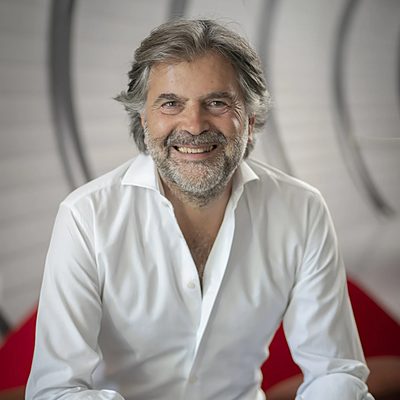
with Arnaud Saint-Paul · Founder & CEO, Tapuat
Everyone is busy governing the model; almost no one is governing themselves. Arnaud Saint-Paul argues that an organization has to be coherent before it scales AI—or it just automates its own dysfunction. Chris Hutchins presses that thesis into the place it matters most: a high-stakes, regulated environment like healthcare.
Show Notes
Everyone is busy governing the model; almost no one is governing themselves. Arnaud Saint-Paul argues that an organization has to be coherent before it scales AI—or it just automates its own dysfunction. Chris Hutchins presses that thesis into the place it matters most: a high-stakes, regulated environment like healthcare.
What We Cover
- Arnaud's path—founding and exiting companies to building the Heart Leadership Institute
- The thesis: self-governance and coherence as the prerequisite to scaling AI
- The experiment—running a leadership assessment through several LLMs that disagreed
- Human bias vs. machine bias, and the honest difference between them
- The high-stakes test: a patient arrives with an AI-generated workup
- Provenance, prompt visibility, accountability, and giving the clinician time back
- The first move for a leader: establishing a coherence baseline
Key Takeaways
- Govern yourself before you govern the model. Coherence—clarity of judgment, trust, and decision-making—has to come before AI is deployed at scale, or the tool just accelerates the dysfunction.
- Model bias is real and varies by maker. Running the same human-judgment assessment through several leading models produced different answers, a caution against outsourcing judgment without provenance.
- Healthcare is the stress test. When a patient arrives with an AI-generated workup, what matters is provenance, prompt visibility, accountability, and the rule that the tool has to give the clinician time back.
Chapters
- Opening: everyone governs the model, no one governs themselves
- From founder and operator to the Heart Leadership Institute
- The thesis: coherence before you scale AI
- The experiment: one assessment, several models, different answers
- Human bias vs. machine bias
- The high-stakes test in healthcare
- Close: the coherence baseline and where to start
About Arnaud Saint-Paul
Arnaud Saint-Paul is Founder & CEO of Tapuat and its Heart Leadership Institute, and the author of Heart Leadership: Fostering Coherence to Accelerate Impact. A serial entrepreneur turned “conscious leadership architect,” he created the Heart Leadership Index to measure the human side of leadership—coherence, judgment, and trust. Learn more at tapuat.com or connect on LinkedIn.
Related Resources
Guest
▶Full Episode Transcript
Chris Hutchins (00:02.154) Welcome back to the Signal Room. I'm Chris Hutchins, your host. I'm really excited about our conversation today. Almost every conversation about AI right now seems to be about governing the model. My guest today wants to talk about the thing that is actually underneath it that no one is governing. Ourselves. Who knew, right? So Ernst St. Paul, it is fantastic to have you know that you're CEO and founder. you've got a bunch of different things going on. and I think we'll talk a little bit about your Heart Leadership Institute, which really piqued my interest when we first had our conversation. It is just not an area that's getting the kind of attention that it really needs. And you know, leadership is definitely in the need of a little bit more heart these days. So Armad Arnad is a serial entrepreneur. He's built and exited many companies before, spending the last decade on a single provocative claim that the human side of leadership, coherence, judgment, trust can actually be measured. He built an instrument to do that, the Heart Leadership Index. And when he ran that index through several of the leading AI models, they disagreed with each other, of course.
Arnaud Saint-Paul (01:12.803) Wait for it.
Chris Hutchins (01:20.204) Arnold, I'm really excited for you to be here. Thank you so much for agreeing to come on this show this morning.
Arnaud Saint-Paul (01:24.379) Thank you so much for having me. It's amazing to be there.
Chris Hutchins (01:30.285) Well, let's just jump right into some of the things that that are top of mind. I I know we're dealing with some high stakes when it deals with we're talking about leadership. it really doesn't matter what vertical you're in. It's a really important space to make sure that people are thinking about the human factors and the human relationships. Because after all, there's really not much point of anything else. So I'm super excited. Let's let's just talk a little bit about, you know, some of your journey. just let folks know who you are a little bit. And then talk about your your your company and and some of the things that you're really passionate about and excited 'cause I think this is a fantastic time.
Arnaud Saint-Paul (02:05.255) thank you. Thank you so much. So the to give a little bit of of a peek, I guess you know, I started that journey towards living through my heart when I was thirteen. but as an adult I I started in finance and then technology because as also at the same time when I was thirteen I started to code. And so technology has always been in my life and more so that I created businesses. around it and use use it as a a vehicle to express myself and create different opportunities. The the journey has therefore been intertwined between the inner journey, you know, how to lead myself on one side, but also on the other, leading others, of course. But more importantly, how do to use technology for a purpose that was That felt aligned with what I am about. And that's how the institute was born, the Hard Leadership Institute, Tapuat. The what I have noticed throughout the years is that we're as good as not the technology, but more as ourselves, right? The a and we see that so many times in different sectors, whether it's the army or or the sports or music, we see that the more alignment, the more coherence in a team, well, the better the outcomes. So it's rather unique proposition indeed, it seems, but it's actually very, very common sense. and I think everybody would agree that the more alignment I have within, or the more coherence I feel within, The easier is life in general, and more so our businesses as well. So it is all about embracing who we really are. But that's a different topic. Let's focus let's focus back on AI and and technology. The what is super important factor you are connecting to is that yes, technology is an amazing powerful force.
Chris Hutchins (04:15.949) Right.
Arnaud Saint-Paul (04:30.779) to do good or bad for whichever, but let's say to do good to help us explore and and and become and face all the different challenges we have in environment, in social, in in financial aspects. However, if the leader that is part of these technology teams and organizations is in the first place fragmented or out of coherence, Therefore, the impact through technology is going to be fragmented and coherent too. And that's how we see the social media debacle or all the different negative aspects of technology. So the invitation here is what if the same way we're optimizing operating systems or technical systems to make sure that they work this in a perfect way or the best way possible?
Chris Hutchins (04:58.242) Right.
Arnaud Saint-Paul (05:27.849) we should look at the same from inner inner operating system viewpoint and in in other words finding a way to align ourselves further and it is possible this is what i've been working the for last four decades to understand better what is our map where how to measure coherence and and also
Chris Hutchins (05:37.538) Right.
Arnaud Saint-Paul (05:56.765) How to lead with it and abide by it. So that's the journey on which we are. One thing that you may find interesting: so in the last few years, I created an assessment called the Heart Leadership Index that helps individuals to know where they stand in terms of coherence according to seven different dimensions. We did the test.
Chris Hutchins (06:16.931) Right.
Arnaud Saint-Paul (06:26.03) Of having the different AI engines to take it. Not a human in this case, but the you know, Sonnet on one hand, Opus on the other, Chat GBT 5.5, I believe, 5.0 it was. Anyway, you could see the shape along these seven dimensions, you could see the shape of coherence that were very distinctive between one engine and another. And
Chris Hutchins (06:41.133) Right.
Arnaud Saint-Paul (06:55.278) And which was so chat GPT is more engineer like and you could see definitely the difference in the in the coherence mapping compared with cloud, which is more human like in many different aspects. Anyway, that was just a curiosity.
Chris Hutchins (07:14.958) It's interesting. So I I think a lot of the challenges that I that I hear from people, no matter what part of the the the ecosystem they're in, is that there there's this kind of a swing and a miss oftentimes because the the understanding is just not shared. And it can be in some of the most, you know, simplistic p terms in terms of just this the way something gets defined. You know, how do you talk about things from a leadership standpoint in terms of how you want to lead your company? It's just a really interesting dynamic and and I I I find the work that you're doing absolutely fascinating. before we go too much deeper, there one thing I just wanna ask you about that I thought was pretty pretty cool. So you you started a financial liter literacy venture for kids. can you tell tell us a little bit about that? That that that's I haven't heard that before. I think it's really exciting.
Arnaud Saint-Paul (08:05.272) well, thank you. The that was yeah, probably 10 years ago. I wanted to help children to learn, you know, it was the at at the moment where cryptocurrency was quite a thing. And I I wanted to create a currency that would help children to learn how to save money, how to invest it, and so on, but from a sustainable viewpoint. So in other words,
Chris Hutchins (08:10.925) Right.
Chris Hutchins (08:20.077) Right.
Arnaud Saint-Paul (08:32.654) Each time they would receive pocket money, they would have the ability to share part of that money to support a charity or to save or to invest right in in sustainable projects at their size, obviously. If if it's ten cents, it doesn't really matter, but to create that habit so that they can live in more abundance over time. So that is a venture that still works, not in the initial idea, but more sharing in schools how you know the s different sustainable development goals of the UN and how to support them. And this way kids learn how to save money and to invest and so on in in in the school, which is awesome.
Chris Hutchins (09:10.017) I love that.
Chris Hutchins (09:16.055) Right.
Chris Hutchins (09:24.813) That's that's phenomenal. I think it it's just one of those areas that just doesn't get enough attention. And they I think th there's plenty of evidence that if you just take a walk around your your local neighborhood, there's not a lot of understanding, first of all, that that adults are functioning with, let alone are they really trying to figure out how do they make it real and and tangible so that their kids start to d develop this core competency. but I I I think what's what's so exciting is just that Your focus could be on a number of different things. Of course you deal with technology, but it it's it's really the human side. But c can you talk a little bit about well what some what were some of the early things that really kind of ignited this drive and passion that you have to to really start to figure out how do you aim things in the right direction and so that we're actually making a difference and helping human beings to actually learn and navigate and As you use your word. I th that they're coherent. I think, you know, one of the t things that I people say kind of out of you know, tongue in cheek is, see if I can put together a coherent sentence. it it's just an interesting term and I don't know that people really understand it.
Arnaud Saint-Paul (10:31.771) Right. The when I I think it started more about trying to understand myself and figuring out that somehow this mind of mine did not really work the intended way. It was very unreliable. So I had to find another way to to do things and hence this connection to the heart that as I was mentioning. So it was first and foremost a personal journey. that lasted decades. And in on in that process, as I was discovering things for myself, then I would start sharing with other people because it would work with me. So therefore why not with others, right? And so on that journey I've always been looking at when I create a new venture, how does that serve the communities that I'm a part of? to help them thrive to the best of my ability. And and it has always been indeed this this constant journey towards sharing most of what I have learned so far. And then about twelve years ago I had this realization of my life purpose being now to really help humanity to connect to that heart that I was mentioning earlier. And therefore help them to get onto that journey towards more coherence. And coherence is very simple. I think a one metaphor can be when you go to a a con a classical concert, before the director comes in, it's a beautiful chaos, right? Every instrument is being tuned and whatnot. And then the director comes in and then all of a sudden you have coherence. In other words, you start listening a symphony out of this chaos. So this is what coherence is about. It's
Chris Hutchins (12:26.295) Right.
Arnaud Saint-Paul (12:28.591) Another word is alignment. So when you have alignment between your thoughts, your actions, just to start that, everything flows. It's easy. When you have misalignment or chaos, obviously, well, we know what happens there. And from a business standpoint, you don't want that. You want you want as much alignment as possible. So coherence flow as well can be another word.
Chris Hutchins (12:32.867) Right.
Chris Hutchins (12:47.138) Right.
Arnaud Saint-Paul (12:58.203) is what really i is about. And we can measure it, we can map it, we can create the conditions for it. And that's a bit what the my institute is about, to show the mapping, the measurement, but also how to foster such conditions to have a business that thrives more easily.
Chris Hutchins (13:21.934) I love how you're you're you're putting this. I I I think the this the more more common ways that people are dealing with their with AI and in their rollouts these days, they're f it it's kind of the opposite of what you're talking about. So your your whole premise is like you're inverting the usual order of operations when it comes to AI, which I love. so you're you're essentially talk saying that self governance and coherence are really the things that hatch need to come before we start dealing with AI instead of afterwards. what what made you conclude that and what what should organizations be doing to get coherent before it tries to start doing AI initiatives and trying to scale them?
Arnaud Saint-Paul (13:56.551) Yeah.
Arnaud Saint-Paul (14:06.493) So AI is an amazing accelerator. Do we agree on that? Right? It accelerates tenfold, maybe I don't know, business in general. So you have leaders that before AI had a lot of different challenges because of the normal circumstances. They were not able to face all these challenges. Now AI comes and it multiplies by 10 the same challenges.
Chris Hutchins (14:12.779) Absolutely. Yeah.
Chris Hutchins (14:17.762) Right.
Chris Hutchins (14:34.882) Yeah. Right.
Arnaud Saint-Paul (14:38.159) So, how can you expect a leader to cope with so much more pressure than before? That's why we are proponents of activating as soon as possible what we call the heart intelligence or this sense of alignment and coherence, because the more we are grounded in such coherence and presence, and present to it, the easier.
Chris Hutchins (14:45.742) Right.
Arnaud Saint-Paul (15:08.413) Comes the challenges to you and more importantly, the solutions to it. So, because the thing is, if you are a fragmented leader, right, which is a leader that is not in coherence, therefore, all the different choices you're gonna make as a leader related to the AI implementation is going to lead towards more fragmentation instead of getting the results you're expecting. So I would say the game has heightened risks now and therefore it is much more important to clean up the house first and and the leadership house and then from there embark onto the journey of embracing more pressure basically.
Chris Hutchins (15:43.992) Right.
Chris Hutchins (16:01.174) So w some of the some of the things that you've I know I know you've talked about are really you you've used the word chaos to describe things, but this specifically a couple of things that you've pointed out before that you know y if you scale AI on top of dysfunction, you're just automating the dysfunction. So we talk a little about w what that actually looks like when it happens and you know from what you're seeing and and what you know the people you're interacting with. w how how do you help them to to really put the focus w where they can actually do some some good as opposed to the just kind of reactionary thing where things are just happening to them?
Arnaud Saint-Paul (16:39.816) Yeah, the I read an article this morning, I think, which was where someone activated an AI system and spent thirty eight thousand dollars in one night of AI because it was an AI loop or whatever, right? So because of lack of presence in this case, the person did this, made a wrong choice. Which activated this this issue. Okay, it's not a big issue, but still it's thirty-eight thousand dollars. So we really want to have coherent systems throughout, right? And more so when we give them to AI to execute and continue the processes over time. And we need to have the right processes in place, the right guardrails and all that. Yes, a hundred percent. But what if we do the same for ourselves first and foremost? Because once we do that, then it becomes much easier for the the the leader to not only lead the per people he's working with, but more more importantly to align with the right situation where this kind of events do not happen anymore. And that's what we observe with our clients. Is that as they embrace the so what we not only do measure and map coherence, but we also train for it, right? And we even certify coaches for it as well. So when we train them, when we train our clients, we see that as they embrace more coherence within themselves, then automatically the events that happen in the daily business world are also. aligning faster and easier with their purpose, with their goals. And that's what I wish for every single business on this planet to embrace, because it's much easier for everyone.
Chris Hutchins (18:53.122) No, th th i I think it's it's important to to talk about some things that you're you've done because I don't know that people really understand what's involved. I mean, this isn't just a hypothesis that you had one day and just decided, yeah, we're gonna we're we're gonna start you know, giving getting that this out to anybody and everybody. You actually did a lot of different experiments, testing the methodology. you know, I I know that that some of some of the answers were were to re in not an agreement between the models and all those sorts of things. But can you just talk a little bit about what you did and and what were some of the results that that that came out of it that just caused you to realize it's time to just double down on this. We this is it it works and it's it we we have to start moving it forward.
Arnaud Saint-Paul (19:37.289) Right. well actually I I would like to start with the fact that the measurement did not happen at the beginning. W I started sharing the methodology with CEOs one on one and seeing the results working for them, then doing the same for groups, then I had to find a way to create a data stream that would show the the actual results that are happening for these CEOs. So it it's not like I have a model or a framework, and then I create a mathematical formula that works for that. And done no, it's part, it's starting from experience, right? I think this is important because we're in a very highly pragmatic and practical environment here. So from experience, we derived a way to measure vertical development in a leader and a group and a team and an organization. And From there from then on several things happened. Not only did we work with companies of fifteen, twenty people for a year where they c we started seeing coherence growing from from our our test viewpoint, but more importantly also their KPI starting to grow up to six hundred percent in one case of new clients. So that was awesome. And and also now we're about to publish a paper, a scientific paper, that demonstrates how coherence. So in I think about 700 and change tests, we were able to demonstrate that coherence is indeed something that is mappable. And and the seven dimensions are not dis discriminant, but they are. demonstrating that coherence. And so we're very happy to be able to share that with the world. The our purpose here is really to provide tools to the community so that they can embrace it for their own purpose, right? For their own for their for their for them to thrive, basically.
Chris Hutchins (21:53.432) Yeah, so the the the impact on trust in in my mind seems to be something that's probably pretty measurable on that with this kind of work. Just talk about some of the things that you that you're seeing from a results standpoint. I I I think th there's the all always this question about you know what kind of evidence do we have that this is gonna really move the needle. So then I think you and I chatted a little bit about this the first time. It's really this erosion in human trust and in relationships. And you know, w what you're doing seems to be taking aim directly at resolving some of those things before they become a a much bigger issue.
Arnaud Saint-Paul (22:29.661) Yeah, we we we don't have a corru we do not have yet research that demonstrates that that shift, but we have information that has shown indeed that trust grows over time by individuals that practice our methodologies. n we haven't been able to quantify it yet because again we didn't have the the We want to have proper research. Now we are working with different organizations to put that together in the months and years to come so that we can demonstrate our objective is to demonstrate to the business world that when you embark onto more coherence alignment, it automatically brings more impact, financial, social, environmental. So in other words, more performance. And indeed culture trusts in an organization thrive as well in parallel to that.
Chris Hutchins (23:39.396) Yeah, it's a it's a fun fun thing to kind of to think about in terms of like looking at certain things that are now become becoming better supported by facts. I I was talking with a an executive at one point and she was just talking about a predictor that they found for for a risk in readmissions and it was the the number of records they found in the electronic health record on a per on a particular person. And it was I kinda laughed because I used to work in a radiology department when I was sitting at the front desk and checking patients in, I would see the orderlies come by with a big stack of volumes. And it was probably some of them were had to have been 10 pounds or more of of records. And I just like, huh, we've got AI to validate what we already could see with our eyes, which is interesting. It took us a long time to get there.
Arnaud Saint-Paul (24:32.693) And and you know, the the fun part too, at least the way I see it is that coherence training and measurement and all that is thanks to AI. We're using AI a lot to make that happen and fully really because we can see things that were not available before. So, you know, I'm one of the biggest user well, one of the biggest, maybe not, but we're big users of AI because it is a great tool for us to not only map but also train people.
Chris Hutchins (24:44.131) Right.
Chris Hutchins (25:03.331) Right, right. So kind of gets to a an area that's interesting to me and and obviously you've done a fair amount of work in this space as well. But the whole concept of bias and I think people t tend to go n naturally f in their in their minds to the the nefarious types of things that people do with data. but th there's a much bigger concern that that I have that I have, and I mean I I know that you have it as well, where th th this bias that comes from the things that are missing, honestly, and whether it's the coherence, whether it's you know, a fundamental understanding of, you know, certain concepts or or even a a a trust whether when it comes to machines or individuals and relationships. But the the bias the that a human being has is very different than what a machine has. May maybe talk a little bit about the the the two of them and what and what your observations are. And you know how how do you get Get l at le get leaders to to really think about this in the right context.
Arnaud Saint-Paul (26:04.57) So that's what I was touching upon earlier when we started to have the AIs to fill the assessment itself, and we could definitely see the bias that each of them have. We don't phrase it in that specific way for ourselves because in the end, what we're taking is only a snapshot of where person stands in this moment, and we're connecting. the what we the seven dimensions we measure are presence, inner peace, inner joy, non-attachment, selflessness, unity, and purpose. So you see it's not very related to bias per se. Now it definitely pictures anyway a perception of reality that is by default biased, right? It's a specific lens that can be filled with a lot of stories or or on on the contrary Is very peaceful, etc., etc. So these aspects happen before identity is formed, and from that place of identity are taking decisions that are biased by default. So, in other words, you can easily imagine two different leaders, one that is led by a sense of peace of presence.
Chris Hutchins (27:19.983) Right.
Arnaud Saint-Paul (27:31.999) of generosity of of maybe a servant leader or transformational leader someone that is living at ease right and and in flow and then you have the other leader that is full of fears that the world is coming at him and and and it's difficult it's always a hustle and a struggle for him right same
Chris Hutchins (27:54.071) Exactly.
Chris Hutchins (27:59.674) Right, yeah.
Arnaud Saint-Paul (28:00.839) Same individuals, but two different biases and very different leadership decisions, therefore, and most likely different trajectories as well from a career standpoint. So these biases, the ones we are measuring, are so important and they affect so much, not only professionally but also personally, that we feel that once
Chris Hutchins (28:07.524) Right.
Arnaud Saint-Paul (28:30.282) You take care of these, the rest is taken care as well at the same time. meaning not only the outcome, which is of the conditions to you know, where the person lives, but also the the decisions will be more aligned, more coherent, less fragmented, et cetera, as I was mentioning earlier. Make sense?
Chris Hutchins (28:53.655) Yeah, so can we just maybe drill into the the the difference r really in in terms of what the human bias tendencies might be versus the the machine. Are there there clear distinctions that a leader should be look looking for to understand really and locate where they're at on their progression?
Arnaud Saint-Paul (29:12.49) So if I look machine to machine, meaning for instance cloud versus open AI, the OpenAI is going to have a more, and it this is a generalization, by the way, don't quote me on that, but still, is going to be having more of an engineer kind of bias. So it's going to be very much technical. And for funnily enough, to d nowadays I use more chat GPD for all the technical stuff. And for everything that is copyright and and more human relations, will I go to cloud. And this is what the the assessment was showing me between these two, for instance. The the bias that the AI has besides the one that has been Implemented by the creators, right? Of the of each engine is also the biases that are coming from our culture, from our content, that is coming from the humanity in general, right? And so you most likely have a different bias depending on which language is being used: Spanish versus French versus Mandarin or English, etc. because of the material that Is has been sourcing the creation of these weights that has created ai. So On one hand, we have a monolithic bias. What I mean by that is AI Claude will pro has a specific set, foundational set of biases that are unique, right, compared with ChatGPT, but still it's always the same shape, let's put it that way. And then you have the human.
Arnaud Saint-Paul (31:17.906) Each human has its own set of biases. Society, each society, each country has their own set of biases as well. And that diverse set of biases are querying this monolithic set of bias, which is the AI plot for to take that example. And therefore, these two biases are creating a third one.
Chris Hutchins (31:27.886) Right.
Chris Hutchins (31:46.16) Yeah.
Arnaud Saint-Paul (31:47.974) So it becomes a bit messy in the in the end, but still works because that's life. That's the beauty of it.
Chris Hutchins (31:48.675) Right. Yeah.
Chris Hutchins (31:56.132) Right. So this kind of goes into the the the whole c creating something out of the the chaos, essentially, is is how I think about it. But you've used the word fragmentation on to kind of describe w what you have to do with an organization just to really start making s making some headway in in the coherent space. I think people assume that this is hard to measure, so it feels like a soft skill, but wouldn't when you're seeing that kind of fragmentation. What does it look like and and w what are some of the the f we'll call them levers that that you can actually pull that d that help you to start moving on things in a way that people can see their their changes?
Arnaud Saint-Paul (32:37.153) That's a fast question. the let's let's start one one step after the other. Fragmentation is a a term that we try to find in order to describe something that is happening on the day-to-day, where when I take a decision, the question is for a leader, for whomever, basically, but is it am I
Chris Hutchins (32:55.737) Right.
Arnaud Saint-Paul (33:04.787) My whole being is in that decision, or one aspect of me has taken it. You may have had in your life at some point a conversation with someone, professionally or otherwise, where you felt that you took that decision, but you were not fully there behind it. Right? One aspect of you was there answering and say yes when in reality you wanted more to say no, but you were not daring to say so, for instance. That might have happened. So that's what I'm pointing to. There was fragmentation there. And most likely the outcome was not the one desired, it was something else. And so that's what happens more often than not in business. So the question is can we afford as a business to continue in that same direction? Because what we know is the more fragmentation.
Chris Hutchins (33:35.203) Yeah, for sure.
Chris Hutchins (33:46.383) Right.
Chris Hutchins (34:01.614) Yeah.
Arnaud Saint-Paul (34:05.403) One fragmentation will lead to two, three, four, five fragmentations. It's not like just repeating itself, it's it's it expands. So therefore it has a direct impact on the bottom line of the company. So, and we see that in sports. When you have a chaotic or fragmented team, statistics in sports show that they have.
Chris Hutchins (34:21.945) Right.
Arnaud Saint-Paul (34:32.465) less results and less access to opportunities than a coherent team.
Chris Hutchins (34:39.245) Right. Yeah there there's certainly been a lot of a lot of re recent events that we can look at from a sports perspective I's for certain, where there's there's that real challenge when you've got you know well, I I think I'm not sure if you follow basketball in the US, but you know, the the yet again one of the superstars is changing teams. and th when you have superstars and it was funny 'cause I think the person I remember most talking about the the challenges inside of a team. I think it was Kobe Bryant and they said it's you know, th there's no I in team. But he his take was, well, there's an and an E in there. But but I mean it it it's a I think I think it's a gap that is that really does have to get closed. I think you've talked a little bit about that before, but maybe talk about what the importance of it is at this particular point in time. If folks want to really do trustworthy AI work, the if you skip this step, it's gonna really not end well. Maybe we talk a little bit about how how important this is and w what are some of the things that they should be exp they actually can start to see and they'll feel much, much better about the decision, quite frankly, if they start acting on this stuff. Because we're talking about some things at pretty high stakes f in a lot of different industries.
Arnaud Saint-Paul (35:56.991) Yeah.
Arnaud Saint-Paul (36:00.921) I mean, if we look at the the trends in the last fifty years as as pertaining to technology scaling, right? We have seen the internet and then and then the phone, the mobile phone, and then social media and so on. We have seen the amazing advantages of this these ecosystems as they were growing. And then as for social media, for instance, we have seen
Chris Hutchins (36:24.805) Right.
Arnaud Saint-Paul (36:30.612) the humongous impact, negative impact it has on society. What seemed to be an an obvious good choice at the beginning became something that started to hamper the actual interconnection of society in general and its capacity to grow into a more conscious society. And and and that is a tremendous negative impact that are going to affect The next generations and many generations, because I don't know how your kids are, but I can see mine. They are pegged to their phones. And what about human relationship? why? It's much easier through digital. So just that, which seems to be quite not important, but has had such a tremendous impact on our society. And now we're bringing in AI.
Chris Hutchins (37:21.188) Yeah.
Arnaud Saint-Paul (37:37.197) Which is going to bring counter quantum computing and robots in just behind it and going to the space and a few bunch of little things. And and all that amazing good if it is still handled from a place of again of non of noncoherence of fragmentation.
Chris Hutchins (37:42.874) Right.
Chris Hutchins (37:49.743) Right.
Chris Hutchins (38:05.53) Right.
Arnaud Saint-Paul (38:06.376) Negative effects may very well supersede the positive ones by a long, long shot. So, and as I mentioned earlier, I believe no company can afford, literally speaking, I'm talking financially, the impact that fragmentation has on our bottom line. None. And and
Chris Hutchins (38:33.774) Right.
Arnaud Saint-Paul (38:35.874) That's that's the thing. Now we're starting to study the d the big companies and see how coherent they are, how impactful they are. And you can see some very, very dire stuff happening there, even if they do still make headlines and whatnot.
Chris Hutchins (38:54.202) Yeah, th this is you know, in my mind, one of the most important things that leaders should be paying attention to right now because there's definitely a a significant challenge. And there's there's been studies out for a while now that really talk about this the degree to which human human trust has been eroded. in the leadership position. You've got a lot on the line. I know I know people doing AI no matter what industry, their their boards are really scrutinizing things pretty pretty closely. but the this human aspect of it, I I think it it needs a lot more attention. if if you're well since you have an audience of of listeners here, just d talk to that talk to a leader and tell them what where they should be focused. Like you know, right now, if they're not already focused on it, what should be they be doing first to make sure they're starting to make progress in this
Arnaud Saint-Paul (39:47.417) I think I mean the best thing is if they could start just measuring their coherence field in their team, that would be amazing. Simple stuff. You can go online on our website, it's free. Go have a look, test it out, and see what's the result. That lets you know where you are in terms of fragmentation of your team. Does that relate to your current experience? Because that's what's most important. And then Potentially, you know, one of our coaches can help you decipher all that and and look at the next step. But I think again, the what we call so what we called soft skills are actually the primary ones. And I think the in the last 10 years, this is what society has realized more and more, and we're going towards more of it because all the what we call hard skills. are taken care by AI anyway. So they're gonna be off their plate. And so the only remaining ones are the soft skills. And which are actually the most essential ones anyway, have always been. So it might be time to take care of that.
Chris Hutchins (41:01.604) Right. I think so w one of the things that people probably I imagine some people are hearing about f and more v more frequently now is with this this trust issue. how do you act you know, establish the credibility that people can start to respond to and and trust? Because I think there's I you've already kind of indicated this where oftentimes things are not even not even raised because this you know, people don't believe that they're they're gonna be heard or they have a perception that decisions have already made that are not being shared. There's a lot of things that go into there and there's a lot of fear. what are some things that you that you would look to do or and you advise a CEO, for example, to do if they feel like there's an issue there and they don't know quite what the severity of it is, but they know they have to do something. What what I mean I love you you mentioned your coaching. 'cause I think that's probably one of the things that people should be thinking about reaching out for. just talk a little bit about that if you want.
Arnaud Saint-Paul (42:06.593) I think the the the the first thing I would do in their shoes is really to look at so to gather the data. Because that's what our institute is about, is I believe and we are demonstrating now that this coherence field that exists already in an organization, we can now map it, we can now measure it, and we can see what is underneath it, or better said. What is happening at the fragmentation level, right? What is the origin of that fragmentation? So if there are trust issues, culture issues, etc., or lag of execution, I would go and map, see where what is happening now in my organization. So gather my management team, they go through our website seven minutes each, and they have an information about where they stand in this moment. Simple from there, then can start a conversation on what can we do with that information? And maybe we want to try a 12-week sprint with these guys, or I want to work with my coach independent from us on on this and that. Of course, let's let's do it right. but let's take actions. That's I think the most important part. So instead of suffering the consequences. Let's start mapping and measuring and then find the solutions that will help you to really go beyond because there's no reason why you would cont you should continue in that same pattern, right? Of of culture trust or whatever issues that is happening. So trust the process, go map and measure. And then after that starts the very interesting conversation of how to get out of it.
Chris Hutchins (44:11.449) Er Arnold, as as we think about the the the next couple of years, if you could l look into a crystal ball, w what where where do you think we're headed and what's your sense in terms of how people will start to think about coherence and start moving the needle there, versus the areas that you might be concerned, are there industries that you think are more likely to do it than others?
Arnaud Saint-Paul (44:37.655) Hmm. I mean, as always, I think, you know, the industries, technology, all the innovations-based industries are tend to lead the way in terms of leadership as well. They they have they see what is at stake and therefore they want to be the best version of themselves too in terms of leadership. So that would be my first guess. Now
Chris Hutchins (44:47.537) Mm-hmm.
Arnaud Saint-Paul (45:05.421) We have been surprised and found in other sectors as well, early adopters, and whether events or cosmetics and and so five, three, five years from now, I would expect the finance and technology worlds to be the leaders in general in that adoption of coherence, because it makes pure financial sense. And it is my wish as well that Fortune 500 companies will start adopting the tools that we offer as well in that direction. But more importantly, we're building an ecosystem. So it's we're here to facilitate an ecosystem and to the best of our abilities. So anyone who is in your audience who wants to be part of that ecosystem is very much welcome to help us and and help themselves to grow in that direction because again it is so essential that we out everyone should be really looking at that and use that tool on a daily basis.
Chris Hutchins (46:08.304) Right.
Chris Hutchins (46:23.993) So i as we're kind of landing the plane here, y you you've touched on a number of things that I that that I suspect that some of our audience knows more about or is some things that they don't really quite understand how to how to tackle that. where can people find you? We know why where where can they f take you know, take this the heart leadership assessment that that you talked about. Of course you've got a bunch of really great content on your site that that I've seen and the coaching program in particular I think would probably would be something that in a near term kind of a sprint organization should be thinking about. But you just tell how to find you and and you know w what that what that could look like.
Arnaud Saint-Paul (47:01.026) Yeah, with pleasure. I I think on our website tapu at a puat.com tapuat slash dfrag for the for the heart leadership index for instance or slash hli dash certification for the certification for coaches. you have a lot of information. We have a whole section of resources with studies, research, books. available there and you know there's a contact page you can also contact us there as well and you can find me on LinkedIn and yeah and on YouTube I think as well. So and s and soon on Subtack.
Chris Hutchins (47:43.78) Actually. Thank you so much for for coming on the show and and for sharing this. I mean, it I always get inspired by people who are not just sitting back and take th taking things as at status quo, but you've seen something that's a significant risk. And I mean I just love that you've dedicated yourself to and your your your team to be able to really work on this and hopefully prepare people. this is probably w one of the most incredibly exponential impacts in terms of h human transformation that we've ever had to tackle. you d there's no place to hide in the world from it, I at least that I'm aware of.
Arnaud Saint-Paul (48:21.942) Exactly. maybe bouton. Maybe. Yes. But thank you so much.
Chris Hutchins (48:24.945) Right. So I think one one of the things that I'm I'm gonna take from this conversation really is the co coherence of humans is actually ultimately what's gonna decide whether the AI helps or it just scales a mess. I think the the idea is the right one. I th I think we all can agree with as we look around. We don't need a whole lot of math to understand pr you know, conceptually based on what we see.
Arnaud Saint-Paul (48:39.972) Yes.
Chris Hutchins (48:53.177) We have a sense that an inherent sense actually that there's some things that are really needed needing attention. So really love that you've drawn attention to this. And I can't thank you enough for coming on the show. This is phenomenal. For me, listeners, I I'm excited for you guys to to of course hear this conversation, but please do go to to the website. I'll make sure that all all the information you need in the show notes. But definitely reach out to Arnold and his team. There there's just a lot of a lot of folks that are in a very Precarious place they find themselves in. Some are very concerned that somebody may challenge them, some are actually not realizing that they have some things they're going to pay attention to. But much more importantly, just reach out to have a conversation, find out that you're okay. Don't guess. there's too much riding on it. You don't want to lose your best talent. Unfortunately, they're the ones that go first if you don't start to do these things and make sure that you're getting the foundation secured. It's really about human beings first. That is gonna do it for this episode of the signal room and I will see you next time.