Can AI Save Someone From Addiction? The 3 AM Call
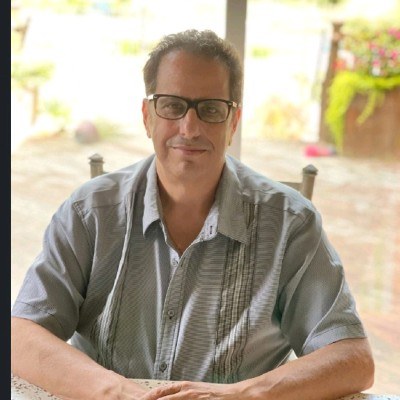
with David Sichel · Founder, Blue Shirt Media
What happens when someone struggling with addiction finally reaches out for help at 3 AM — and nobody picks up? David Sichel, founder of Blue Shirt Media and a person in long-term recovery, joins Chris Hutchins on why a missed call at a treatment center isn’t a lost lead — it’s a patient-safety event — and what responsible AI looks like at the most sensitive doorway in healthcare.
Show Notes
David Sichel — founder of Blue Shirt Media and a person in long-term recovery — works at one of the most sensitive doorways in all of healthcare: the moment someone picks up the phone and asks for help with addiction. He joins Chris Hutchins for a candid, vendor-neutral conversation about doing automation responsibly when the stakes are a human life. His centerpiece reframing: a missed call at a treatment center isn’t a lost sales lead — it’s a patient-safety event, because the person on the other end just found a moment of clarity that may not come again.
What We Cover
- Rebranding the “lead” — why treating callers in addiction care like sales leads misses the human reality, and why answering immediately can save a life
- Why the front door — David’s path from running a medical-transport company that drove people to treatment, shut down during COVID, to seeing the gap of unanswered treatment-center calls and building AI to close it
- Designing AI for crisis — how custom voice agents are trained for the 3 AM caller: slurred speech, hold times, distress, and the patience to slow down
- Where the machine stops — the human escalation pathway, set with the center up front, and why AI here is a tool to free admissions people, not replace them
- Real governance vs. the show — HIPAA compliance, disclosure, defined handoffs, and the non-negotiables for AI at a human-critical touchpoint
- Earning trust — cutting through spam, the cheap-model tell, and why fit-for-purpose beats cool tech
Key Takeaways
- A missed call is a patient-safety event, not a lost sale. The person who finally calls has reached a moment of clarity; if nobody answers, that window can close.
- AI at the front door should free people, not replace them. The biggest misconception is that AI is replacing admissions teams; done right, it answers more calls so humans can do the human work.
- Non-negotiables come first. The AI identifies itself as an AI, discloses recording, stays HIPAA-compliant, and hands off to a live person on rules agreed with the center.
- Responsible AI is fit-for-purpose. The industry’s real miss is incomplete, narrow tools shipped without the time to do them right — not the absence of the flashiest model.
Episode Timestamps
- 00:00 — The 3 AM moment of clarity
- 01:18 — Meet David Sichel & Blue Shirt Media
- 03:28 — Why a missed call is a patient-safety event, not a lost sale
- 05:28 — Moving beyond off-the-shelf AI to custom healthcare models
- 08:45 — How AI handles slurred speech, hold times, and stressful calls
- 11:58 — Human handoffs: where the machine stops and people take over
- 17:12 — Cutting through spam and building real trust in AI
- 22:00 — Non-negotiable rules for AI at human-critical touchpoints
- 28:23 — Engaging inactive clients through responsible automation
- 29:40 — Where to connect with David Sichel
About David Sichel
David Sichel is the founder of Blue Shirt Media, a HIPAA-compliant AI call-answering and patient-outreach platform built specifically for addiction-treatment centers and recovery programs — 24/7 AI voice agents, missed-call text-back, outbound re-engagement of inactive contacts, and CRM integration. A person in long-term recovery and a certified recovery specialist, David previously built a medical-transport company that drove people to treatment and shut it down during COVID; he founded Blue Shirt Media after seeing how many treatment-center calls were going unanswered. Connect with David on LinkedIn.
Related Resources
- Blue Shirt Media: blueshirtmedia.com — AI call answering for treatment centers (David’s company)
- Episode: The Hidden Reason Hospital AI Keeps Failing with Angel Mena, MD
- Episode: Why AI Agents Are Healthcare’s Next Biggest Security Risk with Pranava Adduri
- Topic: AI Ethics & Governance
Guest
▶ Full Episode Transcript
Chris Hutchins: Welcome back to the Signal Room. I'm Chris Hutchins. My guest today works at one of the most sensitive doorways in all of healthcare: the moment someone picks up the phone and asks for help with addiction. David Sichel is the founder of Blue Shirt Media, and he builds AI that answers and follows up for drug and alcohol treatment centers. What pulled me in is how careful he is about it. This is a conversation about doing automation responsibly when the stakes are a human life. Dave, welcome to the Signal Room.
Dave Sichel: Thanks, Chris. It's a pleasure to be here, and I really enjoyed our conversation on Friday, too.
Chris Hutchins: I did as well, and I'm really excited for you to share your story with our listeners today. Maybe just start with the short version of who you are and what Blue Shirt Media does.
Dave Sichel: Yeah. So I'm Dave Sichel. As we discussed on Friday, I'm a person in long-term recovery. Before I formed this company, I had experience building another company — a transport company that would take people to treatment. And when I was in there, like most things in life that happen to you, I saw the admissions department and how overworked they were. Then COVID hit, and there was no certainty on the protocol for taking people to treatment, so I shut that business down. Later on, once AI came out, I realized there was a gap in treatment — phone calls would go unanswered, and admissions people couldn't get to the call. So: AI, a pain point, and here we are.
Chris Hutchins: Yeah, there was so much revealed during those early days of COVID. I know people have been disrupted — hearing what you're telling me about having to shut down your business, I'm sure there was plenty of stress in that. In our conversation Friday, you said something that really stuck with me, and I want to dig into it. You were talking about that missed call at a treatment center. It isn't a lost sale, it's a patient-safety event. Unpack for me what's actually on the other end of that missed call.
Dave Sichel: Yeah, Chris. For me, being in this business is hard — not hard, it's rewarding. But if you and I were selling widgets somewhere, we'd be talking about the leads that come in. That's what we'd be discussing. It's harder to put that tag on a person, especially a person stuck in addiction. How do you call them a lead? So let's call them what they really are: people who had a moment of clarity, who make a call that could save their life — and nobody answered.
Chris Hutchins: My gosh. Can you say that again? That's profound.
Dave Sichel: Yeah. As we discussed on our previous call last week, there's only a certain amount of time. Anybody who has experience with a loved one, a friend, a family member in addiction knows firsthand: that person isn't ready until they're ready. So when they finally get the courage, or the will --
Chris Hutchins: Yes.
Dave Sichel: -- or the desperation; there are a million words I could use, but we'll make it easy. When they finally make that call, if nobody answers the phone, if it's a long hold time, a dropped call, any of those things — if nobody's on the other end, that's the difference that could save a life.
Chris Hutchins: A hundred percent. That's so profound, and I'm glad you put it that way, because we try to do our best, but sometimes that's not enough. I love that you're putting a clear focus back on the individual who's just had that moment of clarity. We have to pay attention and we have to do better. If we're going to use AI for good, these are the things we have to keep in mind. So let's talk about what brought you to this. Take me back to how you ended up building it, why treatment centers specifically, and why the front door.
Dave Sichel: Yeah, it's a good question. What happened was I thought of the idea, and then I joined a platform called Go High Level, which a lot of people have heard of — it's a good platform. The issue for me was that it does a lot of good things, but it's not perfect at anything. And I knew that for the importance and the value of this call, I had to get agents answering that would be a hundred percent — a model I could roll out where people could listen and say, that's so empathetic. They identify as an agent, but once you start talking, you'd never know. That's the one I went to.
Chris Hutchins: Yes. Right.
Dave Sichel: I did some work with a white label, but I still wasn't controlling it. So I went in house and started my own tech, working on my own tech stack. So now it's me, a developer, and a VA, and we're building our own custom models.
Chris Hutchins: Fascinating. So you bring a personal perspective to this work. Share as much or as little as you'd like — how does that lens change the way you build?
Dave Sichel: Well, as far as what I built, I have this pressure, this whip on my back, that I just never feel it's as good as anybody says it is. As great as the idea is, as good as the product is — and it works really well, it's good enough — it's still technology. And technology is not a hundred percent. But then again, people aren't either. You know what I mean? But it's such a gratification to know that even though I'm never happy with it, because it's never good enough for me, at the end of the day I'm building something that saves lives. And as far as the personal perspective — we're going to talk in a few minutes about lead reactivation, but I was the person who sat in that CRM and waited for a call that came. So on a personal level, my personal goals align with my business goals: to help as many people as I can.
Chris Hutchins: I love that, Dave. That was crystal clear from the first moment we spoke — that you've got a passion for what you're doing. And that really matters, because people are in various stages of life. All of us are dealing with some really crazy times, and all of us are experiencing very common things that, more often than not, don't get any airtime. It's really important for people to hear how things really are, so they understand they're not alone — and that it's okay to reach out for help. How you conduct yourself, how you drive your business, where you spend your time — it matters. It's a beautiful thing, and I really appreciate how you do that. Let's talk about the stakes a little. Most AI answering pitches are about efficiency. In your world, the caller might be at the worst moment of their life. What does that change about how the system has to behave — in the first ten seconds, for example, what it's allowed to say? There are really some specifics.
Dave Sichel: Yeah. Well, the first thing we say on the call is we tell them my name is Jody, or John, or whatever it is, guy or girl, and this call is being recorded for quality purposes. We record that call in case there are any questions for the treatment center, because we try to pass the data anonymously to the center — HIPAA and different privacy things — so we always stay compliant. So the first ten seconds is really getting that out of the way. And we also let them know — which I feel is a really good add-on — that we'll send a text message at the end, with their permission. If they say no, we don't opt them in. We say they'll get a summary text message. And that text works twofold: first, the information goes right to the client in real time. And second, if it's an overnight center, we can do a few things. We can do a live transfer, which a lot of people prefer — it's harder to do at night than at three o'clock — but the other thing we can do with that text message is send the client a reminder, or an AI call reminder, at 7 or 8 a.m., whenever they open: Hey Joe, it's Dave; you were speaking to us, we just want to let you know here's the number to call. And the center will also have the information. So the first ten seconds, we're getting information out of the way, and then we wait to see what's going on.
Dave Sichel: Ninety percent of the people who call a treatment center at three a.m. aren't usually sober at the time. So there's a whole lot of things — slurring words, getting a little upset. So our AI agents are trained to know that, to be slower. I know I jumped a little ahead on that question, but that's what our agents do.
Chris Hutchins: Right. Sure. But I think it leads naturally to the question around the stopping points. You're clear that it's not going to give medical advice — but walk me through where the machine stops and a human becomes involved.
Dave Sichel: Well, a human becomes involved a couple of ways. What we do is sit down with the treatment center and say, Look, Chris, what's a qualifier? Maybe for a treatment center it's, we accept this insurance, Blue Cross. What's your level on where the call needs to escalate to an agent? We don't decide that. And that leads into what we talked about on Friday — the biggest misconception, which we both spoke about, is that AI is replacing people. Our AI is just a tool to answer more calls and to free up admissions people to only react to the calls they want to react to. It reduces the bandwidth in the treatment center — frees them up a little bit more, which we really like.
Chris Hutchins: Yeah, and during our conversation I think we hit on this governance-theater issue — the councils that perform oversight without actually doing it. In a setting this sensitive, what does real governance look like versus the show version?
Dave Sichel: When you say real governance, do you mean what we do on our part to make it HIPAA-compliant — like, we have to sign agreements, BAAs? Go ahead, I'm sorry.
Chris Hutchins: No, it's really — rather than having these lofty conversations around governance where it's all an academic exercise, what does it actually look like in practice? For example, you have to come to some conclusions and build some rules around what the human escalation pathways are and what causes that to kick in. These are decisions that have to get made. It's not, we'll just wing it and hope it works.
Dave Sichel: Yeah, you're right. And everything we were saying earlier about the call — the moment of clarity — there's no room for error in what you're talking about. So what I say is, we design what they want. I do the technical stuff, the prompts and this and that, but we sit down and go over everything. First in our process, I'll build you a demo — just something I pulled off the web with your information. You listen to it, listen to the voice, tell us what you think. And I always say the same thing: look, if it's not up to what you want, if you don't like the overall tone, there's not much I can do to make you like it. On certain models — and you've probably had this experience personally too — there's a long pause between questions. That's because the AI agent is looking in the knowledge base for the right information, and that slows the call down. So if you get a demo from us and it's not sounding right to you --
Dave Sichel: -- then we're not the right fit for you. You need to find somebody else; there are other people who do it. But if you like it, then we sit down and go into the second phase: All right, Chris, tell us what you want in an admissions person. Write me an FAQ. I've noticed in these things — even though with treatment it's a little different — that ninety percent of people ask the same questions all the time. They may ask them differently: what kind of treatment do you have? How long is it? Can I bring my girlfriend? Can I bring my dog? Can I bring Red Bull? There are a lot of questions like that we can answer really quickly. The next stage is when they say, All right, I have a date, I have insurance, I'm ready to come in — let's transfer to a live agent. And in that same token, we also handle long hold times. Another thing, Chris — you got the call, you're on it, and you're waiting five minutes; you may be disconnecting them in that same moment. So we get on the line, try to get information, and bring it back to admissions.
Chris Hutchins: Right. Let's talk about the trust issue. I've spent a lot of time talking with folks about trust — from the relationship standpoint, because there's been such a horrible decay in relationship trust between human beings in the last couple of decades. I won't belabor that, but you've seen some messaging channels being abused as well. So earning trust in this arena, under the context of governance, is what I'm thinking of. You've seen spam, fake approvals, vendors waving AI-generated claims around. What does that abuse cost legitimate operators like you?
Dave Sichel: Yeah. I've been self-employed for over forty years — I know I only look thirty, so it's hard to say that. But --
Chris Hutchins: I was gonna say, bro, you look really awesome. Twenty-five, thirty, maybe.
Dave Sichel: He's gotta be lying if he's saying forty years — I know that's what you were thinking. So the answer to your question is that we put on a really good product, but I've been dealing with that kind of stuff no matter whether I was a kid hustling candy or now doing this AI. But to your point, there is a higher abuse with this AI. And there's also a problem with people contacting treatment centers and home-service businesses about using their AI — people get contacted a hundred times a day. So as far as I'm concerned, there are always bad actors in everything. For us, everything has to be a hundred percent clean. We want it to be right, we want to be compliant, and we want to get our message out that, look, you never have to miss a call.
Chris Hutchins: So here's another interesting angle that I would hope would never be an issue, but it actually is, and it gets back to the trust factor. How do you tell a center owner it's automated without it sounding like you've put a robot between a desperate caller and help?
Dave Sichel: Yeah, we don't have that problem. Our people sound human. My bad — I told you Friday I'd send you a demo and I never did — but I'd like you to hear it too. We don't sound anything like an automated robot, and that's been my whole purpose from the start. The good thing about AI is it's come a long way in the year I've been doing this — better, more tools available. The treatment-center owner, or the head of business development, whatever their title is, has to really be on board and hear it — like I said, a five-minute test before they go anywhere. Whatever works for you, whether it's me or the next guy, that's fine with me. But I'm always going to put my best foot forward. As far as governance goes, to answer your question specifically: the agents a year ago versus the agents today versus the agents in six months are so much better, so much clearer. Our agents learn so much. The agents we have out there come in, and we take information — not names and stuff, but anonymous data — and we run that into the AI to see where we can improve. So we're always working on our models. We don't sit back and say, today we have the best model. We just keep going. It's important.
Chris Hutchins: Yes, I couldn't agree more. That's one of the things that's challenging for people to wrap their heads around: if you're using software, typically there are cycles — maybe an upgrade every quarter, every other quarter, patterns like that. But this is a situation where the models are evolving almost on a daily basis, and it just needs a lot more eyeballs on it on a regular basis than we've ever had to have before. I definitely appreciate the approach you take. If we could zoom out just a little from treatment centers — if you were advising any healthcare organization standing up AI at a human-critical touch point, what's the one principle you'd make non-negotiable?
Dave Sichel: On a human touch point — let me see if I got that. So what you're saying is, if it were a hospital or a doctor's office, anybody outside the treatment space, what would I make a non-negotiable for a handoff, a live transfer?
Chris Hutchins: Yes, exactly.
Dave Sichel: First of all, that the AI agent would identify itself as an AI agent. That any disclaimers in the beginning are recorded — of course, healthcare; everybody's with HIPAA here. So any disclaimers they have, recording, like we said, text message if that's the case. In the beginning, I would just let people know that it's an AI, before I go anywhere. Then I'd get into the calling, the prompts. And I would ask people, how far do you want to go with it? We can keep the AI engaged for thirty minutes, or if your idea is just answering the phone when times are busy and getting the call to a live person, we can go really fast. So a non-negotiable for me would be no communication without — I have to know from you what you want to do. Otherwise I can't do it. I won't do it.
Chris Hutchins: I love that. It's a crystal-clear answer, man. We don't get those often enough these days. I appreciate it. I want to look at another angle. We're coming close to the end of our time, but I want to make sure we hit a couple of really important things. Where do you think the industry is getting responsible AI wrong right now?
Dave Sichel: It's hard for me to say, because I do follow AI things everywhere, but mainly from my software providers. So it's really hard for me to say where they're getting it wrong. The only experience I can give you is as a consumer. I'll call an AI — I think with the city I'm living in, which we'll leave anonymous because I live here — and it's a terrible AI. I think that if you put a product out, no matter what the business — home service, doctor, whatever — and it makes the person want to hang up, or it makes the person confused, then one of two things: you don't care, or your callers don't mean anything to you. So I'd say an incomplete product — people not taking the time to go over things. I really only know it from my perspective, and I know how hard we go over things, but it's given me the ability to test other AIs, and within fifteen seconds I can tell you whether they spent time preparing it or not.
Chris Hutchins: Yeah, that's interesting. Being in healthcare for the majority of my career, I've seen so many solutions that come and they're really narrow — they're tackling this much of a space that has a broader set of needs. It seems like we're picking and choosing these little components but never actually solving the whole thing end to end, and it's really problematic to work that way. So this whole idea of really making sure we're developing things that are fit for the purpose they should be is just important. Cool technology is not the solution. It's the tailored ones that actually help people — that's what really matters.
Dave Sichel: Yeah. And if I could add to that, I'd just say that if your callers are important to you — if that's your first line of defense, which for most people in sales it is, your call — I mean, if you just want to save money, you can find many models. There are plenty of people who will do it really cheap, have a really cheap model. You'll pay less than maybe any major vendor would charge you. But the problem with that is people know it's AI. Like, if the sign on your business is a fifty-seven-hundred-dollar sign instead of an eleven-thousand-dollar sign, people might not know that. But the reason I say it is because we build a done-for-you system. We don't build a piece of software and give it to you. So I think people know the difference. And as more and more people say they never want to go to AI, we'll see even more — you'll know, and I'll know too. It's not just me: everybody knows when you're calling a bad AI. You just want to talk to the agent right away. If people are calling my AI and they're hanging up or losing calls, then it's just not the right product, and I'm not doing my job.
Chris Hutchins: So, last couple of things. For someone running a center who's hearing this and thinks, I think I might need to fix my front door — what's the first thing they should do? Should they try to solve this with or without a vendor? What would you recommend?
Dave Sichel: Yeah, I would suggest you get somebody you feel comfortable with, that you trust, that you see information about on the web, that you can research. But more importantly — and I say this not just because it's the way I do it — let them run a demo for you. See how it is. It's proven that it will work in this industry. So find your time, try a couple of different people, and see where you're the most comfortable. I hope it's me, but if it's not, use the next guy.
Chris Hutchins: Right, I appreciate that. Between last Friday and today — our conversation — what's a question maybe I should have asked that I didn't? Did you want to speak to something?
Dave Sichel: Yeah, what I do want to say really quick — it'll only take a minute — is we do something else too, where we engage inactive clients. Every treatment center has these, and, like I said earlier, I was that guy. So we take the clients who are inactive, and what we do is get the client commercially approved for text messages, send a text message, and then the AI text-engages them with the idea of coming back to admissions. These are people the treatment center can't or doesn't have the time to call. So that's something we do. Not a lot of people are doing that right now — we're one of the few — but it's really important to me. It can help a lot of people.
Chris Hutchins: No, I totally get that. It seems like an obvious place where technology should be part of the process people think about. I love that you're taking the proactive step and not just leaving it and hoping the center's going to do those follow-ups. I think that's a differentiator. So where can people find you and find out more about Blue Shirt Media?
Dave Sichel: Yeah, you can go to my site — there'll be a link there. It's blueshirtmedia.com. You can come there, read the blogs, read the information, call me — you can call me directly on my cell phone. We'll go over anything you want to go over. And even if you're maybe not in the treatment space but you're somewhat in healthcare and you want to find out some options, we really do talk to people who can use the service and don't even know it exists. So, blueshirtmedia.com.
Chris Hutchins: Thanks so much, Dave. I really appreciate it. And for our listeners, you'll find all the contact information you could ever need in the show notes, as always. Please don't hesitate to reach out to Dave and his team at Blue Shirt Media. Dave, this has been an amazing conversation — well, two days' worth of it; our listeners only get to hear today's version — but I've very much enjoyed our conversations, and I look forward to continuing them. Thank you so much again for what you're doing. You're mission-oriented, you've got passion, and it's personal. To me, that's the winning formula to really make a difference in people's lives. So on behalf of my listeners, I say thank you.
Dave Sichel: Thank you, Chris. Thanks for having me. Appreciate it.