The Hidden Reason Hospital AI Keeps Failing
with Angel Mena, MD · Chief Medical Officer, symplr
Everyone’s chasing the AI demo; almost nobody’s fixing the process underneath it. symplr Chief Medical Officer Dr. Angel Mena joins Chris Hutchins to explain why so many hospital AI pilots stall before they scale — and why “layering AI on top of a broken process” just makes the broken process faster.
Show Notes
Dr. Angel Mena — Chief Medical Officer of symplr, a healthcare operations software company — joins Chris Hutchins to answer a question most health systems get wrong: why do AI pilots keep failing to scale? A board-certified internal medicine physician and former residency program director, Angel works the operational backbone of healthcare, where AI either delivers real results or quietly dies in a pilot. His on-record thesis is blunt: don’t layer AI onto broken processes — you’ll just make the broken process faster. This is a candid, vendor-neutral conversation about what leaders must settle before they sign off on an implementation.
What We Cover
- From the floor to the C-suite — Angel’s path from internal-medicine physician and residency program director to Chief Medical Officer, and the clinician-to-executive lens it gives him
- Operations AI vs. clinical hype — where AI is actually delivering results in health systems today (credentialing, scheduling, compliance, contracts) versus the demo everyone chases
- Why pilots stall — the “don’t layer AI onto a broken process” thesis, and the specific things a leader has to settle first: data, process ownership, and governance
- Governance at the table — shared governance across clinicians, IT, and operations, and why it’s the bottleneck that decides whether a pilot scales
- The human side — administrative burden, physician burnout, and clinician adoption from the floor, not the boardroom
- Before you sign off — Angel’s advice to a technology leader about to commit to a major healthcare AI implementation
Key Takeaways
- Don’t layer AI onto a broken process. If the underlying process is broken, AI just makes it fail faster — fix the process and the ownership first.
- The wins are operational, not theatrical. Credentialing, scheduling, compliance, and contracts are where AI is quietly delivering today; the flashy clinical demo is usually where pilots stall.
- Governance is the scaling bottleneck. Pilots scale when clinicians, IT, and operations share governance from the start — not when a tool is bolted on after the fact.
- Give clinicians time back. The right test for any healthcare AI deployment is whether it returns time to the people doing the work; if it adds burden, adoption dies on the floor.
About Angel Mena, MD
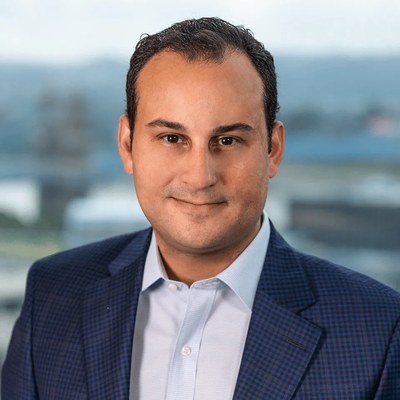
Angel J. Mena-Aguilar, MD, FACP, is Chief Medical Officer of symplr, a healthcare operations software company. A board-certified internal medicine physician and former residency program director, he spent 11+ years at TriHealth and continues to oversee resident training. His innovation roots run deep: he was on the core team at Halo Health that built the first cloud-based clinical communication and collaboration platform, chaired its Physician Advisory Council, and became its Chief Medical Officer in 2019. His signature focus is tackling physician burnout through technology and education, spanning population health, medical education, and clinical-communications innovation. Connect with Dr. Mena on LinkedIn.
Related Resources
- symplr: symplr.com — healthcare operations software (Dr. Mena’s company)
- Episode: AI Security Risk: The Massive Mistake Companies Make with Aaron Puckett
- Episode: Why AI Agents Are Healthcare’s Next Biggest Security Risk with Pranava Adduri
- Topic: AI Ethics & Governance
Guest
▶ Full Episode Transcript
Chris Hutchins: Welcome back to the Signal Room. I'm Chris Hutchins. Every week we try to get past the demo and into the part nobody puts on the slide — what it actually takes to make AI work inside a health system, and what happens when it doesn't. My guest today has lived both sides of that. Angel Mena is an internal medicine physician who came up through the floor of primary care, then residency and program director, training the next generation of doctors. He's now chief medical officer at symplr, sitting over the operational backbone of healthcare — credentialing, scheduling, workforce, compliance. He spent more than a decade at TriHealth, and he helped build one of the first cloud clinical communication platforms over at Halo Health. He's got a line I keep coming back to: you can't just layer AI on top of a broken process. Angel, welcome to the Signal Room.
Angel Mena: Thank you very much for having me today, and for that kind introduction.
Chris Hutchins: It's my pleasure. As I looked at your background, it was clear to me you've got some things our audience will really be interested in hearing about. Before we dig in, give me the short version of who you are, what you do at symplr, and maybe a little about your personal story. What brought you into the medical profession?
Angel Mena: That's always a great question to start with. The way I like to address it: in my experience as a program director and an educator of the next generation of physicians, you interview a lot of people, and you learn the reasons people go into medicine. You end up with three main categories — you review their personal statements, and this includes myself. You went into medicine because you wanted to make a difference for your community; or there was a medical reason, personal or a family member, that convinced you; or you had a parent who was a doctor. Those shape the reasons. For me it's been a blessing to be involved in technology and startups from the beginning. As a physician, I've always been able to make my community better one patient at a time. As an educator, every patient one of my residents touches is a patient I have the opportunity to help. And in the technology world, everything is exponential — when we introduce a platform that reduces friction in healthcare and helps deliver better care, now I've been able to touch so many more patients at a time. My journey started as I was beginning my practice and was asked to consult for a clinical communication platform, and since then it's been a fantastic experience in healthcare technology.
Chris Hutchins: It's amazing to me. In light of some conversations I've had recently, the unbelievable administrative burden we've been layering on clinicians over the last couple of decades — with all of our so-called technology improvements — the weight of what you do as a physician is enough by itself to be a full-time job. I always find inspiration when I talk to someone like you who's got all these other things going on — administrative and executive oversight, coaching residents, being on a show like this — and then thinking about how much further you can go in terms of your impact, patients being seen by someone you've trained, and then all this technology work on top. AI is not for a hobbyist, and clearly you've understood technology in a whole different way. I just want to acknowledge that. I'm quite sure you've got a family you're taking care of as well, which makes all of this even more mind-blowing. So thank you for what you do.
Angel Mena: I appreciate it, and I get that a lot — how do you do this, how can you have your head on one side and then on the other? I have a vision of the near future where a lot of the things I do administratively will be facilitated in a way that lets me focus on the things that really matter: taking care of the patient, spending time looking at the patient rather than sitting in front of a computer, spending more time with my residents as I coach and mentor them into the profession of medicine. But to date, it is very difficult to navigate the waters of the administrative side and the clinician side.
Chris Hutchins: Being on the more technical and data side of healthcare, I think there's a level of misunderstanding when it comes to adoption of this stuff. Technical people get really excited about cool stuff, but at the end of the day, how many of the things we develop as hobbyists and try to force on our clinical people are actually supporting the real mission? Is it actually making things easier for you? Is it giving you more time with the patient? These are the things we've got to dial in — and we'd better do it quickly, because AI is moving faster than any industry, and in healthcare in particular it's of the utmost importance that we get our act together. So let's talk about your journey a little. You were a practicing internist, a program director training residents. What did you see from inside the exam room and the teaching service that made you want the seat where the operational decisions get made?
Angel Mena: The main thing was that we want to participate. Clinicians want to make things better; we want to solve the problems we see in healthcare day in and day out — and our voice wasn't there. On one side I had that desire to help, and on the other I was in the right place at the right time when someone raised their hand and said, can you come help us solve a problem? I said, absolutely. That led to conversations, and we developed a clinical communication platform. That was a problem we needed to solve at the time. We always talk about fragmentation and silos in healthcare, but just twelve or thirteen years ago we were really broken in communication. We had no way of knowing who was on call, who was taking care of a patient. You had to call a unit, talk to a unit clerk, figure out who the nurse was, and it was written on a piece of paper that was already outdated because things changed on the go. So we wanted to solve that problem. I call it my university in technology, because you go from being called in to provide your clinical expertise to sitting with a UX team, a marketing team, the product team, and then you're on the road with a sales team trying to get your product out to health systems. At that time I was just starting my clinical practice.
Chris Hutchins: Because clearly you didn't have enough to do, right?
Angel Mena: So that gave me a little more flexibility to get into the technology side as well.
Chris Hutchins: It's amazing. I'm sure you've heard this, and by the sounds of it you've been advocating it: we really have to stop the approach we've taken for so long, which is let's build it for them. No — you've got to build it with them. One of the things I've told a couple of the chief innovation officers I've worked with over the years is: you're really good at solving difficult problems, but the challenge I see is you're not asking the people who need the solutions the most. You're doing some cool stuff, I don't argue that — but if you ask a physician, I don't care what their EHR platform is, what their pain points are, they've got a list. That's your experience too, right?
Angel Mena: Yeah, absolutely. But I think there's a reason they're not asking. They're acknowledging that the work we do is very hard and that we have to dedicate our time to our patients, so in a way they're trying to protect us. But the problems we're trying to solve have to come from whoever's at the bedside — and not just the physician, but the nurse, the respiratory therapist, the physical therapist. These are the people who really understand what's happening at the bedside and how to solve those problems. So we have to figure out how to pull them into the conversation and then go find the solution, the vendor that's going to help us.
Chris Hutchins: There's a reality I think people aren't cognizant of many times — I'm sure you've run into this. There's an expectation that an executive running an organization should understand things that others have spent an entire twenty-year career developing the skill set and knowledge to do. It's a misplaced expectation of who's responsible for them to understand enough to make good decisions. It's one of the things I've advocated for and written about recently — it's the responsibility of a chief data officer like me. I had to figure out what level of information could inform the CIO to go ask for budget. I might have to dial it in differently for the chief operating officer, who has less understanding of the technology — he just needs the facts, verifiable facts, and needs to be able to trust them. So it's on the people dealing with this in the trenches — whether it's a development shop or your innovation group — to come to you with the information you need, serve it up concisely, so you have what you need to execute, or to tell us, look, this isn't going to work.
Angel Mena: It's interesting. In that journey through the clinical communication platform startup, my former CEO and founder — when we would go out on the road and talk to health systems — we learned really quick that you have to target what we call the three amigos. And sometimes it would be the three enemigos, the opposite of friendly. You need your CFO, you need the COO or CEO, and you need the CMO — the chief medical officer, not marketing, because that confusion happens a lot — and with medical I'm summarizing everyone who's clinical, because sometimes it's a chief nursing officer. You needed that combination, but the message was different. With the chief medical officer: how are you going to improve the outcomes of your patients, how are you going to reduce friction and give more time to your physicians and nurses? When you talk to the CFO, you bring a conversation about ROI. It's an industry where it's very difficult to put a hard ROI on things, because some of the outcomes are very difficult to measure — but they're going to want to hear how you build that ROI around the platform. With a chief operating officer: how do you facilitate the processes that improve operations? So the message needed to be tweaked depending on who you talked to, but at the end of the day they also need to come to the table together and understand how each one supports the other. It was an interesting learning curve for us.
Chris Hutchins: The CFO conversations are the really challenging ones to frame, because the things we're talking about are actually reducing risk, reducing readmission rates, reducing costs — but things that aren't on the P and L. You can tell me you're going to reduce length of stay, but I have to budget the way things are actually flowing today. It's a really hard hurdle to clear, particularly with something like a hospital-acquired condition. They'll give you credit for the last day — the lowest-cost day, when you're leaving — if you've done something to influence it, but in reality the cost explodes as soon as that acquired condition occurs, and then it goes flat for an extended period. That's a massive cost that doesn't fit the model they like to use, which is the normal admission: they come in sick, they have a procedure, a few days later they're gone, no complications. That's what they model for you.
Angel Mena: Yeah, that's the conversation. For the most part it's very difficult to impact that top line, so you're making your argument about how you can improve the bottom line — cost savings and other ways of delivering the outcome and the value we're offering.
Chris Hutchins: I would probably want to advocate for the one measure I'm pretty sure you'd want: look, we are reducing mortality. This is not a calculation — you want to meet the people we save? We can do that. It's a quality-of-care and outcomes conversation, and for goodness' sake it's a PR boost if you're getting a reputation like that. This is the kind of conversation that should be happening within organizations, and when you have a chance to educate a board, that's a great opportunity you shouldn't miss. Similarly with your CFOs — most of them are very passionate, but you really have to figure out their language so they can get what you're saying and figure out how far they can trust it. That trust piece is where it gets a bit tricky when you don't have a guaranteed bottom-line number to give them.
Angel Mena: At the end of the day, you want to show you're delivering better care. How do you measure better care? If you hit mortality, if you hit different metrics, and you're delivering better care while engaging more with your team members, your staff, your employees — that's the goal, and that's what the board and your executive leadership want to hear. How do you go about that? What are the processes, the technology, and the people you're putting in place to make sure it's sustainable and that you can scale? Because what we're seeing a lot of is: how do we increase access in healthcare? And to increase access you either acquire, merge, or implement new technology — but all of that needs to be scalable.
Chris Hutchins: So let's get into a bit of a sensitive area for a lot of people. A lot of the conversation around AI is really chasing the clinical demo. You work in the unglamorous layer — credentialing, scheduling, compliance, contracts — super fun and exciting stuff, I'm sure. Where is AI genuinely delivering right now, in production, not in a pilot — actually getting real results?
Angel Mena: Operationally — you framed it as quality, safety, and contracts. In the contracting world, we're able to summarize and redline things way faster than we used to and get that process moving; that's almost table stakes now when it comes to AI and contracting. In quality and safety it's the same — summarizing, understanding timelines, when things are due and need to be submitted so we can move along the credentialing process. In scheduling, we can leverage AI to anticipate staffing needs and understand what competencies are required for specific needs. And in clinical practice — I'll go a bit beyond, because that's where we've seen AI really show itself, not demo AI but the real thing — in imaging. Stroke diagnosis, coronary disease diagnosis — that's very strong, where AI is helping us. And documentation: we're seeing a lot of strength in AI being practically applied for documentation.
Chris Hutchins: Here's a challenging one. We hear that most pilots are failing. Let's talk about what actually makes them fail or stall. You said you can't layer AI onto a broken process, but most systems can't fix those processes fast enough. So are we about to spend five years making broken processes run faster and calling it transformation?
Angel Mena: This is my personal opinion — I've never been a fan of pilots. If you think about it, the amount of energy and people's time you have to invest in implementing and driving adoption of a new technology is enormous. How do you do that for a smaller opportunity, when you're really trying to show the value of a new technology? Is the commitment really there to drive the engagement so you can show the value of the platform? That's my biggest challenge with pilots. I believe it's extremely important, from the customer side, to partner with a vendor — after the appropriate vetting and governance process — that you feel is going to be your partner. You start at a point and then you might need to develop more throughout the cycle so you can achieve what you were looking for. Now, when it comes to AI, take that and consider the technology cycle of AI nowadays: by the time you finish a pilot, you're probably moving on to the next thing, because it's changing that fast. You have to understand that things are moving pretty fast now.
Chris Hutchins: The stuff people are starting to realize, because they're hitting some bumps in the road, is that this is not a typical development-cycle evolution. The speed you mentioned is really rapid, and by the time you realize you've veered off — because things drift for a variety of reasons — you may be at a point where you've really gone off the rails. You think you've figured it out, and then you realize you put some bad data in — okay, let's get rid of the data — but you've already trained the model. When you sign off on governance for an AI model, you need a game plan with continuity to keep that thing from going off the rails. That brings me to a leadership concern: how does a leader tell real improvement from expensive automation of dysfunction? They may not even be aware of some of the things under the hood.
Angel Mena: That's a great question, and I don't know that there's a great answer to it yet. In fact, I've been having conversations with groups that are trying to define exactly that — how do we call this a success? Sometimes it's very difficult to put a metric that's already been leveraged in healthcare against it. You need more data; you need to understand how it's implemented, how it's adopted, how it's driving change, how it's replacing processes that were standardized and working but are now shortened in time. I don't believe we have the right answer for that yet, but as we go through more of these implementations, I feel like we're going to start defining success in the AI world in healthcare.
Chris Hutchins: That leads into the sign-off question. What has to be settled first, before someone signs off — what has to be true underneath?
Angel Mena: First of all, we need to define ownership. What we see in healthcare many times is: I'm a physician, I raise my hand and feel like I need this AI technology — or a group of physicians does — and we take it through the current governance structure, but because it's technology it falls under IT. As we discussed about choosing technology and the failure to bring the right subject-matter experts into the conversation, it's the same with ownership, implementation, and adoption. As an IT or IS expert, I'm not going to be the one to drive adoption, so I need you to partner with me in delivering this. So I'd always say ownership is extremely important. Define success, whatever that is, and then how do you sign off? The one thing that still scares me in this world of AI and multiple vendors is security. You can't sign off on new technology and have shadow IT in healthcare — that's a huge problem. You need to take every technology through the same process of vetting on the security side, because we know what a risk that is.
Chris Hutchins: It's an interesting thing to deal with — ownership from so many angles. When you talk about process, data, process ownership, governance — what's the thing teams skip that keeps coming back to bite them?
Angel Mena: Not specifically about data, but the governance processes in general — I feel like they create the framework to advance, but sometimes they can slow down innovation. Let me make my point. Many times when we raise our hands in the clinical world and want to drive innovation, we get in front of this governance pathway that slows down the process, and unless you have a very tight system in place, you're going to get disengagement from the clinician who really wanted to drive change. So you have to have a strong governance structure with tight processes — and there has to be some vision. I'll give you an example. Recently we wanted to make changes in how we track data from the ambulatory setting — from wearable devices. Any visionary in healthcare and technology will tell you: you have to leverage those wearable devices, track the data, determine how it comes into your system, how you're going to analyze it, and how you're going to improve care based on it. But if that goes through layers and layers of governance — the first layer being clinical approval — and it's taking forever, you're going to disengage the people who really want to drive innovation.
Chris Hutchins: In that case — I've seen this before too — if the academic exercise is how governance has been approached in the organization, the next thing you know you're two and three levels down from the person who really owns it. Which leads to the big question for me: in your experience, who needs to be in the room to make these conversations effective — to where you get to conclusions, and to policies that are actually carried out?
Angel Mena: It definitely needs to be multidisciplinary and multi-departmental, but the initial idea or innovation needs to be vetted at the clinical level. Call it what you wish — chief clinical officer, CMIO, CNIO, or a group of them — vetting the idea with the right vision and saying, yes, let's move it forward. Now you start to size, price, and cost the whole idea — from IT and IS, compliance, risk, executives — so you have to go through that process, but you've received the clinical stamp. Now let's size it. Whether it falls at the top or the bottom of your priority list depends on many variables, but clinically you stamp it and move forward. We can't just slow down on the clinical side.
Chris Hutchins: I totally agree, and that's one of the things I've taken seriously working with organizations as a chief data officer. There are a lot of people who are going to throw up the caution flags, and I love that they do — I don't need to do that. What I have to find are the things we can say yes to that are actually going to make a difference and start to relieve the burden and pressure that takes you away from what you went into medicine for — to help people — not to work in the EHR and key things in while the patient's probably annoyed because they're not getting the face time they used to.
Angel Mena: Absolutely. I'm a believer in processes and in the multidisciplinary approach of groups and committees. But you can't govern everything by committee. At some point someone needs to make a decision and move things forward. It happens a lot in healthcare, and sometimes I'm guilty of it too — but it's just about making the decision and moving forward. Things are moving very fast and we need some help.
Chris Hutchins: If you listen carefully, I think you might hear the amen corner of the entire clinical community. You've framed this very nicely. So let's talk about shared governance — what it looks like when clinicians, IT, and operations all have a stake and maybe don't all want the same thing. And by the way, risk management, legal, compliance, the CISOs — all of them are very busy, and they may not want this to be a big part of what they're doing. But they really do need to be at the table.
Angel Mena: I believe there are multiple permutations of what that group looks like, and you've outlined the right groups. I'll go back to: if this is a clinical process, you have to have a clinical group moving things forward from the clinical standpoint. And if you figure out how to get the legal side to move faster, let me know — because that's something we're always looking for. You know what they say: once it goes to legal, it's there for months.
Chris Hutchins: Well, hopefully some of this will feel good to you. In my most recent experience working with a health system, I found it amazing that some of the people who historically, from a role standpoint, wouldn't even want to talk about it — because it was too complicated, too risky, they didn't want to contribute to a decision with downside — at that organization there was more than one person on the legal team who was enthusiastic. When we brought something to be considered, they were really aggressive about going through it; they knew what the stakes were, so they processed things very quickly, giving us the things we needed to pay attention to. But they were helping accelerate, not slow it down — same with the CISO and the risk and compliance people. So there are people like that in most organizations. At the same time, a lot of these people are carrying a significant workload, because the provider sector tends to be overstretched — probably the more significant reason being that we have regulatory bodies essentially trying to figure out how to reimburse us less for what we do in the provider space. But let's talk about the human side now. Burnout is running through everything at this point on the clinical care side. From your career, I'm sure you've had to figure out how to balance and manage it yourself. With everyone now selling AI as the cure for burnout, have you seen it quietly make burnout worse? What does adoption look like from the floor, not the slide deck?
Angel Mena: That's an interesting question. I recently had a conversation with a couple of primary care physicians who've been practicing for about thirty years. They went through the changes in documentation — paper charts, then the EMR, then the next thing, and now they're in the AI revolution. They'd say: I see a lot of patients, I'm exhausted at the end of the day, I spend a lot of time communicating back and forth with everyone who needs to take care of my patients — but I don't want to introduce another technology. I've figured out my process; as much as I'm going to complain, if I introduce something else, it's going to disrupt my day. So there are still opportunities in the clinical workflow world where I don't know if we're going to solve their problems — they've already figured out their processes, and we just have to acknowledge that. Now, for the other group of physicians, it's working very well. Tools like ambient AI, where documentation has been facilitated tremendously — it needs some tweaking and adjustment, there's still some hallucination, we need to be on top of it, but that's just going to get better. It's worked tremendously in reducing what we call pajama time — documentation and EMR time after your regular hours. And when the patient's in the office, we have time to look at the patient. You're not documenting at the same time; you're taking your time to look at the patient, have a conversation, listen, do a good physical exam. Those things were very difficult in fifteen minutes.
Chris Hutchins: I'm glad you mentioned this. I think we've gotten some things really goofed up. We wanted to make things more efficient, but the main objective was to improve billing — so we did away with the transcriptionist and decided the doctor could do the documentation. I think we replaced the wrong function, and here we are trying to dig out of that now.
Angel Mena: I agree. We were so focused on what we spent the most time on day to day that we tried to put AI around that, instead of understanding how we ended up spending so much time in the EMR. You start thinking: it was because of all the regulatory requirements, all the billing and coding, all the other stuff that bloated your documentation. I ask myself: if we had gone first for those things with AI, could that have solved our documentation challenges? Because we've always been documenting — before and after the EMR — and I think we still want to. I believe we still want to be the ones expressing our thoughts, our clinical assessments, and our plans. Whether now you have an AI tool that takes what I'm verbalizing and turns it into the regulatory components that satisfy the requirements — and then you're done. So I wonder if there's going to be a flip in how we leverage AI in the clinical arena for documentation, billing, and coding.
Chris Hutchins: To me that's a natural evolution, and I hope people are already working on it. If you can get accurate documentation using that technology, it naturally lends itself to coding workflows where you don't need a whole bunch of coders — because if you've got a clean documentation record, the coding piece is entirely rules-based. I know people have some great stuff in that space that's doing extraordinarily well and outperforming humans, which is great. That bridge can be a really big differentiator, and I'm hoping we start to see some of that coming out at scale pretty soon, because it's definitely needed. So — a CMO or CMIO is about to sign off on a big implementation this quarter. One thing: what do they settle before they sign? And where can people find you?
Angel Mena: Let me clarify — am I wearing the vendor hat or the customer hat?
Chris Hutchins: What I'm getting at is the biggest thing they should understand before they sign — and then, second, how people can get in touch with you for your expertise and guidance, because the conversation has clearly hit some things a lot of listeners are going to want to talk through, since you've got a lot to say in a lot of different arenas everyone's working in and probably struggling with.
Angel Mena: From the CMIO, from the health-system standpoint, you really need someone to have ownership — because I need to build a relationship with that person, group, or role. This is going to be a journey; there are things you're going to ask me to do, and I want to sit down and understand your needs, the problems you're going to solve, so we can develop it together — especially when you're talking not about point solutions but at the platform level, where you touch so many groups, departments, and variables. You want the right people connected on a quarterly basis, doing business reviews, defining the next goals and the next measure of success, and coming back to review. The analogy in the healthcare industry is that this is an ongoing quality-improvement project, with a specific process and methodology, where you have to plan, do, review, and be nimble and adapt to the changes that are coming.
Chris Hutchins: Nimble and adapting — I don't think we're often accused of that in healthcare, unfortunately. You mentioned the regulatory stuff. There's so much pressure coming from every direction, and these arbitrary regulatory mandates come out from time to time — they give you a target, you get to the eleventh hour, you've spent a ton of money getting ready, and then they're not ready. It's incredibly frustrating.
Angel Mena: Yeah. And going back to your point about governance, the legal team, risk, and compliance — I do agree with you: there is a culture shift. People now understand we need to move at a different pace, at all levels. When we talk about administrative burden for clinicians, those same administrative burdens exist in all those other groups, and they're also trying to figure out how to implement their own technologies to keep processes moving. Once we get that culture shift — we need to move forward, we need to adopt, we need to show success from all layers of the healthcare industry — I think that's when we're going to find the right formula.
Chris Hutchins: As we wrap up, there's something you've highlighted here. When you're dealing with all these different functions — it's cliche, but if everyone owns it, no one owns it. So in that ownership conversation, I'm seeing a lot of bumps, because if you're in operations and I'm in the clinical space, I have a good sense of what information I can put into a model without exposing anything from a HIPAA standpoint. Independently, the operations people have the same sense and are comfortable they won't put the wrong things out there. But the gap is the piece neither is responsible for, and there's risk there — because, as I'm sure you've seen happen inadvertently with gen AI, it's very likely to try to find a bridge for that. And if it finds that bridge, everything becomes exposed and it introduces risk. I'd love for you to weigh in on the best way to put some formal structure around that. Some organizations are bringing in a chief AI officer, maybe even fractional — whatever we want to call that role — and I don't think that's the biggest cost. What are your thoughts?
Angel Mena: That's a great question. Every year we release a survey — we call it a Compass survey — because we want to make sure we're aligned with the direction of the industry. The focus is to get insights from the clinical group and leadership, the technology leadership, and the operational leadership. It's getting better year over year, but when we started doing it three or four years ago, the dissent in the objectives and goals of a fiscal year across those groups was more than 50 percent. Obviously the technology group was focused on technology — and now we hear a lot about security; the clinical group was into burnout and delivering care; and the operational side was focused on supply chain and staffing, which were big problems. We've always felt those were the three groups we needed to target to make sure we're aligning. But with AI, as you mentioned — what is that connection, that bridge between one and the other? Who's going to show what that gap is? Is AI going to do it, or do we need a human? I believe AI is going to help us connect better and find the bridges between one group and the other, especially clinical and operational — now I feel they're more connected, and that's what our survey says. The framework is still going to be to look back at your processes and make sure you have the right ones in place — leverage AI to find those processes before you institute technology that's going to build those bridges. It's a tough question to answer, I'll give you that.
Chris Hutchins: It is. One of the things I've experienced myself — and I'm sure you've found some of these too — is that I've been working in an AI model, just building some efficiency for myself, and I'll ask it if it can do something, and all of a sudden it's gone and connected to other pieces of my model that I didn't authorize and never intended. It's about solving the problem, and it assumes that if I'm asking, I want it done. So the big takeaway for me in that space is: if you're going to have people using the technology, they have to be trained on how to prompt it. Because if you don't do that, these things are going to happen, and even in the administrative area it can go off the rails. It's really hard to hit the reset button once these things have been trained — they're going to remember it whether you want them to or not, which is a significant problem.
Angel Mena: A hundred percent. For the most part, for us, that's being involved with gen AI tools. When you're talking about agentic AI — where you have an agent that lives in operations and clinical and elsewhere — they're generating their own connections, their own problem-solving capabilities, and we want to make sure there are guardrails around that, that we humans are monitoring what's happening in the background.
Chris Hutchins: I could not have said that better. For my listeners: when the episode goes up, there will be show notes with all kinds of information and ways to get in touch with Angel, and probably some good reference material as well, because I want to make sure you can really benefit from his expertise. Angel, I can't thank you enough for being on the show. As always, I've learned a whole bunch of things from you, and it's been an absolute pleasure. Thank you so much for coming on.
Angel Mena: I appreciate the time, the questions, and the conversation, and I've learned a lot from it today as well. Thank you very much.
Chris Hutchins: Thank you. And that'll do it for this episode of the Signal Room. Thank you, and goodbye.