Healthcare AI Leadership: Trust, Psychological Safety & the Seven Dimensions of Credible Authenticity
with Larry Kuhn
Larry Kuhn, Founder and CEO of AspireVue, explores what happens to leadership when AI enters the equation. The conversation examines how leaders must evolve their decision-making frameworks to remain relevant, how to maintain human judgment in increasingly algorithmic environments, and what distingu...
Show Notes
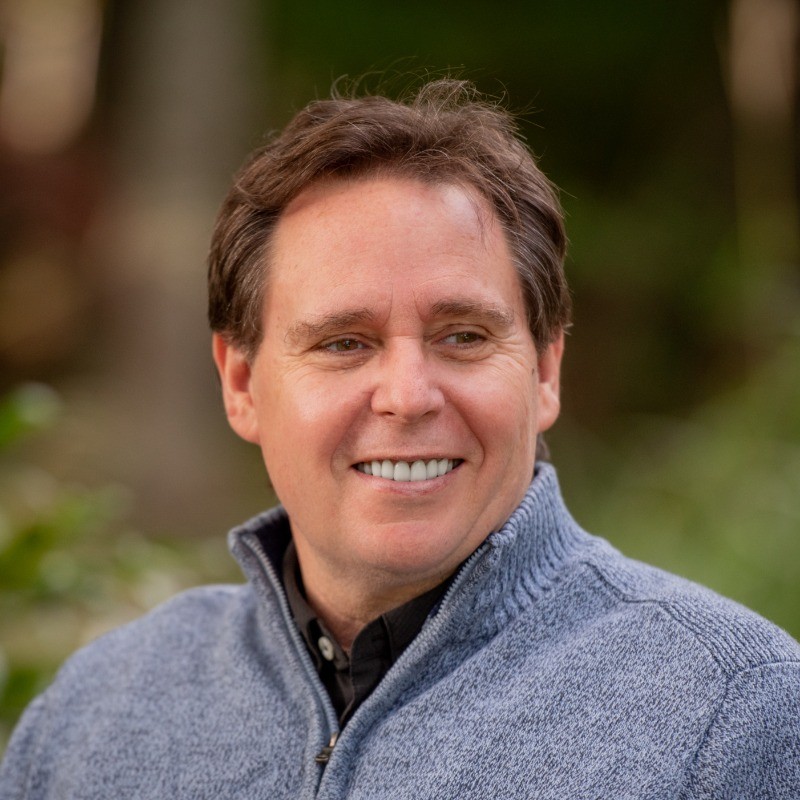
Leadership in AI starts with trust, and the data says leaders are starting from a deficit. Only 25% of employees say they trust their CEO, and just 21% strongly trust their organization. Dr. Larry Kuhn, clinical psychologist, Founder of AspirVue, and President of Prepare to Change, has spent more than 3 decades helping healthcare organizations, Fortune 500 companies, and government agencies rebuild the trust that AI transformation demands.
What We Cover
- Why trust is the single greatest barrier to healthcare AI adoption, and what the 5-decade drop from roughly 70% institutional trust in the 1970s to 25% today actually means for leaders driving change.
- Dr. Kuhn's Seven Dimensions of Credible Authenticity framework and how to translate each dimension into behaviors employees can feel in daily interactions.
- The 3 predictable fear responses employees exhibit during transformation: moving against (aggression and control), moving away (disengagement and avoidance), and moving toward (minimizing problems behind a false calm).
- Why 50 to 70 percent of adults cannot recall a primary caregiver who was consistently available, and how those attachment patterns shape workplace responses to AI disruption.
- The leadership practices that create psychological safety for AI adoption, and why no amount of technology can substitute for genuine human connection during periods of disruption.
Key Takeaways
Trust is relational, not informational. No amount of data, slide decks, or ChatGPT output can replace the lived experience of a leader who shows up consistently, follows through on commitments, and grounds decisions in evidence rather than sales pitches.
Fear is a predictable response to uncertainty, and it has a shape. Leaders who recognize the 3 fear patterns can meet employees where they are rather than misreading disengagement as resistance or false calm as alignment.
Credible authenticity is a practice, not a personality trait. Being reliable, real, relatable, ready, and rational shows up in small repeated behaviors over time, not in a single all-hands speech.
Frameworks & Tools Mentioned
- Seven Dimensions of Credible Authenticity (Kuhn, AspirVue)
- Trust at Work research paper
- Three fear responses: moving against, moving away, moving toward
- Psychological safety frameworks for transformation
Chapters
- 00:00 – Leading Through AI With Trust
- 02:10 – Trust Tax vs. Trust Dividend
- 05:45 – Why Trust Is Declining at Work
- 10:20 – Psychological Safety and Fear
- 14:30 – AI Transformation and Job Anxiety
- 19:00 – Reliability and Authentic Leadership
- 25:40 – Full Disclosure and Trust
- 30:10 – Credible Authenticity Framework
- 32:20 – How to Connect with Dr. Larry Kuhn
- 33:00 – Closing
About Dr. Larry Kuhn
Dr. Larry Kuhn is a clinical psychologist, Founder of AspirVue, and President of Prepare to Change. He has more than 3 decades of experience helping healthcare organizations, Fortune 500 companies, nonprofit executives, and government agencies navigate transformation. His paper "Trust at Work: The Seven Dimensions of Credible Authenticity" is gaining traction in leadership circles nationwide.
Related Resources
Related episodes:
- Healthcare Leadership, Operational Reality, and System Signals
- AI Governance in Healthcare: Just Culture & Trauma-Informed Leadership
- Good People Are Quietly Quitting And Your Company Is the Reason
From The AI Health Pulse:
Related topic: Healthcare AI Strategy
Related article: Healthcare Data Strategy
Guest
▶ Full Episode Transcript ~5,205 words
Chris Hutchins: Today's episode is what I've been looking forward to for a while, because it gets at the heart of something every organization is grappling with right now. Not just what's changing, but how we help people feel safe, seen, and empowered as that change happens. That's exactly why I'm thrilled to be joined by Dr. Larry Kuhn. He helps leaders navigate the complex change environment that we're in with clarity, trust, and authenticity. You talk about something called trust tax, and the trust dividend.
Dr. Larry Kuhn: Organizations struggle, number one, to stay ahead of the pace. I mean, it's like the train is leaving the station, and here we are running because it's going at a much faster pace than what our normal relationships and functioning can manage at your paper.
Chris Hutchins: I think it's even more striking when you think about the fact that only 25% of employees can they trust their CEO. If we can't trust the people that are setting the course, this is a really uncomfortable place for people to be, which kind of gets into the really this the whole concept of psychological safety that you talk about.
Dr. Larry Kuhn: One of the very first things that they have to establish is can I trust you? I mean, it goes back to a very primal place. So I have several ideas that I've passed along as I've studied this over the years. Yeah, I I think I'll say the first one is.
Chris Hutchins: He helps leaders navigate the complex change environment that we're in with clarity, trust, and authenticity. As the founder of AspireView, president of Prepare to Change, and as trusted advisor, he's advised Fortune 500 companies and leaders, nonprofit executives, government agencies, and many others that his specialty is guiding leaders through transformation without losing what makes them human. With over 30 years helping healthcare organizations navigate an ever-changing landscape, he provides expertise in succession planning, leadership development, talent management, and many others. So our conversation this morning is going to start with a topic that I think is near and dear to a lot of people's hearts, and hopefully they'll be inspired once once they hear the conversation this morning. Dr. Kuhn has recently published a paper. It's called Trust at Work: The Seven Dimensions of Credible Authenticity, a Powerful Framework that is now making waves in leadership circles. Dr. Kuhn, welcome to the show.
Dr. Larry Kuhn: Well, thank you, Chris. I'm glad to be here.
Chris Hutchins: Well, I really want to jump right in. So why don't we start where the white paper begins? You write that trust isn't just a soft skill, it's actually a measurable business driver. And you talk about something called trust tax and the trust dividend. Can you break that down for us a little?
Dr. Larry Kuhn: You know, many, yeah, thank you. Um many years ago, Stephen Covey actually wrote a book that business travels at the speed of trust. And I rediscovered that, you know, years later. And I'm like, wow, it really goes back to the heart of things. There is so much change that's happening today. And when change happens, one of the natural reactions that people have is they go back to their very most fundamental need. And this goes back to Maslow and uh Hertzberg, that we need safety, we need security. Even Erickson talked about a developmental need that a child has. One of the very first things that they have to establish is can I trust you? Will you drop me? Right. Or not. And I mean, it goes back to a very primal place. And I think that's what a lot of people really are facing now with all of the, I guess what we would call it, you know, the disruptive innovation that's happening. Organizations struggle, number one, to stay ahead of the pace. I mean, it's like the train is leaving the station and here we are running because it's going at a much faster pace than what our normal relationships and functioning can manage. And I think that's what leaders are trying to grapple with is how can they maintain just those basic needs when they don't even know themselves exactly what's going to happen. So that trust is a big issue for folks.
Chris Hutchins: It's striking how tangible the numbers are. As I was looking at your your paper, I think it's even more striking when you think about the fact that only 25% of employees say they trust their CEO. This isn't just a PR problem, it's a culture and performance issue as we're going into a period of time where disruption is absolutely a certainty. If we can't trust the people that are setting the course, this is a really uncomfortable place for people to be, which kind of gets into uh the the really this the whole concept of psychological safety that you talk about. You lay out what I think is one of the most practical frameworks I've seen in in your seven dimensions of credible authenticity. Let's walk through those a little bit and give the listeners a quick tour of what they are and why they matter.
Dr. Larry Kuhn: Yeah, I I think that's a good idea. You know, the foundation of it, I mean, just first defining the problem. You mentioned a statistic. When you think about it, just the problem itself, I think within organizations, people are dealing with processes, technology, and people. And the processes and technology are kind of operational. Right. I mean, we can kind of stay ahead of that. And we think we can check the boxes on those. We've got our process right and our tech right. But the people thing is where the problems happen. People are the areas where there's the greatest asset. They're the greatest expense, often within an organization with direct labor. They are the greatest headache and the greatest risk, particularly for HR and senior leaders, whenever you have a risk of turnover, and that's huge cost. So the people side of things is what often ne gets neglected when we're focusing on tech and processes. Now, when you're dealing with the people, and this is kind of defining what the environment is that we're actually dealing with here when we think about trust. You think about it, uh there was a stat I found that said uh back in in the 1960s, um I think it was 1972, they identified that uh only about um 60 or 70 percent of the population actually said, yes, I would trust the average person that I meet. That was about one out of two. Well, that has dropped significantly now to 2025, where we're at only about one out of three actually would say, I trust people that I meet. So you've got a couple of things going on here. Right apart from the AI issue, number one, people's trust has dropped in other people. Right. The second thing is imagine that you're working with a team and you're a senior leader, and this struck me as well. Not only do people just fundamentally not trust as much in general, but also you're dealing with people here who 50% of them, as a clinical psychologist, I understand this, but 50% of the population, when they're asked a question like this, and I often pose this question, can you remember a time when a primary caregiver or someone like your parent was available and responsive to meet your either physical or emotional pain, and they responded to it? Can you remember a time that that happened? And I'm struck. I mean, uh at the low end, about 50% of the population says, I can't really remember somebody that was there to meet my need. I was there to meet their need. Well, in my just anecdotal evidence of people that I ask that in a clinical setting, about 70% say, I really can't remember my parent or someone being there to meet my needs. So imagine you're sitting with a team. Right. You've already got one out of three say they're going to trust people to begin with. And then about 50% of those at this point, even at the conservative side, would say, yes, I have a secure attachment, meaning I'm not anxious, avoidant, or disorganized when I'm connecting with others. Right. So we've already got a very, very few people that really have the capability of truly trusting and being authentic, just to begin with, let alone throw in the AI piece. So I mean, it really is underscoring, I think, the need for leaders to understand the core fundamental needs that people have relationally to establish trust. And that's why I wrote the paper, you know, what is it that we can do to increase trust with others? And I think there are some steps that people can take.
Chris Hutchins: That's that's really uh it's a sobering fact that you you bring up because in the healthcare space, we're already starting from a a place where we're uh we're we're we're swimming upstream. Most people aren't going to get their care because and excited to go to the doctor. They've already got some things going on that are concerning to them. And if there's trust in that relate, it's not there in that relationship, that can be problematic. But what we're talking about is something even more basic that everyone is dealing with on some level, and probably I don't know that we're talking about it. We certainly aren't uh unless someone like you asks those questions. I don't think we're really considering just how significant this is. And the the lack of trust is really ingrained in who we've become. Um we've got generations now that are, you know, much, much further down uh what I would call the spectrum in terms of the influences that that are now really driving how they think and what they value.
Dr. Larry Kuhn: Well, think how bad it's gotten. I mean, just you know, because I think we have to really get a a tangible sense of the problem. In the 1970s, people said they trusted the government about seven 70% of the time. Wow. Think about what, you know, in terms of other institutions like the church and law enforcement, it was really pretty high. Right. At this point, the sources that we typically would think you could trust, the government institutions, law enforcement, physicians, organizations, that's dropped now from about 70% down to 25%. And it and currently 21% of employees strongly agree that they can trust the organization. So that means that there's about 80% that don't fundamentally trust the organization, 43% trust their manager to act with integrity, 25% trust their uh CEO. And uh even at this point, 24% of employees report trusting colleagues to actually do what they're said they're going to do if they're working at home. Right. I mean, the it's it's really gone down, and and I think, okay, you know, certain positions you're not necessarily going to trust. The car salesman, not likely gonna trust them. Why? Because they have, you know, a dog in the fight, they're they're trying to make some money. But even these types of positions like pastors, physicians, right, police officers, other family members, co-workers, that has extremely eroded. It's a I mean, it is really a high need, I think. And we're not just dealing with processes and technology here with AI. That's right. It's a it's a relational thing. So I have several ideas that I've passed along as I've studied this over the years. Yeah, I I think I'll say I'll say the first one is reliability. One of the most important things that a person can do is basically do what you say you're going to do, follow through on it. And I think sometimes we're so busy. Uh I I've seen people who it used to be that if somebody said they were going to do something, they'd do it. Now, I'll drop the ball sometimes, and I think we all do, but I think it's becoming more and more common that, well, you know, we did our best, and as long as our intentions were good, then it's it's defensible. If we want to follow through, if we want to build trust, then I think we need to follow through on what we do. And I I don't know, Chris, what has it been like for you? How do you see it? Are people following through or or not?
Chris Hutchins: I think increasingly um I'm finding it's not as reliable as it was a few years ago, for sure, in my own experience. But I think we have kind of shifted a little bit away from experience when it comes to trust. And we were thinking we've been thinking about it more as the promise and you know, the intention, as you mentioned. But in reality, how we're deciding what risks we're going to take or you know, what decisions we make, it really is weighted on the experience side, no matter what someone says. And, you know, I think we don't often articulate what our real trust level is in a in the workforce environment for a variety of reasons. And I think that's something that we really need to talk about a little bit more. I mean, if we want to pivot over for a second and talk about the fear that's out there, just because of the AI discussions that are being had, what we're talking about, we have no shot at getting AI right if we can't address the underlying fears and trust issues that exist. I think we're on a really bad trajectory if we can't actually course correct. So if we're talking about what AI can do, that's great. But how does that really help a person that that's really dealing with a level of uncertainty that they've never had to deal with before? How does a leader go about creating psychological safety in a time where so many people are afraid of being automated out of their job, or heaven forbid they identify a workflow that could be automated, but they're scared to actually raise their hand because they don't want to lose their job?
Dr. Larry Kuhn: I think that's right. I think fear is probably one of the core just visceral reactions that people have when an individual feels threatened, either their life or something that they value, something they that they care about. I mean, I have a motorcycle. If I lend my motorcycle to someone else, if they're an experienced rider, I'm okay. But if if they're not, I'm feeling a high level of anxiety simply because something that I care about is threatened. And when people are fearful, they'll usually respond in one of three ways. They'll either go aggressive and move against. So that means they become more controlling. Kind of what we would say today, it's a popular term, narcissistic, where they become very manipulative and forceful, blustery if they're ever challenged. Um they just double down. Sometimes they'll overpromise and underdeliver. So that's one way that people respond. But not everybody's the same way. Some people instead, they instead of moving against, they'll move away. So they'll they'll shut down, they'll avoid, they'll distract, and they'll disengage. And this is kind of what we see happening. Who's gonna raise their hand? Right. Because when you do, it's like standing up, you're more likely to be a really good target of getting shot. And this is the fundamental thing. I mean, there are two primary motivations, and I'll come back to the third piece that people often behave when they're threatened. But there's two primary motivations that people have. One is they're really motivated to look good. And the only thing that like exceeds that is they're even more strongly motivated to not look bad, right? To not be embarrassed and humiliated and ashamed. Well, here we have a situation, like let's say we're in a team environment. People sitting around that table are highly motivated to not look bad. And so what they'll often do is move away. Right. They'll pull back, they have shame because they think that, hey, I don't know what really might be going on here. The worst fear that I have is that someone will discover that. Right. And then what they'll do is either move away or move to control situations and become aggressive. So those are patterns that people typically will develop. And we sit and wonder, well, why is it that people are reluctant to engage? I think it does, like you say, go back to that core thing of fear, and people will either move against and aggress, move away. Or the third thing that they do, Chris, is they'll move toward. And when they move toward, they try to fix it, they try to make everything okay as if it is not a problem. And so they minimize the problem and and it and just say, Well, we're all good. And they they move to this kind of phony posture where often underneath that are hidden agendas where people have their own stuff going on, but they're not likely to disclose how they really think or feel. And so there they sit. So here comes management along with an AI idea, we're going to do something, and you've got a whole lot of people that are either going to respond aggressively, they're going to shut down, or they're going to act as if it's all okay and not say anything because they're afraid that if they say something, they're going to get humiliated and maybe lose even more. Right. So I mean the I think it just really underscores to me the dilemma that this poses for supervisors and leaders. How do we create some of that space that we can increase trust because we have to pay attention to these core fundamental needs. And I think the first one really is hey, just do what you said you were going to do. Yes. Don't underpromise and and don't overpromise and underdeliver. Right. Instead, I think we need to underpromise and over-deliver when it comes time to keep our commitments so that we can be reliable. That's the first one.
Chris Hutchins: So it brings up a really interesting dilemma now because how do you trust what you're hearing from the top? For example, if you're the CEO and you get out front of your team and you're saying, hey, no one's going to lose their job, that's about as big of a risk that you could take because deep down you understand that disruptive innovation is going to change things dramatically in the types of work that we can do now, it changes. So if you can empower your workforce to be able to do more meaningful work and eliminate some of the more routine and monotonous tasks, while that's an exciting thing from a technology and innovation standpoint, you still have to get past that trust barrier so people can really open up their thinking. Because the reality is if you want people to really be part of this evolution and bring value, particularly in healthcare, because we know that the resources we're talking about, there's a scarcity. There's not a surplus in a lot of, particularly in clinical roles, um, you know, whether it's nursing or providers. So this is a really big obstacle that we've got to be able to overcome. Um, and it's not even the technology conversation right now. This is are we are we setting out to do something that we can actually stand by our commitment that we are this is all about empowering our workforce, not replacing them. But what's the balance? Because the numbers probably do change. I know to IT transformations I've seen have dropped workforce by over 50% over a period of four or five years.
Dr. Larry Kuhn: Well, this is this is to me one of the most important pieces in terms of strategies that leaders can have to build trust. And that is to be real. Authenticity requires full disclosures. And that means that leaders can, one of the fastest ways you can undermine trust is to not give the full picture. And I'll give you an example. As a founder within my own company, I go out and meet with investors. And I heard an investor just last last week say to me, one of the things that can shoot somebody as a boat and sink their boat is if they have a founder who comes and they don't tell the whole picture. They paint the rosy picture, right? But they don't disclose the problems. Because then what happens when, I mean, everybody kind of knows, well, there's another side to that coin, and they're only showing me the rosy side. Right. Don't shine me on. What we really need to do is have authenticity, and that means to both present both sides of the coin. Here are the upsides, and here are the challenges that we're facing. I know that a lot of times when leaders, particularly in healthcare, I've got some clients now that they're facing these same types of challenges that you outlined. And it's very tempting for a new leader or even a current leader to not want to appear bad. Right. So they'll shine them on and make it look like it's a little bit better. They'll embellish, they'll paint a rosier picture. All the while, the big question in everybody's mind is you're coming in and something's going to change. How is it going to affect me? So what I'm seeing, particularly with some leaders that I'm working with, is a very strong and intentional dedication and commitment to providing the full truth. See, this is the thing. If if I don't trust you, if I'm the leader and I don't trust you to be able to handle the whole story and I shine that on, right, then how can I expect that you're going to trust me? It just doesn't happen. Right. Years ago, I mean it's a simple little story, years ago. Ago, I used to need to drop off my kids, right? And years ago, I was married before, and I would need to drop off my kids at a particular time. And there were times that I'd be running late, even if it was five minutes late. So what I do is I know this. I would call and I'd say, I'll be there on time, you know, I'm sure I'll make it. And then I drive as fast as I could to make it. Only to then, you know, be a couple minutes late. And there my ex would be going. I knew it. Right. You always, you know, I can't trust you to tell the truth. And there was an element of truth to that because I feared what the repercussions would be. So I thought, well, if I can just kind of finagle a little bit. And I even had told myself, convinced myself, that I was still being truthful. Right. And I had to take a hard look at myself and say, look, I need to be willing to deliver the bad news as well as the good news. And that is hard for anybody.
Chris Hutchins: Right. Now that that's such a great example because it it is it's really ingrained in us, even on a personal level like that. I mean, fast forward into our workplace environment, how much more likely are we to be um overly concerned about the repercussions like that? I mean, yeah. It's very remarkable. I think as we're we're starting to kind of wrap our conversation, I think what would be really um helpful, I think, is get give me some of your what's your what kind of advice would would you give uh leaders who are trying to navigate and you know get get their organization through such a massive AI shift. I mean, back in the 90s, we all of a sudden had jobs that were impacted by the internet. I think this is I I don't even know from a order of magnitude standpoint standpoint how I mean this is a what is it, a hundred X, a thousand X? I don't know. It's crazy.
Dr. Larry Kuhn: Yeah. Well, these are the things that it boils down for me. Number one, be reliable, follow through on what you said you're going to do. Number two, be real and authentic. Give as much, you mean you can't tell everything, but give as much of the picture as you can and don't hold back. We don't want to do that with with uh clients or patients. We don't want to do that with colleagues either. Number three, I think that it's important for people to see us, particularly as leaders, as being relatable. The more that we can conjure this feeling of we're similar to them. We're not really different. And the truth is, I really don't know right now exactly what's going to happen either. See, we think that as leaders, we have to present this facade that we've got all of it figured out, and that does not engender trust. If we can just be honest and say, hey, I don't know, and I will keep you posted as much as I can. Right. Let's have actually some space that we can carve out, and I think this is important, to carve out space where people, it's okay for them to weigh in with their concerns. Right. See, if we say, hey, we've got our story all sewed up and we're selling that, if people feel like they're being sold something, there's no space for them to have concerns or to raise issues. So what do they do with that? They won't raise it because they don't want to look bad. So then they go and talk about it with everybody else. So I think that's the piece of relatability. Can we be, you know, active and proactive about creating space? The other thing I think is we have to be ready. By readiness, I think about that story, you know, that most people, a lot of people unfortunately, can't even remember an experience where there was a person who was responsive and available to them. Right. So that's about creating that space so that you can be available to respond to what somebody needs. So being real, being receptive so that you can create the space to hear the challenges that people have. And then finally, I think we need to do our homework. We need to be able to provide a rational explanation for what's going on, not to minimize that or just kind of polish it off. No, let's let's get our facts and deal with facts and not just conjecture and not just being salesy about it. People can smell it a mile away when there's something fake. Let's be rational and provide some good evidence for what is going on, what we know and what we don't know. That's what I like to use. Here's what I know, here's what I don't know, here's what we know for sure. We're committed to everybody being successful here as best we can. But we're not gonna be your sugar daddy. We're not gonna take care of everything. You may have some challenges here, and we we really are facing challenges.
Chris Hutchins: No, uh, that's incredibly powerful advice. And I think the message really needs to get out there loud and clear. This is not a drive-by kind of fix we're talking about. This is gonna take a commitment. You can't create that space by having a an open town hall meeting every six months or something.
Dr. Larry Kuhn: No, it is fundamentally trust, it is a relational thing. It's not something that you can solve with information. And that's been the challenge recently is we think that the problems that we're facing can be solved with more information, more internet, and more ChatGPT. Just solve it with information. We can't. It has to be that connection. And that means vulnerability on both sides.
Chris Hutchins: Dr. Kuhn, I I think as we wrap, it occurs to me that there's probably a lot of listeners out there that are in a situation where they're having to make these kind of leadership calls. How can someone reach out to you? Yeah, you know, because I I'm certain that there's going to be people who will really need your expertise. I know I'm inspired by it, and I know I have to start thinking a little bit differently about how I even influence things in my own family. But this is important. And, you know, if if you could just tell folks how they can they can get in touch with you.
Dr. Larry Kuhn: I I find myself, I guess, wearing two hats most of the time. One is as a clinician, and I'm working with people on on deeper issues, you know, relating to anxiety and depression and things like that, or relationships. But then I spend most of my other time, and this is most of the time, is working with leaders. And uh, so how can people reach me? We have our website is AspireView, that's A-S-P-I-R-V-U-E, Aspireview.com, and they can connect with me there, Dr. Larry Kuhn, D-R-L-A-R-R-Y-K-U-H-N at Aspireview.com. And I would be more than happy. We've got a team of coaches, and this is these are the type of things that we just provide another set of eyes to help people. Often I have CEOs who just call me and they say, I need to bounce something off of you. And sometimes it's an ethical type of dilemma. Sure. And working through that with a lens to look at the relational side, that can make a huge difference.
Chris Hutchins: Dr. Kuhn, thank you so much for your time and sharing your insight and your leadership in the space. For all of our listeners, if you're navigating change, thinking about AI, or just wondering how to make your workplace more human, go and read the seven dimensions of credible authenticity. It's a must. The link you'll find in the show notes. And again, I will make sure that you have all the material that you need in the show notes to be able to follow up with Dr. Kuhn. And hopefully we'll all get on the get on the this the same train and we will get through this together and have amazing success and look back in amazement. But that's gonna be that's what we hope. Thanks, Chris, for the opportunity today. Well, folks, that's that's gonna do it for this episode of The Signal Room. As always, if this conversation resonated with you, please share it with a colleague or your leadership team because the future of work it really starts with trust. So until next time, stay tuned, stay curious, stay human. And thanks for listening.