Watch the full episode
Denial Management: Hidden Leaks Your Hospital Can't See
with Gretchen Heinen · Founder & CEO, Authsnap
Clinical denial management starts long before an appeal letter, and Gretchen Heinen, founder and CEO of Authsnap, explains why AI can only work the denials a hospital can actually find. A registered nurse whose career runs through emergency care, utilization management and the revenue cycle, she joins Chris Hutchins to talk through fragmented payer communications, clinician review, patient information buried in clinical notes, and what small and rural hospitals need.
Show Notes
Clinical denial management starts long before an appeal letter, and Gretchen Heinen, founder and CEO of Authsnap, explains why AI can only work the denials a hospital can actually find. A registered nurse whose career runs through emergency care, utilization management and the revenue cycle, she joins Chris Hutchins to talk through fragmented payer communications, clinician review, patient information buried in clinical notes, and what small and rural hospitals need.
What We Cover
Gretchen describes the many ways payers tell a hospital that a claim has been denied: a letter in the mail, a spreadsheet of denied claims, a phone call, remark codes, a clawback, or a payment that arrives with little explanation. Five or six people in different departments may each hold a piece of that process, and Gretchen says many denials are never captured as a result.
The conversation also covers why clinical denials, where a payer decides a patient did not need the care, differ from administrative ones, and how Authsnap shapes its work around what each hospital and its staff need. Gretchen talks about AI governance and protecting patient information, building trust with hospital teams, the measures Authsnap reports to its customers, and where she expects the denial landscape to be in three years.
Key Takeaways
Finding the denial comes first. Because payer communications arrive through so many channels, Gretchen says technology that only reads one feed of claims misses the rest. Her question for any vendor promising to fix denials with AI agents is how the tool fits each workflow inside the hospital.
A person reviews every case. Authsnap involves a human in every single case because the information is clinical, and at minimum a nurse reviews it before it goes out the door.
Patient information hides in the note itself. Gretchen points out that a doctor's note often repeats the patient's name throughout the text, so leaving out the top of the page does not keep PHI away from a language model. Her team builds de-identification processes and firm barriers between the data and the model, and trains staff on what can and cannot go into tools like ChatGPT.
Rural hospitals work the problem with fewer hands. One person may handle billing, coding, case management and discharge planning, and patients waiting to go home come before a stack of denials. Gretchen says Authsnap has seen rural hospitals affected by $750,000 to $1.5 million a month in denials.
Measure the work and fix what is upstream. Authsnap tracks denials processed, how many are overturned and paid, and turnaround time, shares a dashboard with each customer every Friday, and meets with hospital executives about preventing denials before they happen.
Figures and examples in this episode reflect Gretchen Heinen's experience and Authsnap's observations and are offered as leadership insight. They are not validated outcomes and are not legal, clinical, billing or compliance advice for any specific organization.
About Gretchen Heinen
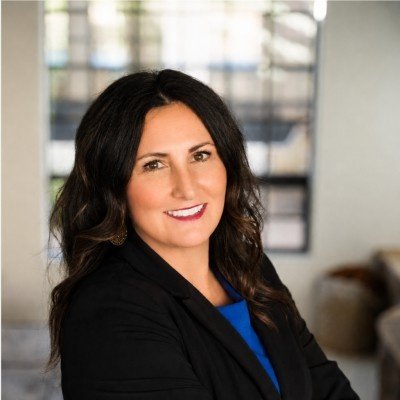
Gretchen Heinen, RN, BSN, PHN, is the founder and CEO of Authsnap, an AI-enabled healthcare technology company focused on reducing insurance denials and improving patient access to medically necessary care. A registered nurse, she brings more than a decade of experience across trauma ICU, emergency medicine, utilization management and revenue cycle operations. She founded Authsnap after seeing in utilization management how manual denial workflows led to lost revenue and delayed care. Connect with her on LinkedIn.
Related Resources
- Authsnap
- Gretchen Heinen on LinkedIn
- Related episode: Agentic AI in the Healthcare Back Office
- Related episode: Your Practice Needs a Clearer View of Its Money
- Related topic: Healthcare AI Strategy
Guest
▶Full Episode Transcript
Chris Hutchins: Welcome back to the Signal Room. I’m Chris Hutchins. Quick thing before we start. I wrote a book. It's called Beneath the Signal. And it's about the human work behind trusted data and responsible AI in healthcare. Search Beneath the Signal on Amazon now and pick up your copy. Okay, here's our episode. And my guest has been working on the side of health care that is probably one of the most painful for patients. It's really dealing with denials and all the crazy gyrations you have to go through to get somebody to pay for what you thought they were giving you coverage to pay for. So Gretchen, it is really, really great to have you come on the show.
Gretchen Heinen: Thank you so much, Chris. I am excited to have our conversation today. It's something I'm very passionate about.
Chris Hutchins: You gotta have passion to want to work with denials.
Gretchen Heinen: It's true.
Chris Hutchins: Amongst other things in healthcare for sure. But before we jump into that, I'd love to hear a little bit more about you. You tell the audience about your background and where you're from and you know what led you to be working in not only in the technology and AI space, but also in the healthcare space.
Gretchen Heinen: Yeah, yeah. So I've always known I wanted to be in healthcare since I was a little kid. I remember volunteering for the hospital when I was in middle school and high school. So I knew I would be in the healthcare space. my mom is a nurse, and so I think I watched healthcare growing up quite a bit. And through the course of different chain of events, I ended up becoming a nurse as a second career and Did a career in microbiology for a little bit before becoming a nurse and have been a nurse now 17 or 18 years around there. I always forget
Chris Hutchins: It's amazing.
Gretchen Heinen: how many years it's been. but yeah, I spent a lot of my career in public health. I spent a lot of it in the revenue cycle side, the care management side. I've worked everywhere from, you know, the emergency room of trying to make sure patients have the correct status and that insurance is gonna pay for their care from the minute they walk in the door all the way to making sure once they leave the hospital they have the care they need after they leave. So I've always been in that type of space where insurance dollars intersect the care we deliver. So sort of the intersection between administration and the clinical practice.
Chris Hutchins: it's a but it you know, it's always remarkable because there's such a passion that comes along with what you're doing and your why is having seen things over and over and over again, I suspect.
Gretchen Heinen: Mm-hmm. Yeah, that's exactly right. So I knew about three years ago, I was an early adopter of ChatGPT, and there was always this piece of me with insurance denials and prior authorization that bothered me when it came to the clinical denials. So the denials where the insurance company is saying, This patient doesn't need this care. These are very different than a denial, as you know, where maybe we got the birth date wrong or the CPT code wrong or something like that. But these are ones where literally the insurance company is coming back and saying, like, I don't think this patient needed this care. You could have provided lesser care or they didn't need this drug. What I was seeing a few years ago was we didn't have great technology that could solve that problem because there was so much human thinking that had to go into those. And with the advancements of AI and just even what I was seeing early on with ChatGPT of what it could do, you know, just conversations that I was having with the LLM back in 2022. you know, it was promising to me that we were heading in a direction where this would be possible. And so I made a few phone calls in, you know, when we started the company in 2023 to some engineers, to some former doctors that I had worked with. You know, I was really talking to anybody who would listen. And essentially, one of my phone calls was to a former doctor that I used to work with that I loved working with. And he always cared about this problem as much as me. And, you know, we were like, let's do this, let's solve this problem. And we'll surround ourselves with the right engineers. We'll we'll figure this out as we go so that we can build the technology. We already understand the problem very, very well. it's just a matter of building the technology around the problem. So that's kind of how we got started. But yes, it was a very different scenario going from a nurse to a CEO. There's a big learning curve there about how to run a company, a Delaware C corporation and all of that I had to learn. But you know, there's lots of really smart people you can surround yourself with to teach you and to guide you. So that's exactly what I did.
Chris Hutchins: Brilliant. So what are some of the things that, you know, being at the bedside and taking care of patients yourself, what are some of the things that taught you that a founder doesn't typically have going into launching a new business?
Gretchen Heinen: I thought a lot about this answer actually, Chris. what it taught me and that it continues to teach me are two things. Number one, we're not doing CPR. Okay, so nothing is as urgent as it feels in a founder's journey. so it really gave me a perspective and a calmness to approach every problem that we deal with every day as a company. Because I'm always reminding myself, like at this current moment. While we're solving this problem, there is nobody who is in need of CPR at this second, right? Like there's no bigger problem than somebody whose heart has stopped, and you're, you know, within 10 feet of that problem. so that's number one. And the second thing is it taught me how to solve problems with very limited resources. So a lot of times in the hospital and in healthcare. You have to solve a lot of complex problems and you don't have all the tools you need, especially in the care management space where you have to solve these patients' home problems and their transportation problems and communication problems. So very different than like, do we have this type of IV line in the stock room, right? These are like social problems you have to solve. oftentimes there are things where there's not enough financial resources to solve their problems. So I learned in all those years at the bedside. How to solve a problem with not everything I need. And that's, you know, founding one one right there.
Chris Hutchins: So what was there a particular moment or an experience that was that milestone for you or you look back and like something just clicked and you said, I've got to do this.
Gretchen Heinen: Yeah, actually there were several patient scenarios that really bothered me throughout my career. And I think there was just an accumulation of it bothering me more and more and more over time. So I wouldn't say there's, you know, one specific patient that I was like, that's it, I have to do this. I think there was probably one situation that pushed, you know, that just broke the camel's back, the straw that broke the camel's back. And I can give you some of those examples. one was a patient who had cancer and had been ordered a three drug chemo regimen. And how chemotherapy is approved with insurance right now is most insurance companies use the same accredited cancer guidelines website. And we all go there and we look up the type of cancer. And what is the approved therapy for that type of cancer based on what the FDA says or what research says is best? so it's really like the go-to place for seeing what is best practice for this type of cancer. Well, a lot of times with that, you have to order it exactly as it's stated on that reference. So if it says it's a certain dose or it's a three drug regimen. you know, if it's something really specific on the timing and administration of the drug, you can't you can't defer from that at all. And so I had a patient who had really poor outcomes because they were only ordered two of the three drugs because they were too sick to get the third drug. And so the care got the whole thing got denied. So this person did not get the other two drugs that they could have benefited from because they couldn't have the third. And because there was a denial in place, it caused a delay in the care. you know, and there was really poor outcomes for that patient. Our own another story is our own software engineer that works at our company lost his mom to essentially a denied claim. She had a twin sister, or not a twin sister, but a sister with the same cancer gene risk as her. And they the sister got the preventative screening she needed and the Treatment to prevent this cancer from growing. And his mom didn't, and she passed away. So, you know, it's stories like that where I watch patients not be able to get the care they that they needed because of a sheet of paper, not because we actually can't give the care. Like we have the doctors, we have the resources, we have the medicine, we have the technology, but a sheet of paper was preventing their care. Like that just eventually became so unacceptable to me that I just was determined to make sure we solve this problem.
Chris Hutchins: Thank much,
Gretchen Heinen: Yeah,
Chris Hutchins: much
Gretchen Heinen: that would
Chris Hutchins: better.
Gretchen Heinen: be amazing. Mm-hmm. And we're striving towards that. I mean, I even have conversations we have conversations at the at the legislative level. we have a specific person on our team that just interacts with policymakers and trying to make sure that we're you know, solving this problem at the very top level. I've had collaboration calls with some of the top insurers in the country. I've actually gone and spoken to them because I do think this is a situation where you do have to collaborate together to solve it because what's happening is There has to be rules, right? In order for this system we have in place to work, there has to be like, okay, if this, then yes, if this, then no. I mean, there's logic-based rules that have to be factored in order for policies to work. But just like everything that we know that has the word policy around it, there's interpretations of policies. And so it's trying to see how we can utilize the technology we have now to guide us on those interpretations of policies without creating AI wars between the insurance company and the providers and the health systems. And so we're really trying to take a collaborative approach at Authsnap with how we handle this. And we want to solve the problem. And in order to solve the problem, you have to have both people at the table.
Chris Hutchins: No, So there are a lot of denials that you know people don't actually end up seeing. but they're there. talk about the clinical denial and what is so different and why is that harder to fight than people would imagine.
Gretchen Heinen: That's a really good question. So what happens in denials management is there's a lot of ways that you can attack the problem. And there's actually many companies who are working to solve this problem. So it's a very saturated space. And we went into it knowing it was a saturated space and we didn't care because we saw a way to solve the problem differently than other people. And that's exactly what we went after. we went after how do we do this in a practical way? and so some of the things that we think about that are barriers to this are IT integration. So in clinical denials, you have to read the patient's chart, you have to read the payer policy, you have to look at what the insurance guidelines are, you have to look at what state this patient lives in, you have to check to see what type of insurance they have and what are those rules, i.e., is it Medicare, is it Medicare Advantage, is it a commercial plan? I know you know all of this, but maybe some of the listeners know. and so when you're trying to decide, did this patient need this care, which is a clinical denial, you have to factor all of those things in. And so IT integration into all of those different things I just described requires interoperability, which we don't have solved in healthcare in America. It requires cybersecurity. It requires HIPAA and making sure that we're following all laws related to PHI. And it requires a software to think like a human. So that is not easy to have a clinical decision support tool that is accurate and is using technology to make a clinical decision. So We created a solution that bypasses IT, IT altogether as far as an an integration. So we can do all of our denials work without an API call. We can do it without having to SFTP. Because what we saw was these hospitals, if you try to go that route, which many of our competitors do, you end up on a one to two year IT prioritization list. And we wanted to avoid that. So we're actually able to start within 48 hours of a signed contract, which is almost unheard of in the industry, because we saw that as a barrier to the clinical denials. And we said, okay, how can we get over that barrier? Here's the fastest way over it with the way that we do it. you know, there's many other things that are involved in that. budgeting process, you know, when you pitch a hospital, you have to have the whole budget committee approve this. It has to fit into a financial fiscal year budget. it usually has to bypass four or five people's desks. So we created a pricing model that didn't require that. So that's another reason why we can get started in 48 hours. Our our
Chris Hutchins: Easy.
Gretchen Heinen: quickest contract signing was actually about two business days. so we met with the hospital, like I think it was on a Wednesday, and we had a signed contract by Friday. Because we bypassed that budgeting committee. So, you know, we're just doing things differently at Authsnap so that we can move faster, we can adopt technology faster, we can help these hospitals faster. And, you know, when you ask, like, you know, what makes it more complex, it's because it's not just a matching exercise inside of your coding software. It's not just that you picked a wrong number or birth date or something is wrong. It's like so much has to go into it. We knew that there was a gap in this space, even with other revenue cycle companies. So we have partnerships with other revenue cycle companies where we are working behind the scenes of them to help them move faster with their clinical denials.
Chris Hutchins: Amazing. There's definitely been a need for that for a long time. I let's talk about, you know, some of the other aspects, you know, that aren't quite obvious to. to everyone else who so what are some of the things that you do coming out that come after that first denial? are there things that you systemically are doing that historically had were much more difficult and oftentimes things would just fall through the cracks?
Gretchen Heinen: Yeah, yes. In fact, this was our most surprising thing when we started the company. So, you know, we had known revenue cycle forwards and backwards at the hospitals that we had worked at, but that was, you know, probably five to ten sample size between me and my co-founders. But once we were behind the scenes of hundreds of hospitals looking at, you know, tons of different styles of how they handle things. We realized that there's actually a much deeper problem with this situation than anybody realizes. And that is that the insurance companies all have different communication methods to their hospitals and how they handle denied claims and clawbacks and communication regarding things. So, for example, some hospitals will issue the denial, but they don't actually, or some insurance companies will issue a denial. And they say, we're not going to take the money out of the account yet, but if you don't appeal within this amount of days, then we're going to claw back that number. Medicare does clawbacks all the time. There's other times where a denial will be issued and then you appeal it and like a check just shows up in the mail. Okay. So they just like pay the claim, but they don't really give you communication that they're paying it. It just has like the patient number on it. Sometimes they send a spreadsheet with the list of denied. Claims. Sometimes they give you a phone call and say this patient isn't authorized to have this night stay in the hospital. Sometimes they will send a remark code documentation where it's just a list of codes that they decided not to pay with, you know, certain patient names on it. And sometimes that comes like once a week. So I just listed like five or six different ways that the insurance companies might communicate with the hospital. So now imagine a hospital. trying to figure out how to create a process for managing their denials when some of it's coming as a letter in the mail, some of it's coming as money missing in the bank account, some of it's coming as a spreadsheet. You have to coordinate between everything from who checks the mail to who's in charge of the person looking at the actual patient's billing account. So you might have five or six different people who are involved in this process who work in different departments. They have different workflows and none of them communicate with each other. And yet all of that falls within the denials landscape. So whenever I see companies that are popping up and they're like, we're just building AI agents, or you know, we're an AI company and we're gonna come in and wave a magic wand and we're gonna fix your denials. I would love to ask that person, okay, tell me about this, tell me about this, tell me how. This is going to happen in this workflow in the hospital. Most technology companies do not understand how patient workflows work. They don't understand how a hospital actually has to create all of these different workflows most of the time manually because there isn't a good technology linking them all. They don't know how to work with that. So they end up not capturing all of the denials. They might work some of them that fall perfectly within their API calls. But if you really want to help a hospital, you literally have to sit down with five or six people and be like, okay, tell me how you do this, tell me how you do this, tell me who exactly opens the mail. And once this person opens the mail, what is the next step that they do? How do they get a letter, a denial letter to the care manager's desk or the billing encoder's desk or the VP of HIM? How does that actually get there? Do they walk it over? Do they fax it? Do they scan it in? You know, I mean like there's literally a thousand questions you have to ask before you can even begin to help a hospital.
Chris Hutchins: Yeah, One example was your elect explanation of benefits at the invoice level, it would tell you what was being denied on something. But that denial would never show up on the line item.
Gretchen Heinen: Mm.
Chris Hutchins: And I was trying to remedy that 'cause we had a massive, massive amount of volume. And we were just trying to clean it up and automate it. And they wanted to sell me a tool to do it. And they claimed that those things aren't together in any system. And I pulled out a paper EOB and I said, Nonsense. You got it. It's right there.
Gretchen Heinen: Mm-hmm.
Chris Hutchins: Patient gets it. That
Gretchen Heinen: Yeah, that interoperability is a giant problem because I mean, why would like in its example you just gave, where there's a secondary payer. So let's say it was an automobile accident, right? And so the patient has their medical insurance, but then there's also the auto insurance who's gonna help pay for this claim. And the patient's on the trauma ICU intubated, they can't even talk to you, right? Because they had a terrible car crash. So you're trying to deal with the family members and these two insurance companies that have totally separate systems. and then the hospital has a third separate system. I mean, like it's people just really don't they think that's all well, it's you know, we have electronic charts. It that means almost nothing. I mean, hopefully we're gonna get there with FHIR and you know, HL7 coming. but from every hospital I talk to, they're not ready for it. So we're ready as a company because we got ourselves ready so we could be ready for them, but without them, we can't do we can't do it without them.
Chris Hutchins: Yeah. No, here. what are some of the areas where you have some boundaries that you that AI's just not gonna be able to go and touch certain things?
Gretchen Heinen: Yeah, so I think the biggest thing for us is AI governance, is the first thing that comes top of mind with that question that you just asked, because we're in a situation where there are very few laws guiding all of us right now. There are some states that have some laws, and there's like guidance that has come out from, you know, the current administration's CMS and the AI The people guiding AI at the CMS level, you know, trickling down to us. We actually have someone who used to work at the White House for a presidential fellow on AI as one of our advisors at our company. So if any company is acutely aware about stuff that's coming out from the White House, it would be us because we're getting it, you know, directly fed to us. But the governance is the very first piece that we are very careful about, because it's I think what's happening a lot right now is there's a lot of LLM wrappers that are being built that aren't thoughtfully thinking about how PHI is going to be intertwined into these workflows, right? And so you have to be so careful about how do you how do you allow an LLM to be a part of crafting a decision without there being the patient's birth date, their name, where they live, any identifiable and any identifiable information in there. So that has to be really thoughtfully considered because a lot of people are like, well, that's easy. Just, you know, don't copy and paste the top part where their name is. Well, have you ever read a doctor's note? Because a lot of times they'll be like, Mrs. Jones reports that on Monday and their name will be all splattered in among the notes of the chart. So it's not as easy as just people think, you know, well, I won't put PHI in there because I won't copy. Any of the information, you actually have to build entire pieces of your software that de-identify the data, have processes for de-identifying the data, extremely well-built barriers between your data and the LLM that you're using for whichever part of it that you're going to use. So it's not even just a matter of is a human helping make this decision, which we do on every case. we have a human involved in every single case because this is clinical information. So at the minimum, a nurse is looking at this stuff before it goes out the door. It that's like one piece of it. But the bigger and more important piece is that governance and So we've spent a lot of time on our AI governance, making sure our entire team is trained, right? We have a lot of scenarios right now where people are spinning up a bunch of policies inside of their SOC 2 certification that never are even reaching the frontline people. So the training isn't even reaching the people. So you're sure you have a policy that says do it this way, but do your people know that policy exists? Do they know how to? What to put in ChatGPT and what not to put in ChatGPT? Do they know what's appropriate, what's not appropriate? Right. So we really strive to take a very practical approach to everything. What would a normal employee maybe accidentally do that they don't know is appropriate? And so it's almost going back to the very beginnings of HIPAA when you know we had to start thinking about HIPAA. How did you train Betty on the front lines? To not make a mistake, right? How do you train your employees what a phishing exercise is going to look like for cybersecurity? You know, that's the stuff that we do very thoroughly, in a including human in the loop for the clinical piece, you know, making sure our software is trained by humans, not by you know, OpenAI's general knowledge of heart failure. Our clinicians are actually training our software on heart failure.
Chris Hutchins: Right. And Talk about your approach to you know how you're developing because that matters a ton if you want clinicians to engage and really work alongside of you for this. And you didn't go build something and hand it over and deliver it to them, did you?
Gretchen Heinen: Yeah. Yeah. So I mean how we how we think about it with as regards to clinician involvement is first, what does the hospital need? Do they need us to write all of their appeal letters or do they need us to write only the appeal letters that their clinical team can't get to? do they need help sorting the denials into different clinical buckets or do they have that proficiency down? In a rural hospital, for example, you might have somebody that does five jobs. Maybe that person's doing billing, coding, case management, discharge planning all in one. That's all one role. So that person, when they get to the start of their day, this kind of goes into that conversation we were having earlier about do you have a billion-dollar problem or a million-dollar problem? Because the billion-dollar problem gets solved first, right? So if this pay if this person has all these patients that need to be discharged and then they have a stack of denials on their desk. What's gonna come first? They're gonna get those patients out the door, right? Because they have humans waiting on them. Paperwork from the insurance company is gonna come second. So when we think about like clinical involvement, we first look at the facility and what they need and what is their workflows and what do they need help and assistance with? What kind of lift do they need? From there, then it's involving them and giving them reports back about what we're noticing in the patterns. So for example, Your ER doctors on Tuesday night are constantly putting the wrong patient status for patients who have strokes. Okay, well, who's working on Tuesday nights? Maybe we need to go to that team that's working Tuesday nights and be like, hey, we're noticing a pattern that every Tuesday night the wrong status is chosen for strokes, and you'll probably find that some doctor was like, I didn't know that mattered because I'm care more about the patient's stroke than like a insurance button clicked, right? And so that's the type of stuff that you have to start working with the hospital's clinical team, their coding team, their billing team. They all have to be working together because every single person is a piece of that puzzle. And so we think about them holistically. How can we engage every member of the team? And we actually have a medical director who will meet with new customers and that's all this person does is literally look at their workflows. You know, figure out what's working, what's not working. And we've made recommendations. you know, that people have told me this is a terrible business model because you're working yourself out of denials or, you know, you didn't charge a consulting fee for this. And I'm like, listen, there is enough money in denials. I don't need to charge for every every piece of advice that comes out of our mouth. Okay. If we can help these hospitals with some small pieces of advice that can make big changes for them, we're gonna do it.
Chris Hutchins: Yeah, So
Gretchen Heinen: Mm.
Chris Hutchins: talk about some of the your experiences, if you wouldn't mind, where you've had great success working with provider organizations just because of the way that they think about it and
Gretchen Heinen: Mm.
Chris Hutchins: the way that they engage you.
Gretchen Heinen: Well, I will I may give you a shout out to your book because I just recently started reading it. But you
Chris Hutchins: Thank
Gretchen Heinen: talk
Chris Hutchins: you.
Gretchen Heinen: a lot about this, like trusted data, you know, trusted relationships in there and how if we're gonna solve these problems, it comes with trust. And the way to build trust in any relationship is number one, to listen and actually listen. not just listen for my turn to talk, but listen to their body language. I mean, you I have seen CFOs nearly in tears on a call because I was the first person to actually ask them, like, how are you doing? Your CEO just quit, the board fired so-and-so, you know, the you're in bankruptcy, you have to shut a critical unit down and now people have to drive 200 miles to have a baby or to get an ortho procedure. These are really heavy things that people don't factor in because our media is obsessed with talking about like how all of our healthcare systems have overpaid C-suites and that's why healthcare is so expensive. I Find that very hard to believe now that I've looked at the numbers. Okay. It's not the CEO's salary that is the problem here in the equation. Okay. And I might catch some heat for that, but I've seen these numbers. I've seen where the denials are happening. I've seen what's happening on both sides. Look, so have you. So if you can build a trusted relationship with these facilities, you can then start to see what their culture needs and you can see how their culture operates and how. you can make meaningful changes using technology, but also working with their culture. you know, I think that is so overlooked. And just being human, right? Just being human with people and being noticing if someone's having a really hard day or sometimes I'll just even send on Friday like something that has nothing to do with the sale. It has nothing to do with the the relationship. It's just asking the person, hey, how are you doing? I know you had a tough week. I just want you to know I'm thinking about you. You'd be shocked how far no one does that. I'm like, why aren't we human anymore? You know? So that's things that we do.
Chris Hutchins: You He had to be precise. cause he told me, look, a fraction of a percentage from a in the margin is the difference between people losing jobs and people not losing jobs.
Gretchen Heinen: Mm-hmm.
Chris Hutchins: If he's off by a fraction of a percent, it could be a hundred million dollars. I was like, Okay, I don't understand that kind of pressure. I don't live with that you know. How what are some of the things that you start to see and that you're looking for to understand the impact? is the is the organization shifting? Is there some cultural shift going on? Are there operational things that they're doing that you can look at and measure to know if they're really improving and if they're leveling up?
Gretchen Heinen: Mm, yeah. So what we measure are how many denials we're processing, how many are getting overturned, meaning they're getting paid, right? So we're appealing these claims and we're getting dollars back. So we have a dashboard for every customer that we share every Friday with them. And then we have a dashboard for all of our customers that we talk about internally. We measure things like how many days does it take us to turn around a claim. You know, how many days does it take us from the time that they notify us, it's our turnaround time, to when we get the appeal letter in their hands, to when it gets submitted. you know, so there's obviously very specific measurements that we do. and then we also have a monthly meeting with the executive, sometimes even more frequently, depending on what's going on with the hospital. where we are giving them strategies for upstream fixes because we want to work the denials that are within scope, not ones that could have been prevented. There will be plenty of work of denials that the patient fell outside of the guardrails of the policy. There's going to be well that well last time we measured it was 262 billion dollars worth of denials. this was in like 2019, 2020 that it was last publicly measured. So we could probably assume it's more than that at this point, six, seven years later. so I'm not worried about fixing some upstream things, bankrupting any denials management company. If anything, it's gonna help us to not do stuff that's unnecessary. So we wanna help them fix upstream problems so that we're only working the ones that we have to. you know, those are like the practical things that we measure. But the things that don't get measured are right now, every every week, every week, a physician spends 13 and a half hours on average on things like prior authorization and denials. Imagine if we could take that amount of time off of the physician's plate. How many more happy physicians would we have? How many less suicides would we have in medicine? How many happier administrators would we have? I have quit jobs before as a nurse because it was so overwhelming the amount of cases they were giving me that I couldn't have well-being in my life and meet the quotas. So how many more nurses can you retain? how many more patients can be satisfied? You know, so those are all things that are almost unmeasurable at this point, but they are certainly things that we are hearing and measuring anecdotally.
Chris Hutchins: Gretchen, if you don't mind me you know ask asking, could you talk a little bit about how you how you position your teams and what are some of the things that you are you're doing from a cultural standpoint that helps them is they're approaching your clients because that obviously makes a big difference whether or not
Gretchen Heinen: Yeah.
Chris Hutchins: you can be successful partnering.
Gretchen Heinen: Yeah, that's a good question. So I think, you know, when you asked earlier about what have I seen as a nurse that's helped me as a CEO, I would say this is probably the th if I would have add something to the list that's third, I would say it's this. And that is that not only have I worked at the bottom tiers of a hospital, you know, not that nursing is a bottom tier, but it's, you know, it's within the clinical space. It's not administration, you know. So you're you're the ones caring for the patient. In theory, you're quote below the doctor, right? I don't that's not how anybody really sees it, but there is like a hierarchy of care, of decision making for sure. so I have been the recipient of bad culture. You know, I have worked in places where the culture has negatively impacted me to the point that I couldn't have good well-being, you know, I'm not sleeping at night. So I vowed to myself that when we started this company, and thankfully, you know. Quite honestly, the reason I picked the co-founder that I did is because I knew he valued that stuff too. And he was also brilliant and extremely knowledgeable. But that was a factor, is like, can I work with this person? Does he see the world that I the way I see the world? Does he care about people the way I care about people? And I watched him as a physician care about people the same way I do. So I knew the two of us would create a culture. Very early on in our company, we hired someone to come in and help with culture to help us set, you know, core values and things that early companies probably don't spend a lot of time on because they're just so there's like, you know, a small amount of them and they're just trying to get things off the ground. But we focused on that very early on. And we also set standards and even our KPIs have stuff built into them about core behaviors that we're gonna follow as a company. And so for us it was embedding the same thing that I believe these hospitals need and how I want to see patients be cared for, we created that culture at our company. And I will say there have been people who have left because they didn't fit our culture. You know, and that's actually, in my opinion, the sign that it's working. If you have no one leave after you set standards, either you got really lucky and everybody fell within those standards or you're not actually withholding your standards. And you know, so we are just really careful about our culture. And I try so hard to care for our team exactly how I would care for a patient. Does this pay what does this patient person have everything they need? Do they have the resources that they need? Do they feel empowered to make their own decisions? So not that our employees are my patients by any means, but it's the same mindset, right? You want to empower these people. You have to do it with taking care of them and helping them to be able to take care of themselves and have what they need to make the decisions they need to make.
Chris Hutchins: I as we are kind of looking ahead, I'm I'd love to hear first of all a little bit about what you're most excited about 'cause I'm sure you're seeing some things now that you're getting traction on that you weren't sure maybe could even be done, but I'm sure you're starting to see it and you know, are there some bigger things that you're seeing down the road that A year ago you would have never imagined.
Gretchen Heinen: Yeah, well I feel like that happens every day with AI. you know?
Chris Hutchins: my gosh, yeah.
Gretchen Heinen: I think every day I am amazed and I'm also equally cautious because every time we step closer to a breakthrough in AI, we also step closer to cybersecurity problems. And so, you know, we take every new advancement that we are able to make with AI, you know, like using agentic AI coders. Like that's a big step, right? Is to have agents coding throughout the night while the human team is sleeping. you know, that's something that I when I thought about what we would be doing as a company, I never imagined I'd have employees that are AI agents, you know. There's things that we're seeing that can be done with technology across the systems right now that we once thought would never be possible, like this migration towards everything being almost like an app based tool or platform that hospitals are gonna, you know, order from a menu of apps. I mean, we're kind of heading in that direction. And that fundamentally changes how differently you build your product. If they keep all their data and they just tap into the app-based system, you know, we're preparing for that type of environment. And there's many people talking about that on quantum technology, right? Like we're on the very beginnings of quantum technology being applied into healthcare. that's something that I read up a lot about and we explore about and talk with our advisors about is you know, these these new advancements, how do we move towards them safely? And how do we be cautious? And at the end of the day, how do we protect our patients' data? How do we protect from cybersecurity attacks? You know, we really put a lot of thought and energy into that.
Chris Hutchins: I for you. I know that you really are passionate about trying to make sure that you're supporting the small and mid-sized hospitals that are out there in the community that don't necessarily have access to all of the technologies and things that they should. talk about what you see in terms of things that leaders in that arena may not be thinking about in a way that you would encourage them to. And
Gretchen Heinen: So, yeah, rural health is a big focus for us because our company, first of all, is based out of a rural community in the upper peninsula of Michigan. and both the fo the founders of the company have lived and worked in rural health. One of them still lives and works in rural health. I live in a city now, but you know, this is rural health is really important to us because what people don't For us, it's about access to care. And so if you have a rural health hospital or system that shuts down because they have so many denials that they can't keep their doors open, which by the way, on average, we have noticed between 750,000 to 1.5 million per month in a rural health hospital that they could be impacted by denials. So on average, a rural hospital can lose a million dollars a month on things that could be recouped. That's a million dollars of operational budget that could go back into their pockets every single month. But unfortunately, they don't have a staff member, they don't have a nurse to be pulled out and write appeal letters. They don't have a coding team that can manage all of these changes that happen with you know, their pay year contracts and keeping up with it. Sometimes they're behind on their charge master. So they don't even have the right billing you know, codes put in because their their CFO is so behind. I mean, I've seen CFOs that like worked for three weeks straight just to get their charge master in on time. So with rural communities, they have an extra squeeze on them. So we purposefully built our solution so that it can be used by rural health and it is used by rural health. So we love working and talking to rural hospitals. Sometimes we can help them, sometimes we can't. you know, sometimes they have a problem, sometimes they don't. But we are open to talking to any of them because even if we can give them some tips and pointers, if we if we can't come in and actually work their denials, we're happy to do that. but that is for us the essence of healthcare in this problem is that we have to have solutions out there that this small hospitals can use because there are you know, thousands of these small hospitals. And the bigger players in our space, when I go to conferences and I'm networking with them, they will tell me, Yeah, we aren't very good at helping small hospitals. Like we're just not built for it. We're built for scale. We're built to help the big guys, but we really don't do a good job of helping the small, the small guys, you know. And so when I heard that, that was like, well, let's build it then. Let's build something they can use because they can't use the big players. So let's use us. Now I'm not saying that's always the case, of course, but it is very hard it's much different helping a small hospital than it is a big one.
Chris Hutchins: No, But what do you what do you think the fight looks like in three years on denials? You think we move the needle significantly from where we are?
Gretchen Heinen: Yes, they do. Yeah. And I really think Authsnap is gonna be a part of that story. you know, th about a month ago, Blue Cross Blue Shield issued a essentially a memo, if you will, saying that they have noticed almost a billion dollars in up up billing that has come their way from hospitals and clinics, and they use the example of anemia. And how they noticed an increase in anemia diagnosis, but not an increase in blood products ordered. And so they're they're, you know, the note essentially said, Well, shouldn't we see blood products being ordered if we're seeing anemia? Well, I have my own thoughts on that because you don't always order blood just because someone's anemic, but they're already feeling it. So they're feeling the effects of this technology, and so What I believe is going to happen in the next three years is we are going to normalize out this denial problem because we're going to have more accurate billing that's being sent to the insurance companies. And in response, you know, as we know, with anything in the world, there's always an action and a reaction, right? And so there's going to be a reaction to the action that's going out there. And I believe that the people like at our company who are at the legislative table about this are gonna be the people who are sitting down to say, Okay, now we have technology that can help us on both sides to be more accurate about this. And I think we're gonna see a reduction in the denial rate. I really do.
Chris Hutchins: Your lips to God's ears.
Gretchen Heinen: Yep, that's right.
Chris Hutchins: Right. Gretchen, this Gretchen, thank you very, very much for coming on the show, for sharing your insights. the plane. If you just let folks know how to find you and how you like to interact with me, I'm sure you have.
Gretchen Heinen: So our website is Authsnap.ai. So like authorization in a snap is how I always tell people.
Chris Hutchins: Love that.
Gretchen Heinen: we're very active on LinkedIn. We you know, I'm active on LinkedIn. You can send me a message on LinkedIn. Otherwise, our website has many different ways, of course, that you can get a hold of us, email, call. We even have a denial tool on there that you can kind of guess what could be your outcome if you want to. put in a few of your numbers anonymously it will spit out some dollars that you could be saving. So that's how you can reach us.
Chris Hutchins: Awesome.
Gretchen Heinen: and even if you've had a bad experience with a vendor before, I would say try to let that hold you back because you can have a great experience.
Chris Hutchins: I love it. For the audience, as always, I will make sure that you have everything you need in the show notes. Make sure you go and check that out after you listen to the whole episode, after you smack the like button, then you subscribe, all those fun things, leave us a good review, that would be wonderful too. and So
Gretchen Heinen: Yes.
Chris Hutchins: I will see you soon.
Gretchen Heinen: Thank you, Chris, and congratulations.