Catching Liver Cancer Earlier
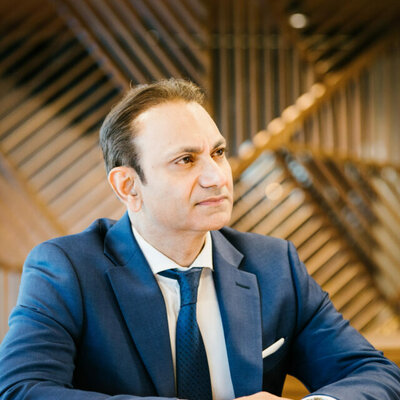
with Dr. Bharat Tewarie · CEO, Helio Genomics
Liver cancer almost never announces itself, and by the time there is a symptom, the window to cure it has often closed. Dr. Bharat Tewarie explains why six-month ultrasound surveillance so often fails the patients who need it most, how the blood-based HelioLiver test detects cancer early enough for curative options, and what the peer-reviewed CLiMB study showed. This conversation is educational and is not medical advice.
Show Notes
Liver cancer almost never announces itself, and by the time there is a symptom, the window to cure it has often closed. Dr. Bharat Tewarie, CEO of Helio Genomics, explains why six-month ultrasound surveillance so often fails the patients who need it most, how the blood-based HelioLiver test detects hepatocellular carcinoma early enough for curative options, what the peer-reviewed CLiMB study showed, and why he is pushing to retire one sentence: “we caught it too late.” He joins to translate this for clinicians and patients alike; nothing here is medical advice.
What We Cover
- Why liver cancer stays silent until it is advanced, and who is at risk (cirrhosis, hepatitis B and C, fatty liver, alcohol, obesity, type 2 diabetes)
- How current guideline surveillance works (ultrasound plus the AFP blood test every six months) and why follow-through breaks down
- The access gap: operator-dependent ultrasound, travel burden, and rural America
- What HelioLiver is: a single blood draw reading methylation on cell-free DNA, protein markers, and clinical factors
- The CLiMB study: prospective, blinded, MRI-referenced, 1,968 patients, and what it showed versus ultrasound
- How a result flows through the clinic: a Quest blood draw, EMR integration, and the positive or negative next step
- What the test is and is not for (patients at risk, not the general population)
- How the team guards against false positives in an organ that is already damaged
- Policy: House Resolution 1591, Liver Cancer Awareness Day, and the “coalition of the willing”
Key Takeaways
- Surveillance fails quietly. Dr. Tewarie cites Medicare data showing only 21% of patients later diagnosed with liver cancer had received even one ultrasound in three years; a blood test done in the same visit is far more likely to actually happen.
- CLiMB showed a real detection gap. In the peer-reviewed CLiMB study (published May 2026), HelioLiver detected 48% of cancers versus 28% for ultrasound, and for stage 1 the difference was 40% versus 10%, with ultrasound detecting zero lesions under two centimeters.
- Catch it while cure is still on the table. The goal is detecting cancer early enough for ablation, resection, or transplant; as Tewarie puts it, “every week matters,” and he wants to retire the sentence “we caught it too late.”
Examples Dr. Tewarie Used
- Medicare patients later diagnosed with liver cancer: only 21% had one ultrasound in three years
- A positive HelioLiver prompting an MRI after a negative ultrasound, catching a lesion that would have been missed
- Cases where the test flagged abnormal cell-free DNA up to six months before imaging could see the tumor
- The rural-health access gap, and a transformation collaborative (co-chaired with Microsoft) working on it
These figures reflect the CLiMB study and Dr. Tewarie's account. HelioLiver is a surveillance test for patients at risk, not a general-population screen, and nothing here is medical advice.
Chapters
- 0:00 Why this episode exists, and meet Dr. Bharat Tewarie
- 1:20 What makes liver cancer different: the silent disease
- 2:21 Who is at risk, and the road to cirrhosis
- 3:35 Why early detection matters so much here
- 4:12 Guideline surveillance, and why ultrasound follow-through fails
- 6:22 The national surveillance gap and rural access
- 10:09 What HelioLiver is and how the blood test works
- 15:16 The CLiMB study: design and headline results
- 20:16 Guarding against false positives in a damaged organ
- 24:00 Real-world evidence and what is next
- 30:17 House Resolution 1591 and Liver Cancer Awareness Day
- 39:03 What drew him to early detection
- 44:11 A call to action for clinicians and listeners
About Dr. Bharat Tewarie
Dr. Bharat Tewarie is a physician executive with an MD and an MBA and a career spanning big pharma and biotech. He is the CEO of Helio Genomics, the company behind HelioLiver, a blood-based surveillance test for hepatocellular carcinoma. Connect with him on LinkedIn.
Related Resources
- Helio Genomics
- House Resolution 1591 (119th Congress)
- Dr. Bharat Tewarie on LinkedIn
- Related episode: Outpatient Care Is Broken
- Related episode: Can We Actually Trust AI With Our Health?
- Related topic: Clinical AI & Patient Care
Guest
▶Full Episode Transcript
Welcome back to The Signal Room. Today I have a special guest, and this is an episode that's squarely in why the show exists. It was really to give a voice to the voices that matter when we're talking about healthcare and clinical risk, new technologies, AI, diagnostics. There's so much going on, but I'm really excited today to introduce Dr. Bharat Tewarie. He's going to talk to us about some really exciting work that he's been doing.
And hopefully give you something to be excited about beyond just listening to a podcast. I know you love the podcast. You all tell me that, but I think it's because you come on and talk, so you get to hear yourselves too. But Dr. Tewarie, I'm excited to have you, and welcome to the show.
Thank you.
I'd like to make it a little simple to start with. If you could just give folks a little bit of an idea of who you are and what's your why. I think we could probably guess it, but I don't like to do that, because there's usually an interesting story behind it. So just tell us a little bit about yourself.
Yes, Bharat Tewarie. I am a physician executive, so I have an MD and MBA, had a career in big pharma and big biotech, and now I am the CEO of Helio Genomics.
Excellent. So to set the stage, for a listener who's never really thought about liver cancer, how would you describe this disease, and what makes it so different from the cancers that get more public attention?
Good question, Chris. Let me start by saying that liver cancer almost never announces itself. There's no lump that you can feel, no early pain that sends someone to the doctor. That's because the liver has a lot of reserve. So people feel fine while a tumor is still small enough to cure, and they often still feel fine when it's no longer small enough to cure. That's the whole strategy of the disease.
If we find what's called hepatocellular carcinoma while it's still small, when it still fits the criteria to resect or transplant, we can go for a cure. But if you find it later, when it has spread, then you have to talk about other options, and curative options are not on the table anymore.
So when you think about the people who are living with the risk factors for liver cancer, who are these types of people? What does their path typically look like as they're navigating their healthcare?
So most liver cancers develop in people who already have long-term liver damage. And the biggest drivers are things that injure the liver over years and often lead to cirrhosis, which I would describe as permanent scarring that replaces healthy liver tissue. And when cirrhosis is present, the risk of liver cancer rises significantly, no matter what the original cause was. So cirrhosis is one of them. The second one is chronic hepatitis B or hepatitis C infection. The viruses can cause ongoing inflammation and damage, and that can raise cancer risk, sometimes even without full cirrhosis. Other new risk factors that are being recognized are heavy long-term alcohol use, fatty liver disease, obesity, and type 2 diabetes.
So with all the talk these days, there's generally a buzz, I would say, around the potential for a breakthrough in research, particularly in the cancer space, because of what AI seems to be doing in terms of the speed that it's able to process mountains of data. Talk about the early detection piece of it, if you would. I think that's one of the things that we know is hopefully going to be one of the major benefits that we start to see more of. But why is it such an important thing from an early detection standpoint in this case, when we talk about liver cancer?
So for those patients who are at high risk, the ones with cirrhosis and hepatitis B, the guidelines are very clear, and they've been clear for years. People with these high-risk factors should get an abdominal ultrasound every six months, often combined with AFP, which is a protein blood test. But this is where the issue comes. The problem is the tool, the ultrasound, and the system around the tool. A lot of people have issues when it comes to completing an ultrasound. Ultrasound requires a separate order, a new imaging appointment. For many patients, it's travel to another facility, time away from work. And each of these steps gives another opportunity for surveillance to fail. A blood test can be ordered during a routine visit and completed in the same familiar lab that patients are already using.
And we know from real-world evidence — there's a study done among Medicare patients who were later diagnosed with HCC, which showed that only 21% of these people had received even one ultrasound in those three years. So that's one thing. Starting with ultrasound, and then follow-through is another important part. You have to come back every six months for life, because you're at high risk for liver cancer. And that doesn't happen. The last part of ultrasound is that it's very operator-dependent. It's often least reliable in exactly the patients with the greatest risk, like cirrhosis, obesity, or fatty liver. Why? Because these diseases can obscure the small tumors.
So in surveillance, you want to have a test that people can actually complete. And evidence shows that routine blood draws are far more likely to happen than a separate ultrasound appointment.
Maybe let's talk about the big picture in terms of what's happening with liver cancer surveillance across the country now. What should be happening for people most at risk versus what's actually going on? I'm familiar with gaps in care. This just seems like another area where it's much more dangerous to have that gap than it would be in other situations.
So as I said before, once you are at risk, the guidelines state that you need to be under surveillance every six months for life. But the majority do not. And especially in rural areas, even if you wanted to get imaging done, surveillance done through ultrasound, the problem is that the centers where you can actually go and get this done are so far away that it's a lot of travel for a lot of people, so it doesn't happen. So there's also an inequity between people in the cities and in rural areas.
Right. Yeah. That's another one of the reasons this show is important — we have to point out some of these issues. That's definitely a real challenge to overcome. It's frustrating.
Yeah, I always say, Chris, it shouldn't be dependent on your zip code whether you're able to catch cancer at the stage where you can cure it. You want this to be available for everyone.
So when we talk about the impact of these technologies, as a physician, how does that affect things for you in terms of how you're able to interact with the patient? Essentially moving things up in the process — hopefully that's what we're talking about. What kinds of things does that enable you to do that you're just not going to be able to get to for a while without this kind of capability in place? To your earlier point, it's not necessarily glaring. It's not raising its hand and saying, hey, we have a problem.
So what you actually want is for surveillance to be done first. As a physician, if you see a patient who has cirrhosis or hepatitis B in front of you, you should ask the question: are you under surveillance? And if not, prescribe surveillance. The next thing is to choose surveillance that you know the patient can not only do one time, but can also do repeatedly, because the guidelines say that you have to do it every six months. And then the last thing is that you also want a surveillance option, a test, that can detect cancer at a stage where curative options are still on the table. Because that's where we're talking about increasing survival — if you can catch it that early.
So these three things are very important: being in surveillance, having a system that makes you come back, and then detecting cancer as early as possible, when cure is still on the table.
Right. That brings us to one of the main reasons we're talking today. I'm not going to steal your thunder, but talk to me about HelioLiver. For a referring physician hearing about it for the first time, what is it, how does it work, and what makes it different from what's come before?
So HelioLiver is not imaging — it's a blood test. One simple draw. And what it does is look at several things together. It looks at methylation patterns on cell-free DNA, protein markers in the blood, and a few simple clinical factors. An algorithm weighs all those signals and then returns a result that says either this pattern looks like hepatocellular carcinoma, so liver cancer, or it does not. So it's a surveillance test for the people I already mentioned, who already have cirrhosis and have another guideline reason to be watched. And what's amazing is that in a pivotal landmark study that we did — the study is called CLiMB, and it was recently published — we were able to detect cancer less than two centimeters, where ultrasound, the current standard of care, could not.
And why is this important? For these people, a curative option is still on the table. So imagine, when Helio Genomics rolls this out across the US, we now have a tool for surveillance that's blood-based, so it's easier done than imaging. And not only that — you're able to detect cancer at the stage where the curative option is still possible.
That's amazing. It's interesting — I was talking with someone just recently about how much the research has advanced in the last probably fifteen to twenty years. When I was young, I had some family members who were hospitalized, and I remember going into the cancer centers, and it felt like there was a cloud in the place almost, because it was just such a horrible diagnosis, and the prognosis usually wasn't all that good. But it's changed so much. And I love that there are things coming into the healthcare arena now that are going to be game changers in that respect. We talk about models in AI quite a lot. Talk about the model for what you're doing with HelioLiver and how it works with the biological signals. How does the test measure — I assume there are some things that are connected. I'm going to mess that up because I'm not clinical, but I do understand some of it.
Yeah, so it's very simple. As a physician, whenever you see somebody who's at risk for liver cancer — cirrhosis, hepatitis B — you prescribe the test, because these people should be following surveillance with a certain frequency. As I mentioned, twice a year. In the same visit you can do the blood draw, because that's already part of the visit. The blood is drawn, and we work together with Quest, which means the blood draw is very easy. You can go to any Quest facility. Quest is, in the majority of cases, even present in the facility of the doctor. And because of the collaboration we have with Quest, we have a very easy way of having the blood drawn, collected, and sent to our central laboratory, where we analyze the sample coming in. And then, in a matter of days, we can send the result back to the physician, who can read it in the same electronic medical record, because we're integrated through Quest with all the different electronic medical records. It's easy for the physician, easy for the practice. The result is there, and the doctor can then discuss with the patient what the test is saying.
If it's negative, the doctor needs to ask the patient to come back for the next surveillance visit, which is six months later. If it's positive, you then need to, according to the guidelines, go and get a confirmatory MRI. And what's important is that in many cases, because HelioLiver is able to detect cancer at a stage where cure is still possible, when you then do the MRI, the doctors know exactly what the situation is and where the liver cancer is. And if it's small enough, you can then make an appointment for a curative option, which can be ablation, resection, or sometimes even a liver transplant. So you see how you get into the next step of what the guidelines are saying. Then care happens at the right time, in the right way.
Amazing. So clinical trials are something we hear about from time to time. I think people who didn't hear about them very much started to understand a little bit more during the pandemic, because they were talked about quite a lot. But the importance of the clinical trial to what you do is incredible. What you've done with HelioLiver is something called the CLiMB trial — I think that's what you're calling it. Talk about what that study was designed to show, and how you want clinicians to be able to read the results. I'm sure I won't understand a lot of the detail, but we have a lot of people out there who will, so I'd love to hear you talk a little bit more about that.
Yeah. So CLiMB, indeed, is a landmark study when it comes to liver cancer surveillance. Why is that? It's a prospective study, blinded, 42 U.S. sites, and a great mix between academic and community centers — actually mostly community. What that means is a real-world situation. And what we also did, which is very important: everyone who was in the study got an MRI as a reference standard. That design matters, because a lot of ultrasound numbers may look better than they are, since it's not a one-time test. It's done over time. And if you wait a long time, the cancer grows, so one day the ultrasound is going to pick it up.
What we did is enroll 1,968 patients with cirrhosis in the study. And in the end, the results were phenomenal. We showed, by a direct comparison to ultrasound, that HelioLiver could detect 48% of the cancers versus 28% for ultrasound. What's most meaningful is that for lesions two centimeters or smaller, ultrasound had zero pickup. Zero pickup. And if we look at stage one, which is also a stage where you want to detect liver cancer because a lot of the curative options are still possible, the difference was staggering. We could pick up four times more cancers than ultrasound — it was 40% versus 10%. So that's why CLiMB is such a pivotal study. When you really want to look at a real-world conversation where everyone had an MRI, you look at CLiMB. CLiMB was published in a peer-reviewed journal in May of this year, so anyone can now look at the data because it's all on the page.
No, that's exciting. You're doubling the detection rate of the ultrasound. That's really, really amazing progress. For clinicians who aren't living inside the lab world, looking at the things that you're looking at, maybe talk about where HelioLiver sits today and where the pathway is going to go from here.
Yeah. So for a hepatologist, it's a way to see a patient who may never make the ultrasound actually get it done. And it's the best way today to find a small lesion that ultrasound keeps missing. For a gastrointestinal physician, a GI specialist, it's a practical answer when the ultrasound report says visualization was limited because of body habitus. And you see that a lot now, since fatty liver is dominating. You can imagine, when the fatty liver is very difficult to image, how the cancer is too. For primary care, it's the chance to act on a risk you already know about. What do I mean by that? If you have a patient who has cirrhosis, hepatitis B, or long-standing diabetes with liver disease, this is the time to ask yourself: should this patient be in surveillance? And the answer is yes. Order a blood test in the same workflow as everything else. And then, based on the result, you can act accordingly. A positive result means — don't panic, but go and follow the guideline, which says you now need to do an MRI. If it's negative, call the patient back in six months. That's the advantage of this one.
This is the kind of breakthrough that I've been imagining hearing about for a long time. I'm super excited about this. In clinical trials, I know you have to have a cohort that you're working with, and there has to be some objectivity to it, I guess is a way to put it. But you're having to balance catching real cancers against really providing a workup for people who don't actually have cancer. How do you and your team think about that balance that you've built into HelioLiver? And what do you want a clinician to be able to tell a patient about a positive result?
So the first thing is that the study I spoke about, CLiMB, was designed with input from the FDA. The second thing is that HelioLiver is not designed for the general population to find out, you know, I'm healthy and all is good, but I still want to know if I have cancer. HelioLiver is designed for patients at risk. You have cirrhosis, which means you already have an organ that's damaged. And now comes the difficulty: can you develop a surveillance test that's able to find cancer in an organ that's already damaged? You have a lot of signals that are interfering with whether you have cancer or not.
So HelioLiver is a test for patients at risk, developed for an organ that's sick. And now you want to find out — you have a high risk for liver cancer because you have cirrhosis, you already have an organ that's damaged — can I find cancer in it? So it's very important that when you say you don't have liver cancer, you really don't have liver cancer. That's very important to be able to say, because you're talking about a population that has a high risk for liver cancer. And that's exactly how CLiMB was designed. This is how a physician should look at HelioLiver too. It's not a test for the general population that wants to know, do I have cancer? It's a test for patients at risk who have a high possibility of getting liver cancer, and now you want to know.
Amazing. So you're dealing with clinical trials. There are a number of aspects to it, but not the least of which is the validation of the results. Talk a little bit about how that's done, and who really does that kind of work when you're dealing with clinical trials. Again, there's a subjectivity that's the concept you guys deal with in the research space all the time.
In CLiMB, let's start there. We had forty-two centers. The biggest centers in the United States participated in it. Eminent physicians were a part of that. Forty-two — so that's a very large base. Today, now that the test is already commercially available, we're rolling this out not only to the physicians who were with us in the study CLiMB, but also to physicians with a high volume. And we see the recognition already in the field, with people coming back with their real-world stories about where this test fit — where the ultrasound didn't show any signal but the test did. We're collecting this as real-world evidence today. So in addition to having done this landmark study, this multi-year study — it took a long time to do it, to get it published so that anyone in the world could read about it — we are now, while we're commercializing the test, also collecting real-world data while the test is being prescribed. And this is now being presented at conferences as a way to tell people how, in practice, HelioLiver has value.
Right. Yeah. I'm processing all this information, and it's like — I don't remember the last time I had a conversation around cancer where I was feeling such excitement about what's about to happen. Talk about what you see next in terms of the evidence that's clearly starting to build here.
Very good point. I was mentioning that now it's very important to collect data when physicians are prescribing it — they see results — and to make sure that people hear about it. You do that at conferences. There was a conference in San Antonio just on Friday where we were highlighting the uses coming out. So one was, for instance, three cases where an abnormal HelioLiver result prompted imaging — meaning you go and do an MRI — after ultrasound had not identified the lesion. So ultrasound was negative, and when HelioLiver was done, it was immediately positive, and that made the doctors go after it: we need to do an MRI now. So this is a case where cancer would have been missed if the people had only stayed with ultrasound.
Other cases presented, again real-world cases, demonstrate the utility when imaging sometimes isn't sure whether it's a yes or a no — it's called indeterminate — and HelioLiver is abnormal in those situations. So here it's used as a tiebreaker, almost. This is where you try to solve the ambiguity, when you do the standard test today, ultrasound, and you don't get a good answer. Here is where HelioLiver can be a tiebreaker.
Another case that was presented is that, since we're measuring the methylation signal in the blood — we're measuring what's called abnormal cell-free DNA — we can measure these signals in the blood long before the image can see it. Sometimes it's even six months before the image can see it. And we already have cases — two cases were presented — where HelioLiver picked up the abnormal biological signal before it had even appeared on imaging.
The last one that was presented, because a lot of doctors are very interested in the real-world use of it, was a simulation study evaluating whether surveillance, when HelioLiver is used, could increase the detection of tumors while they're still able to go for curative options — what's called the early-stage treatment category. And that's definitely there. All of this is only possible because the biology, the change in biology when you have liver cancer, when you have HCC, begins long before the tumor is large enough to be clearly visualized on imaging. This is one of the quotes from the doctor who's involved in this. And it's very important, because it can give a clinician valuable lead time to identify the disease while the patient is still in the window for cure.
You mentioned the access problem a little bit ago. I'd say access and reimbursement are some of the areas where these kinds of new diagnostics can get stuck. Share your vision with the audience in terms of what access looks like once you get to full scale with Helio, and what we need to change in the system to get us there.
Well, what you need to change is the ability for a doctor who sees a patient at risk to prescribe surveillance. Just do it twice a year, every six months, and let the patient come back. The next one is to choose a surveillance methodology that makes the patient come back, like a blood test can do — like HelioLiver — but also a methodology where we can pick up cancer so early that you can still cure it.
And the last one is this: as I mentioned before, in rural America we have a bigger issue when it comes to imaging, because in many places it's not even available. That's why Helio Genomics is part of the Rural Health Transformation collaborative, which Microsoft co-chairs. In that program, we're very much trying — in those towns where ultrasound is sometimes hours away, and people don't go — to let people actually get the blood draw at a clinic they already use, because the blood draw is easier done. And therefore they get access to a surveillance methodology when they're at high risk. Because if you're in rural areas, you should also be able to detect that cancer at a stage where you can still do something about it. And that's a big part of the access.
Right. That's one of the things that's so challenging, and again, that's one of the reasons I really wanted to have this show — to be able to have people like you really talk about the impact of these things, so that we could hopefully start to get people's minds shifted a little bit. You want to talk about equity and equitable care, all that sort of thing — this is the kind of stuff that I get excited about, and that we really do have to lean in and try to push a little bit, just to get people to understand that this is important. It's breakthrough stuff. It shouldn't matter where you live. It shouldn't matter what your economics are.
Yes, exactly. Well said. And you know, in liver cancer, Chris, every week matters. So any delay when you're at risk for liver cancer should not be acceptable, because every week matters.
That's right. Well, that kind of gets to the other part of what you're working on. As if you're not doing enough already, you've got another piece of this moving forward right now. Tell us about House Resolution 1591 and the letter to Secretary Kennedy.
Yeah, so what we're actually trying to do is the following. A federal nod is not going to help find a single tumor, but what it does is make it harder for the system to forget these patients. And that's what it's all about. We've already spoken about this — surveillance fails quietly. The ultrasound never gets ordered, or if it gets ordered, it gets ordered once and then life gets in the way. And nobody is sending a letter when that happens. The only thing that happens is the cancer just shows up later, at a time when the survival rate is very poor, and then you have end-of-life care. So what we're trying to do with HHS, and with the people who pay for care, is figure out how we can build a way to find cancer earlier.
A few ordinary things need to change. You want a physician to order surveillance — without that, it feels like a specialty favor. You want to make sure that if the test is positive, it means you're in a guideline: go and do confirmatory imaging. You don't want the result sitting in an inbox with nothing happening. And you want a test that, in the end, gets paid for, because that's what decides whether a community clinic will keep doing it.
Now, what happened is, a while back — this was at the beginning of the year — I spoke at a briefing that the American Liver Foundation had put together on the Hill. This was not a Helio event. It was patients, advocates, members of Congress, the usual mix getting together. But I came away from that meeting quite inspired. And I kept coming back to the same thing I say to clinicians too: the disease is rising, a lot of people don't even know that they're at risk, and the test that we already recommend is one they never get. So we kept going at it. I kept going at it. And lo and behold, as you've seen in the press release, Representative Don Bacon from Nebraska and Nydia Velázquez from New York are leading a House resolution to make October 15 Liver Cancer Awareness Day.
We were asked for input, and what we pushed for was pretty plain. It's not a logo on a post. What we want is prevention, which means knowing who is at risk. And then, when you know who's at risk, surveillance and a test done while there's still a possibility to do something about it. Awareness only matters if what we become aware of someday actually means that somebody finally books a test they may have been putting off forever. And then, of course, access is a big part of that. Through this awareness, we also want to see if we can solve the access part in areas where surveillance is very difficult to do logistically.
So, putting the amazing testing — the beginning through the clinical trial, the work you've done, getting to the point where we are now — what are you hoping comes out of these next few days? Obviously, you've got some really great results you're talking about, and now, if you can get the attention and the support for this resolution on October 15, what are you hoping that we see come out of that?
So clearly: doctors, hepatologists, GI specialists, primary care — when you see a patient at risk, ask yourself, is this patient already on surveillance? And if so, what surveillance is that? Is it a surveillance that people will come back in six months and do? So get them into surveillance. Make sure everybody knows that a positive result means imaging. And if you have a negative result, make sure that they come back. What I'd also want is that those of us who listen to this podcast — if you or a parent has cirrhosis, ask where the surveillance is happening. If it's not happening, go and ask your doctor for it. Don't wait for a symptom. There usually isn't a symptom related to liver cancer. It doesn't give you an early warning.
I think this gets to something that's really more on the practical side, and I'm hoping there are some things we can do as folks are hearing this for the first time. Maybe talk about what you've learned working with Representative Bacon's office and briefing HHS and the congressional offices about what moves federal attention on a disease like this. What do you need us to do to get behind this?
Well, become aware. Be curious. Ask questions. Look around and ask yourself: do you know someone who has confirmed cirrhosis or hepatitis B? Be curious — if it's a family member or a loved one, ask whether they're under any surveillance program. And if they are, are they going back regularly? Because the guidelines state that you need to be under surveillance and tested every six months. Are they? And there are now possibilities to help get a surveillance methodology that improves people's ability to do it in an easy way — for instance, a blood test like HelioLiver. Go and ask for it. That's what I would say. It's all about awareness. There's nothing magic about it other than being curious and asking for it.
I love that. Well, if we tailor a message just a little bit for some of the folks who are listening — I know for sure we have a lot of clinicians who listen to the show — maybe talk to some of the folks who are colleagues of yours doing GI, hepatology, primary care, health system leadership, or digital health investments. What do you want those people to know, and how do we get them activated?
Well, the first thing is this: liver cancer, as I said before, almost never announces itself. That's the tragedy of the disease. So you need to find out who can get liver cancer. And these are people with cirrhosis or hepatitis B. Make sure those people get into a surveillance program. And the next thing is that if something comes out of the surveillance program — if you use HelioLiver and it's negative — come back after six months, because liver cancer again doesn't announce itself. It grows very fast. If you don't have it in January, you may have it in June. So keep going back to the surveillance. And if it's positive, stay in the system. Go and get your MRI done.
And now comes the magic. Liver cancer, when it's detected while it's small — that's amazing, because you can still do something about it. There are curative options on the table: resection, ablation, liver transplantation. So make sure that you do surveillance, so you can catch liver cancer at this stage, so you can actually help the patients — your family member, your loved one, whoever you know. Help the people in the US who are at risk for liver cancer detect it at a stage where the doctor can still do something meaningful about it. And that's also what I would like — if somebody asked me, what do you want in 10 years? Liver cancer found small on a blood draw that people actually complete. That's phenomenal, because you can still help those patients improve their survival rate.
Imagine how many years of life you can give back if you detect it that early. This is what this is all about.
And I don't know if there's anything more meaningful. I guess it's clear you have a passion for helping people. Going into medicine kind of requires a lot — if that's not your motivation, I don't think people stick with it, I'm guessing. But maybe talk a little bit, on a personal level, about what drew you to early detection and solving that problem. You've spent your career on some amazing work like this. Was there a moment that sits with you that really was one of those aha moments, where you said, you know what, I'm going after this? It of course takes a lot of drive and resilience to do it.
You know, in a clinic years ago, the visit I still remember is not a dramatic one. It's just the person who felt fine, and the scan that said we're already late. And after enough of those experiences, strategy doesn't come abstract anymore. You want — or I wanted — one sentence to retire. And you know what it is? We caught it too late. I've heard it so much as a physician. You don't want families hearing it when there's a blood test on the market now where you can detect it at a stage where you can really do something about it. That's what I keep saying: every week matters. Every week does matter when you have a cancer that goes so fast, and today it can be detected early enough to do something meaningful about it.
Right. Early detection. I think of the challenges we've had over the last couple of decades, and it is frustrating for people to still have some of the same issues when it comes to having access to care and things like that. But I love that you've taken the path that you have here. So it's not only pushing on it from a clinical research side to develop these kinds of capabilities, but also, let's influence the public policy that can actually make this happen. If you could talk to the founders or researchers who are building something in the early detection stage, is there something that you would tell them — that you picked up during your path in the evolution of HelioLiver — that you wish someone had told you about earlier in your work?
Yes. So be driven by the fact that one of the best ways to treat cancer is to catch it as early as possible. So let's find all those markers, all those biomarkers, that enable us to catch it as early as possible. And now comes this: once you have it, you're not there yet. You just have it. Now you have to make sure that you disseminate it in society. And for that, you have to build what I call the coalition of the willing — which means not only the doctors, the patients, the insurance companies, but also people who are in a position to write laws and resolutions, politicians, everybody behind it, because it matters to all of us. We can really do something about cancer if we all do our best to catch it as early as possible.
I think the word I would use here is amen. We've all had family members. I don't know if it's even possible to live more than a couple of years on the planet without having a family member or someone you know be affected by this stuff. Dr. Tewarie, this has been an enlightening conversation, and I'm coming out of this excited. I'll say it's been a little unexpected, only because I only heard about this a week or so ago. But as I've heard and looked at some of the things you shared with me, this is exactly the kind of breakthrough that we've been needing to have. And I don't know how you come out of this not feeling even more enthusiastic and excited about what's to come, because we have people like yourself pushing the envelope and working hard on the research side to uncover things, finding ways to detect these things earlier. It's amazing. Thank you, thank you, thank you for the work that you're doing. I'm really excited.
And thanks so much for the invitation, and for giving us the ability to have this phenomenal conversation with you, so that other people can hear this too, and together we can take some action to get early detection disseminated everywhere.
And for listeners, I'm going to make sure that you've got all kinds of information in the show notes. There's going to be a quick turnaround, because I want to make sure you find the opportunity to communicate with your representatives over the next few days. You can be part of making something really important like this happen. And this is not one of the things that people should be wrangling about because they're sitting on one side of the aisle or the other. I think we're all on the same side of the aisle when it comes to fighting cancer. So please, please, please, when you find the information that we'll give to you, please follow up on that and reach out. And if you're someone who's working in this space and you want to do something about it, you'll have a way to get in touch with Dr. Tewarie as well.
Absolutely. What I'll say at the end, Chris, is: let's all try to retire "we caught it too late." Thank you so much.
Yes, thank you so much for coming on the show. It has been a blessing. I appreciate you very much. For our listeners, thank you so much for tuning in. And one last plug: please check the show notes and make sure that you take some action on this one. This is why we're here. Take care, and I'll talk to you again soon.