Watch the full episode
AI in Emergency Medicine: Does AI Make a Better Doctor?
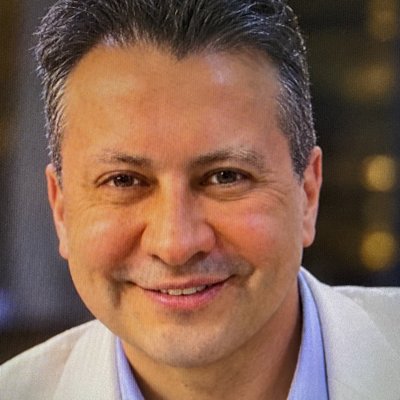
with Dr. Harvey Castro · Emergency Physician & Healthcare AI Speaker
Harvey Castro, MD, MBA, is a board-certified emergency physician in Dallas, a healthcare AI speaker, and the creator of DR GPT. He joins Chris Hutchins on where AI belongs in a hospital: making care instructions easier for patients to understand, moving medicine from reactive to proactive, and the questions leaders should ask about trust, culture and financial return before adopting an AI tool.
Show Notes
Harvey Castro, MD, MBA, is a board-certified emergency physician in Dallas, a healthcare AI speaker, and the creator of DR GPT. He joins Chris Hutchins on where AI belongs in a hospital: making care instructions easier for patients to understand, moving medicine from reactive to proactive, and the questions leaders should ask about trust, culture and financial return before adopting an AI tool.
What We Cover
Harvey traces his path into emergency medicine to a 12-hour wait in a New York emergency room as a 12-year-old, and follows it through early medical apps, building his own emergency rooms, and writing one of the first books on ChatGPT in healthcare within minutes of its release.
Chris and Harvey then get practical: how generative AI can make discharge instructions understandable for children, teenagers and patients from other cultures, why the value of human plus AI depends on the human, what proactive care could look like, and the three pillars leaders should weigh before deploying AI. They close on what Harvey would tell medical students and young people choosing their careers now.
Key Takeaways
Communication is part of the care. With patient identifiers removed, Harvey used a language model to turn pediatric discharge instructions into coloring pages, comic strips for teenagers, and translations that account for culture as well as language.
Human plus AI depends on the human. Whether a doctor gets better with AI depends on how well that doctor understands the tools, their limits, and how creatively they combine them with medicine.
Reactive medicine waits too long. Harvey contrasts his father, who died of a heart attack with no warning, with his mother, whose early cancer diagnosis let her get treatment. He describes his own offline digital twin of wearable, record, genetic and lab data, with an AI agent that reviews new research and recommendations he checks himself for hallucinations.
Three pillars before adoption. Harvey weighs financial ROI, culture and trust, and says your AI will only move as fast as the trust. A quick culture check: ask each executive what they thought of AI four years ago and what they do differently today.
Right size the model. Harvey asks whether every use case needs the most expensive model, or whether something smaller built in house fits the need and the budget as token and energy costs climb.
Examples in this episode reflect Dr. Castro's personal experience and observations and are offered as leadership insight. They are not validated outcomes and are not clinical, legal or compliance advice for any specific organization.
About Dr. Harvey Castro
Harvey Castro, MD, MBA, is a board-certified emergency physician, healthcare AI speaker, and advisor to the CEO of Phantom Space. Known as DR GPT, he is a former CEO of Trusted Medical Centers, a five-time TEDx speaker, and the author of more than 45 books, including AI in Emergency Medicine (Wiley). Connect with him on LinkedIn.
Related Resources
- Book Harvey Castro to speak
- Books by Harvey Castro
- Harvey Castro on LinkedIn
- Related episode: AI in the ER: Clinical Judgment Still Wins
- Related episode: Human Judgment & Clinical Trust in Healthcare
- Related topic: Clinical AI & Patient Care
Guest
▶Full Episode Transcript
Chris Hutchins: Welcome back to the Signal Room. I'm Chris Hutchins. Quick thing before we start, I wrote a book. It's called Beneath the Signal, and it's about the human work behind trusted data and responsible AI and healthcare. Search Beneath the Signal on Amazon now and pick up your copy. Okay, here's our episode. My guest today works in emergency medicine shifts in Dallas, and he spends the rest of his time on one question. Where does AI actually belong in a hospital? He's a board-certified ER physician, a healthcare AI keynote speaker, and the founder of Dr. GPT. Harvey, welcome to the Signal Room.
Dr. Harvey Castro: Yeah, I've been so excited about this interview, so excited to be here. Thanks for having me.
Chris Hutchins: Oh, yeah, I I'm excited as well. I mean, it's quite an honor for me to talk to the guy who came up with Dr. GPT. But obviously, you you you've got passion and you have a why that's that's undeniable. So I'd like to really kind of start there and hear a little bit about you know how you got into medicine, what kind of drove you to it, and what are the things that kind of led you and inspired you to start doing some of the stuff you're doing now in the AI space.
Dr. Harvey Castro: You know, it really boils down to this uh scar on my hand. You really can't see it. But basically, uh I was 12 years old, I was in New York City, and at that time, I'm gonna age myself, Michael Jordan was the thing. Like you, if you were watching basketball, you were watching Michael Jordan.
Chris Hutchins: I was.
Dr. Harvey Castro: And you know, and that 12-year-old that's going through puberty thought, oh my gosh, I need to keep working on my jumps and hops. And so it was basically uh basically uh again, this is New York City, Queens. Ironically, one of my buddies was trying to steal one of the do not park signs, and he was having a hard time taking the sign off. Well, he left a piece of metal sticking out in the beat on the back part of it. And so I didn't see it. And so I'm walking to school, I'm actually walking from school home, and I jump up to hit it. And as I hit it, when I come down, it slashes my hand open. And I'm literally just bleeding. And you know, 12-year-old kid, luckily, I honestly at that time just didn't know what to do. Luckily, my mom was home and she sees my hand just bleeding, and she's like, We're going to the emergency room. Fast forward, I go there, wait 12 hours, and the ER doctor finally looks at me and says, You waited too long. And I'm like, I was in the waiting room 12 hours. What do you mean I waited too long? And so, yeah. And so then, you know, we we were indigent and didn't know anything about medicine. And the guy starts suturing me without any anesthetic and says, Yeah, you waited too long. We just have to numb you up. We have to just suture up without anesthetics. And I thought, well, maybe that's how they do things. And I, at every point, I could feel it. Well, at that time, I later realized I didn't have to go through that pain that could have numbed me up. And I told myself, you know what? This is 12. When I grow up, I'm gonna be an ER doctor. And when I grow up, I'm gonna make sure I leverage healthcare to help people. That simple thing. And when you're a little kid, you tell yourself many things, but to look now as an older gentleman saying, Wow, I did say I was gonna be a uh doctor, not just any doctor, I'm gonna be an ER doctor, and here I am. And so that mission to serve really just pushed me and to the point where I've always been, I call myself a nutty professor. I couldn't afford college uh books, so I called the at the time there was no internet, so I called and wrote letters, real letters, to the uh book publishers to send books to me and I would find mistakes and send it back to them. And believe it or not, I got all these books, and then fast forward medical school, uh, they did the same. And so at one point I had more books that I had reviewed and on books than my professors because I have been doing so many of them. And then fast forward, uh, that pain point, uh, I was in residency, and unfortunately, I just realized so many people were dying. And personally, my dad had died years ago from heart disease. And I thought, wait a second, there's this thing called vitamins. I'm learning about them through uh there was luckily at my med school, there was a gentleman that would teach vitamins and herbs and how it would affect medicine. And at the time it was really ahead of its time. And I thought, oh my gosh, I'm gonna write my own heart vitamin company. I'm gonna publish it, create it, get a cardiologist to look at my formula and bless it. And it went public. And we were selling at uh national uh uh vitamin stores. And then I'm getting to what your question is, but I'm almost there. And so graduate residency, excited, seeing patients. And all of a sudden, I tell my nurse, hey, this person's dying in front of us. We need to act now. And at the time, this thing called an iPhone had just came out, and there was a thing talking about something coming out that was called an app store. And I was coding my patient, and I told my nurse, hey, let's get this medicine going. And she's like, One second. She went and got a textbook, got a calculator, and I'm looking at the guy dying. I'm like, we need to go like now, you're taking too long. And it dawned on me. I was like, wait a second, let me put that medication on my phone where you could just tap and it gives you the IV medication immediately. And it was the first person in the world to do that, and that thing went viral all over the world. And I did a 40 more applications like that.
Chris Hutchins: Amazing.
Dr. Harvey Castro: So and then fast forward the latest and greatest. Uh, I got two quick stories. One, I didn't like medicine, uh, I didn't like where I was working, I didn't feel like the patients were getting this personal attention. And then I thought, you know what? I'm gonna create my own healthcare system, I'm gonna start my own emergency rooms, my own hospital, billing, staffing. And I did. I I grew that and I was able to teach doctors how I thought medicine should be practiced, how I thought patients should be talked to. It was great. And then the final story to answer your question, now you get the full circle. ChatGPT came out. ChatGPT came out, and I just lucked out that I was on my computer and within it just being released the same day, I saw it. And in the first five minutes, I thought, oh my gosh, my whole life just flashed. I thought, if I had ChatGPT in medical school, residency, when I was starting businesses, all of it, I would have just killed it more. And then I thought, you know what? Literally, within the first five minutes, I said, I'm gonna write a book. And it's called ChatGPT Healthcare. And that went viral because I was the first person on the planet to write a book on how do we use this thing called ChatGPT in healthcare? And it went nuts.
Chris Hutchins: That is amazing, but the risk pieces of it are concerning to me. And it's always because of the things that I'm sure that you know you you've had to deal with a lot of it, it's really the underlying data. But you're familiar with the complexity that lives in the data. Uh, the fact that the EHRs basically were created to improve building good quality, had nothing to do with trying to enhance the and fixed workflows for clinicians. What were some of the things that you discovered early on that helped you to navigate that? Because clearly you had to solve some of those things probably before a lot of other people were figuring it out.
Dr. Harvey Castro: Yeah, it was really interesting to be in that world early on, because it's it still is, but it was so much more of the wild, wild west. Like, yeah, what do you do? What is this thing? I'll never forget some close friends came to me. They're like, Harvey, you really need to be quiet about this ChatGPT healthcare. Like, what if it's like bad and your name's all over it and you're really out there waving the flag? Like, you probably should wait. For me, I thought my favorite phrase is we don't know what we don't know. And I thought, let's leverage this tools to help me. And you gotta go back for a second. I literally had my own hospital system, my own ERs. I practice medicine for over 20 years. So I could see the medicine, but I could also see the C-suite side of how to run a business. But at the same time, that human empathy of how do we take care of that patient, even though they cannot pay for this service in the emergency room, and this complexity of AI with all the issues of it. And so, luckily for me, I almost grew as the technology grew in the sense that when generative AI came out, I thought, how can I take this one principle and apply it? And what I did was the following one of the main things as an ER doctor is simple communication. If I cannot communicate with you and I give you the best medicine in the world, but I don't really convey it well to you, you may not take your medicine or you may not know how to take your medicine because I didn't convey it. And so that simple generative medicine, I create the following. I would take discharge instructions and I would take those discharge instructions and feed them through an LLM. Obviously, I take away any names of the patient and whatnot, but this was specific for kids, and it would convert the whole discharge instructions to coloring book. And then that is what the children would be able to color and understand how their disease process. So now a little kid could color and be like, oh, this is my asthma. Okay, this is my medicine. Okay, when I can't breathe, I need to tell an adult. It's kind of hard to tell a kid. But when you sit there, and now the parent or the doctor can color, man, now I'm using generative AI. And then to your point, like how are we uh addressing the issues? Well, uh, to get into the weeds, I created my own rag model that was HIPAA compliant, that took out all the information, and then was able to put the core part of the discharge instructions, and then I used another platform to put their phone number and all that on the front of it, and then I put it together, and then it was totally independent, but then now they were able to get all of it so that they could be able to enjoy those pictures. And then my colleagues were like, Harvey, what are you gonna do with teenagers? I said, Oh man, teenagers is easy because there's cartoons, and so I would do coloring uh comic strips on top of the color for teenagers, and they loved it because they're like, Whoa, this doctor's kind of cool. He's like talking my language, this is way out there. And then I worked in DFW, and we have people from all over the world, and I thought, well, here's generative AI again. I need to translate, I need to talk to them, but not just translate, as you know, it's about the culture. How can I speak to you? Simple example. If I if I say football and you're from Europe, you're not thinking football like an American. You're thinking football, which is soccer. And then again, that I know it sounds like a minor point, but then I'm not conveying that communication. And so those were quick examples right away that I was doing with patients and leveraging.
Chris Hutchins: I I love that. It's like really trying to figure out how do we capture that translation that you all are trained to do from the very beginning of your medical education. And there's no one better at it than clinicians, as far as I'm concerned. But we have to figure out how do we make it easy for people to understand it enough at least that they can understand and give consent. Well, if we're gonna have to put something out there under informed consent, we've got to make it more of a team sport and figure out how to do that.
Dr. Harvey Castro: I want to bring a key point. I know everyone's heard this term, but I really want to unpack it. And it's basically human plus AI. And why does that matter? Because to what you just said, it's not about just any human. Can a doctor be better with AI? Well, depends on the doctor. Is that doctor understanding the tools? Does he know the good, the bad, the unknown of the tools? Does he know how to leverage? And then I'm just going to go to something basic as a human being. How creative is that doctor? Is that doctor able to look at a tool, combine it with medicine, and create something, literally create a whole new way of thinking? Because one of the things that's what you also just said is we're trying to fix the problem in the same environment. But guess what? We use AI, changes the AI, changes the environment, disrupts everything, and now we can create solutions because we're not fixing them in the same environment.
Chris Hutchins: Yeah, that's an important factor. Because they we when you're changing, and I guess the this is the interesting thing. It's exciting to me, but it's also a little bit more frightening because we've always had this I'll call it an old legacy understanding of the medicine as a practice, right? It's an evolving science. And the way we've taken care of it from a regulatory and quality measurement standpoint for a logus, times we treat it like it's static, which it's never been. Talk about some of the things that you see, the things you look for that maybe people aren't thinking about. the might actually uh uh open their their thought process up a little bit and get them to look at some things differently.
Dr. Harvey Castro: Yeah. We're in a uh we hear it all the time. People talk about sick care and some, I call it reactive medicine.
Chris Hutchins: Right.
Dr. Harvey Castro: To my point earlier, my my father died because he had a heart attack, but he didn't have any warning signs. He had nothing, and yes, he didn't take care of himself. But at the end of the day, he was practicing reactive medicine, meaning, you know, he only went to the doctor when something's quote unquote broke. On the other side of that is my mother. She was diagnosed with cancer and she basically diagnosed herself. She's an ultrasound tech. She was teaching someone how to ultrasound a neck, and she found a little nodule by accident, and that ended up being cancerous. And when they did a scan, they found two different independent cancers. And luckily for her and for me, 20 years later, she's alive because she was able to get treatment way early. And to me, that's more of that proactive approach. And the reason I want to go over that is your question is, what is different? Well, my goal in my heart is we need to forget about this reactive medicine and really focus on proactive. Because, my friend, if I can tell you, hey, because of your voice, I'm detecting, and this is true, I could detect that you're a pre-diabetic. And you're like, What? I haven't been to a doctor in years. What do you mean I'm a pre-diabetic? And I'm like, yeah, I'm catching that on your voice. Let's get a real test. And then you're like, holy cow, Harvey, this is the case. And now I treat you earlier. Now you're not, you don't develop full-fledged diabetes and all the complications. And guess what? Now you may have 15, 20 more years to your life because of that one proactive approach. And so to me, AI will take medicine to some degree outside of the hospital and put it more in the individual. I'll give you a real example. Now, this is an n of one, but I took all my wearables, all the data, my WHOOP, my Apple Watch, my Oura, my electronic medical records, my genetics, my labs, and I created an infrastructure where it's on computers at my house that are do not have access to the web fully, and my data lives there. Then I added AI, sorry, to analyze my data, and then I created an AI agent that goes and searches PubMed, clinical trials, best practices, and looks at all of that and then dumps it on top of my digital twin of all that information I just said. And then every week I get reports. This article just came out, it proves XYZ. You actually have this genetic propensity of X syndrome. As a result, you need to take this vitamin at this higher dose. And then me as a doctor, I can look at it and say, okay, that hallucinated. Nope, that's actually on par. Huh? Didn't I have an idea? I want to make sure this didn't hallucinate. Let me go look at it and I see it. And now I can implement it. And so that's to me the future of medicine. Catching it ahead of time, using artificial intelligence with the right doctor, not just any doctor, to give me that care. Um, and I took it to the next level. You're gonna love this story. June, I knew better, but I speak a lot around the world. And I had gone March hard, April hard, May hard, mid-June. I was on the second to last talk. I was in Boston. I had just gotten off stage, and that description of my digital twin, I gave it texting access. So my AI sends me a text and says, Harvey, today's Tuesday. I see you have a flight tonight, and you're going to Portugal, but why don't you spend the night and there's a flight in the morning, you can stay comfortable at your hotel, you can easily make it to Portugal from Boston, and you don't speak until Thursday anyway, so you can get there Wednesday. Because I'm noticing your HRV is going south, your sleep is going down, you have been trending the last month worse, worse, and you're getting to a uh dangerous level, and I can tell you're actually aging yourself right now. You need to rest. And I thought, oh my gosh, what about that whole proactive approach? Because it's that repetitive abuse that we do to our bodies that if we can catch it early to say, you know what? I need to sleep. You know what? I do need to eat XYZ. You know what? I do need some sunlight. I haven't been going out today or this whole week. All of those small decisions happen to make a big decision.
Chris Hutchins: Amazing. You're right. I love that story. The opportunity, though, to start to think differently and realize that you can do something and have uh take take control in a positive way. Um for me, it made me start to ask questions and think about, you know, what should I be talking to my doctor about and what can I, what are things that I could actually do to be more proactive. And you mentioned the pre-diabetic thing. I discovered my situation because of something else completely. And when I found out I had diabetes, it was from a person who was filling in for my doctor, and they asked me how long I've had it. I'm like, I didn't realize I had it. But it made me start to really pay attention again. And one of the things that I hadn't realized, and you'll think this is probably typical of uh a young male American or that probably has this mindset, but I love ginger ale, and I thought my grandparents drank ginger ale. So it's it can't be bad for you, it's not it's not coke, right? Well, I was having two or three of them a day, and I didn't, I had no idea, didn't even look at a label. And the doc says, well, uh, that's a big part of your problem. Because they were asking me where the where the sugar is on my diet. I'm like, I don't even have it in the house. Well, it turns out it isn't some things that have labels that I wasn't paying attention to. Um but but to the point though, it was it did give me the inspiration that I could be more proactive and take control. And I think we're at a point now your message I think can really be amplified and it'd be probably better received than it might have been just a few years ago. At least I that's my hope, and I'm really glad you're here talking about this because I think it's a message people need to understand. It's too we can't we can't be reactive. Males in particular, and I'd love to hear you talk about this because I've I've told people for a long time, I want to see research get done from the right perspective at some point in time, because we have this opportunity from the time of a kid's born until they get about to the age of accountability, basically, if they're male, and then they disappear for a decade and a half, unless, of course, they have something catastrophic, they're just not paying attention to their health care. And they come in with the usual suspects going on by that time, and you've got you've got to start working against fixing things that should have been prevented. But we've never looked at things from the time of birth all the way through and followed them to see how where we get to if we teach them to be proactive, own responsibility for their care, and develop good habits. But you see what I mean though, that opportunity is usually completely skipped because we're not looking at an ROI that's in a reasonable period of time. But it needs to be a long-term type of thing that people think about and they and we're we're not doing it yet.
Dr. Harvey Castro: You're gonna love this story. Uh two, three weeks ago, I was invited to speak in Mexico uh for the Mexico City, and it happened to be one of the largest medical schools in the country. And I sat with the dean, and he's like, Harvey, uh, can I give you a tour of the medical school? We could just kind of walk around. I just want to show you what we have. And in short time, as we were walking through, I was able to tell him how to leverage AI for the medical students, for the residents, uh, simple, I call it simple, simple anatomy, uh leveraging AI in the anatomy labs, uh, simple skill sessions to improve their skills. His mouth dropped. He's like, wow, Harvey, uh, I can't imagine us doing this. And I said, Of course, like let me help you. And I'm helping them right now. And one of the things that surfaced and to this pre-diabetic uh point, I said, my favorite phrase is let's work backwards. What are your pain points? And he said, Harvey, one of my biggest pain points is he's a kidney doctor, is I get patients that have end-stage renal disease due to hypertension, diabetes. And if we could have just caught these guys or women years before, they would never see me, and I'm fine with that. And I kind of jokingly said, Well, what's the regulation here? Because if I can help you develop an algorithm that every time the patient or family member is making a phone call with their permission, if I can tell you that they're pre diabetic or that their pressure is high with their voice, then that gives you the ammunition to have them come into the Clinic because us guys are tough to come to the hospital or clinic. And if we can catch them early again, then why not do it? And he was fascinated. He's like Harvey, he called his head of research for the university. He made him come, and we're in talks right now, how we can create that for the public.
Chris Hutchins: I love that.
Dr. Harvey Castro: And I thought amazing.
Chris Hutchins: I'd love to hear a little bit more about some things that you see from a vision standpoint, where we are, where we're where we're headed to, and what some of the challenges are. Because I think there's a lot of executives there in some tough spots because there's expectation uh that they're going to deploy AI capabilities. Uh there's a lot of pilots had a wonderful physician. Actually, her episode just went up on uh this week. She was talking about pilotitis, which I'm sure you know exactly what that's all about. There's just a lot of a lot of things that are being done in a way that they're not seeing the results of the successes that they could have. And I I'd love to hear you talk a little bit about where you see there's opportunities and what some leaders should be thinking about, the types of questions they should be asking.
Dr. Harvey Castro: Yeah. To me, I look at three pillars for this question. One is the financial ROI. Second is the, and not necessarily this order, the second is the culture. And then the next is the trust. And let's kind of unpack all three.
Chris Hutchins: Yeah.
Dr. Harvey Castro: Your AI will only move as fast as the trust. And that trust will also be indirectly or directly, depending who is looking at it, based on the culture meaning. If the administration, the hospital system, the culture is not looking at AI to the point of adaption and just looking at it as a negative, then it's probably not going to be accepted in that because the culture is going that way. On the ROI, I'm going to wear my administrator hat. As I had the administration of a hospital system, if it didn't make financial sense, I only had so many dollars to keep my doors open, and I wasn't going to put the hospital at jeopardy for XYZ unless I could prove to it. So I look at the culture, I look at the ROI, and I'm thinking, how can I make this better? For me, I think on the culture, I'm going to say this biasedly, is having someone like me or someone that understands AI. And when I say me, I'm a physician. So I can speak to other physicians on the topic because I went through med school, our residency. I was in the front lines, literally in the front lines. And I can literally speak truth to them. On the culture, I think I can speak to that because I know traditionally we are not early adopters, because if we make it things wrong, people will die. So we cannot just like accept to accept. On the ROI, the definition from a healthcare point of view of a physician's ROI is going to be different from maybe a C-suite because they're speaking different languages. To me, if I help a human being, that's my ROI. My patients got better health. Now, obviously, can they afford it? Maybe, maybe not, but I just want to give them everything they can. And I'm looking at it different. First, uh CEO is like, well, if I give this away too much, I'm going to have to close my hospital, and then there's no one that's going to get anything. And so I get that. I'm biasedly going to say I have tons of free resources on my website, just tons. Uh, and I even create a little chat bot that you can ask it questions and goes back and forth, but there's tons of resources on what the CEO should be asking. Now, as far as the AI drift, there's multiple pieces to that. And to go into a little bit in the weeds, some of these AI programs are nothing more than ChatGPT. That's all it is. They're just a product, they do ChatGPT to it, they put a little wrapper, and then here you go. For us individual leaders, how do we put a price tag behind that? And then how do I move forward? Because as we know, some of our tokens can cost more and more and more and more. And all of a sudden it's like, wait a second, tokens, electricity. Now I need an IT team. Like, whoa, whoa, whoa, this is way more. I can't afford it.
Chris Hutchins: Right.
Dr. Harvey Castro: And so some of the key questions I would tell the leaders is number one, evaluate the culture. How is that culture moving forward? And a quick biopsy is ask everybody in your C-suite in the leadership, what were your initial thoughts of AI when you first heard about it four years ago? And then have them pause and then ask, how are your thoughts today? What are you doing today that you didn't do different? And that'll give you an example of how the culture has changed and to see where they're at. Obviously, having people that understand this can open their eyes to see things that they didn't know that could happen. The next part is the cost. How can I keep costs down? And that's where it gets a little tricky. Is it worth you're gonna laugh at this idea, but or chuckle people listening? Is it worth having solar panels on our hospital to decrease my energy bills? Because maybe it will decrease because I'm in the south and I get a lot of sun and maybe it will pay itself off. Second, is the technology for what I need apparently where I can have cert AI that could be homegrown, that could be put in my hospital system? Because think of it this way: I'm in Texas, and if I have to go to Kroger's, do I walk? It's only like two blocks away. Do I walk? Do I ride my bike? Do I rent a car? Do I get a limo? Some of that's overkill. So that same analogy, do I need the most expensive model out there for what I need? You may not. You may need something so simple for your particular needs that it actually makes uh financial sense to build it in-house and just do it. And so those are just small questions, but I think it's like playing chess. You play that first move correctly so that tomorrow you're doing really well.
Chris Hutchins: Yeah, and you raise an interesting point too on the cost side of it. I don't think people generally understand this point, but if you're primarily using Gen AI, the cost model is worse than you're thinking because every time there's an iteration, you're hitting the equivalent of an enter key, everything up to from the beginning of that very session till that moment gets resubmitted every time you hit it. And your cost just keeps exponentially climbing. I don't think people understand that, but the number of tokens people burn through for the most basic things are probably the things that are killing them and they don't know it.
Dr. Harvey Castro: And that's why I'm having fun in the sense that I'm working with different uh AI company, doing some asynchronous care. Another one, I'm helping them for the medical school platforms. And big picture, it's to me, it's more about how can I help, I know it sounds odd to say, how can I help humanity? How can I help doctors? So that poor little kid that got sutured without any anesthetic won't ever happen again.
Chris Hutchins: Right.
Dr. Harvey Castro: And I I call it the healthcare IQ, my friend. If I can increase our healthcare IQ with time, we are gonna live longer. And let me give you the analogy. If I suddenly got a cigar right here and started smoking in front of you doing this interview, you'd be like, what the heck is this guy doing? He's freaking doctor. But if it's 1950 and I'm smoking and doing that, you would probably be smoking with me. You'd be like, this is normal, this is the culture. So, with that idea, if the AI and healthcare is improving with time, our habits, what we don't know is bad for us, we'll not start knowing, we start educating our kids, and then that level gets higher and higher and higher. And it stands to argue that with time, you are going to delay diseases. With time, you're gonna be doing things differently. The other part to this is if the AI can reduce my costs, let's say the pharmacology department, where certain drugs or drugs in average cost $2 billion to make, but AI, there's some companies now that are dropping that cost to $200 million. Still a lot of money, but it's not $2 billion. As that price goes down, down, down, down, we get closer and closer to personalized medicine, where I can treat you, not just you and everyone that's like you, but it's specifically to your genetics, less side effects, and now the price has come down to something very reasonable. And so I really think in our lifetime we will see that happen.
Chris Hutchins: Yeah. No, and we should. We certainly have the we have the intelligence to do it. I think the we don't often stop and uh think about the pace that things have evolved. I was talking to somebody recently just about treatment of cancer. Um I remember you know going to see a family member like 25 years ago uh in a cancer war. Then there's this big gap in between, and the next time I went into one, I was just blown away with it. I mean everything felt differently. I mean, the whole culture, the environment felt different. People's positivity was like it was palpable. And it and the reasons for it were just amazing. I started to understand just how far things had progressed in such a short period of time. And we don't see the forest through the trees sometimes. We don't realize just how far we've come, and we don't look at the opportunities in front of us with the same anticipation that I think we should, because we just don't realize you know, with the capabilities much, much further further along. And we're we're not we're not scratching the surface in terms of the creativity and the innovation that can be brought to bear. But you have to have the patience and you have to you have to have the passion to bring that intensity to it, I think.
Dr. Harvey Castro: I want to unpack that because what you just said, I want to just uh add to people don't realize what you just said in the sense that we are a lot further than we realize. And my public service announcement to everyone listening out there is do your best to take care of yourself. Feeling, yeah, doctor's saying take care of myself. No, he let me explain why I'm saying this. If technology is catching, like your example of cancer sooner, if proactive medicine truly is starting to happen, I really believe that in the next five years, and I hate giving time frames, but in the next five years, we're gonna start seeing cures to cancer, genetic changes, uh, improvement in CRISPR technology to the point where we will be able to repair our organs. We will be able to turn the clock back, at least uh chemically inside of your body. As a result, if you're taking care of your body, the analysis that I'm making is there might be some things that we may not be able to fix yet during that time. But there might be others that we are. And so if you are taking care of your body today, fast forward five years from now, it may be at a point where we're still able to catch things early, reverse, change, and the things that you did happen to her, we might be able to be able to fix and cure. So to me, I'd say everyone, take a good get a good night's sleep tonight. Make sure you get your steps and make sure you see your doctor on a regular basis.
Chris Hutchins: I love that. And you know, I'd like to have you maybe take another step here because there's a whole another generation of people who are making their thinking about their careers, where they want to go, the kind of things that they want they want to do with their lives. And what would you tell some of these young people and the folks who are going through medical school right now that they should they would they should know about it and they should be thinking about as they're coming into a point and a place in history where the capabilities have never been so uh available and the opportunities have never been so ripe as they are. What would you tell them to get them energized and embracing this and really running this thing down to get it just as far as they could get?
Dr. Harvey Castro: Question, my friend. I truly believe in my heart that, and I'll go back to what I said earlier and I'll unpack it to your question. It's about human plus AI. But if I'm not the diverse human that I am, then how much information I understand is very limited because I haven't grown that much.
Chris Hutchins: Right.
Dr. Harvey Castro: If I, same analogy, if I don't know how to use AI and have no idea how it works, then when I try to use it, I'm not gonna use it as well. But if I can tap into that creativity, what makes you special? Why did people send you to med school? Why did you get hired for that job? Why are you the CEO of that company? Tap into that question. And like you asked me first, what is your why, my friend? Well, to everybody out there, what is your why? What is you? What is the genetics of you that makes you so special? And we all have something, and if not say something, many things. Now tap into that person and then go on the journey of AI. Start learning it, start using it. Because if we can start using it more and more and more, then you're adding the two and you're going to start doing amazing things. And to my point, as a physician, an entrepreneur, and knowing AI, I'm putting it all together and I'm seeing things that I didn't see five, 10, 20 years ago. And I'm creating things that in my mind, I'm like, wow, never knew I could create that. It's because I'm taking that creativity, that doctor in me, that entrepreneur AI, putting it all together and creating. Same goes throughout there. So what I would tell the youth, and I tell my son is, what is your passion? i.e., what is your why? What do you want to do that's not work in the sense that I could work 18 hours straight and I don't feel like I'm working. I'm loving it. So to me, it's not work. What is that? And then how can I be creative? How can I take that AI and use it to, for me as a doctor for humanity, how can I leverage these ideas to create something that doesn't exist and help people? And when you take it with those eyes, you start seeing things. The other thing I always say is you got to work backwards. So tell the youth, where do you see yourself? What do you see in the future? And then start working to that end. Because if you don't know which way you're going, you're just going to keep going. But if you know where you want to go, then at least there's some kind of path. And I know with AI, you're like, oh my God, Harvey, it's changing every day. Well, that's okay. Because if you go back to what I said, your passion, your why, what do you see and your creativity, you are going to be the leader. You're not going to be waiting for people to invent the future. You will be inventing that future. So it makes me really, really excited because I really think this is the path of the next human. And for me as a medical student, I would tell the medical students, I was like, man, I am jealous because you can learn all these permutations of things because AI can just start presenting the different flavors of diabetes, how they present. Whereas I have to wait and read about it or talk to different people and talk to my elders. Now you have a wealth of knowledge that you can grow so quickly. I know uh some of my doctor friends get upset at me when I say, well, if I was in charge of medical school, I could probably pass medical students within two and maybe four years. The average years is four. And I say five because some people may need more time, but I really think you could train someone quicker and know their stuff really well if you know how to leverage these tools.
Chris Hutchins: Yeah, and I think you illustrate a point I've heard uh a friend of mine say recently he said, the most powerful thing about AI is you. A human being who has perception, who has judgment, who has emotions, who actually cares, has compassion. That's what makes the AI really, really powerful and impactful. And I just I love that. I love what you're about. We could have gone so many different ways with this conversation, and I just I can't I can't begin to thank you enough for coming on. And I hope you'll come back because I there's a lot of other things that I would love to delve into with you as well. I think the audience would uh absolutely eat this up. But again, thank you so much for being on the show for my audience. I'm gonna make sure that you are stacked up uh with all the information that you need to get a hold of Harvey, to to follow what he's doing, to his website. We'll hook you up in the show notes. Uh be sure to reach out to him. Uh I'm sure if you've got uh ideas and inspirations, he probably would be someone that would be very happy to hear it. I can hear the passion in his voice. So definitely reach out to him. And that's gonna do it for this episode of the Signal Room. Uh I will see you next time.
Dr. Harvey Castro: Thank you.