Why AI Agents Need to Know When to Stop
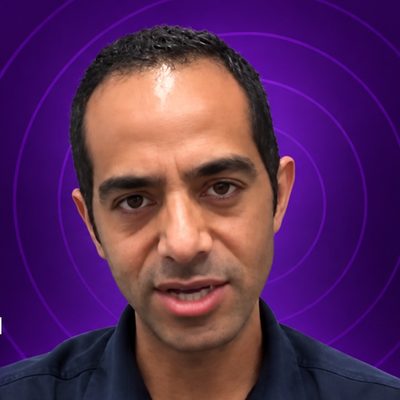
with Kaled Alhanafi · Co-founder & CEO, Basata
AI agents in healthcare only work if they know when to stop. Basata co-founder and CEO Kaled Alhanafi explains how his team builds agentic AI for hospital and practice operations, and why trust and governance matter more than the algorithm. Chris Hutchins and Kaled discuss referrals, scheduling, patient calls, human escalation, and why success with one task does not establish readiness for the next.
Show Notes
AI agents in healthcare only work if they know when to stop. Basata co-founder and CEO Kaled Alhanafi explains how his team builds agentic AI for hospital and practice operations, and why trust and governance matter more than the algorithm. Chris Hutchins and Kaled discuss referrals, scheduling, patient calls, human escalation, and why success with one task does not establish readiness for the next.
What We Cover
- How Basata's agents read referrals, call and text patients, and handle scheduling
- Why “a really good AI is the AI that knows when to stop”
- Why capacity in healthcare is trapped in administrative work, not only in a shortage of doctors
- Why he says 70% of AI transformation is change management
- How agentic AI in healthcare earns autonomy one task at a time
- How to be transparent with patients when they are talking to an AI agent
- Why point solutions fail and holistic approaches work
- What hospital administrators should do first when adopting AI
Key Takeaways
- Design the handoff, not just the automation. Kaled's test for a healthcare AI agent is whether it knows when to stop. A human handoff, with the context that travels with it, belongs in the design of the workflow.
- Autonomy is earned one task at a time. Success on one workflow does not establish readiness for the next. Start with a single workflow, define what you need to learn, and use the result to decide what comes next.
- Most of the work is change management. Kaled argues that about 70% of AI transformation is change management, and that the practice teams already hold the answers about where their time goes.
Numbers Kaled Cited
- 10 to 30% of physician effort goes to administrative work
- About $150 billion a year is wasted on patient no-shows in the US
- By 2030, about one in five Americans will be over 65
- Basata has raised a little under $25 million and recently completed its Series A
These figures and examples reflect Kaled's perspective, not independently verified performance findings.
Chapters
- 0:00 Welcome and Beneath the Signal
- 0:45 Why Kaled left Lyft and Cruise for healthcare
- 1:34 A personal path into healthcare
- 3:36 Shadowing practices and the start of Basata
- 6:16 The healthcare capacity problem
- 7:19 How Basata's AI agents work
- 8:52 The AI that knows when to stop
- 11:16 70% of AI is change management
- 13:26 Trust as the differentiator
- 14:14 Scaling at the speed of trust
- 16:41 The 2030 demand problem
- 18:36 Why point solutions fail
- 21:28 AI patient scheduling and no-shows
- 23:54 Would patients rather talk to a human or an AI agent?
- 25:15 When an AI agent should reach out, and when it shouldn't
- 27:54 Earning autonomy task by task
- 29:45 Regulators and healthcare AI governance
- 31:47 Why start with back-office operations
- 35:57 Where hidden capacity lives (the Lyft parallel)
- 39:00 Advice for hospital administrators
- 41:50 New roles and shared responsibility
About Kaled Alhanafi
Kaled Alhanafi is co-founder and CEO of Basata, a healthcare AI company whose agents help practices with referrals, patient outreach, and scheduling. “Basata” comes from the Arabic word for simplicity. He previously worked at Lyft and Cruise. Learn more at basata.ai or connect on LinkedIn.
Related Resources
- Basata
- Kaled Alhanafi on LinkedIn
- Related episode: Outpatient Care Is Broken
- Related episode: Agentic AI and the Human in the Loop
- Related topic: Healthcare AI Strategy
Guest
▶Full Episode Transcript
Chris Hutchins (00:00.160) Welcome back to the Signal Room. I'm Chris Hutchins. Quick thing before we start, I wrote a book. It's called Beneath the Signal, and it's about the human work behind trusted data and responsible AI and healthcare. Search Beneath the Signal on Amazon now and pick up your copy. Okay, here's our episode. My guest today has done a number of different things, but most recently he he made a decision to move on from his role at Lyft and Cruz to build a healthcare company. After losing a family member to the healthcare administrative era, we hear about these things, but today is going to be a little bit personal. He builds AI agents that actually do the work in hospitals. Kaled, welcome to the signal. Been looking forward to this episode. Thank you so much. I'd like to start with uh your personal story a little bit, just to let people know who you are and how you ended up in transportation to now doing something in healthcare. What's the why that led you down the path that you're on?
Kaled Alhanafi (00:57.280) That's right. Well, it's great to be with you, Chris. Thanks for the time. As you know, I was at Lyft and Cruise. And when you're at those companies, you're building really complex systems in complex spaces, right? So what I learned most at Lyft and Cruise is essentially how do you bring technology to a place where you are in the physical world? There is that messiness and complexity around. So you've got traffic lights, you've got police officers, you've got kids running around, right? How do you make sure that the technology works and there's guardrails there? As I was doing that, I was remembering my mother, who about 18 years ago, because we're working on this really cool technology and it's advancing so fast, I'm thinking about the base of where I grew up. And I grew up in the Middle East and migrated to the US later. But my mom actually died in the middle of a medical clinic in the waiting room. She was waiting for some medication and for some care. And somebody looked at the chart and gave her the wrong dosage of the medication. So she passed away about 15 minutes later on the spot. And I wasn't there to see it, but of course I had heard, and it was just devastating. It really shook me to my core. And it became kind of a a catalyst for me to get into complex systems and understanding the world and how can I actually contribute. So that was kind of as you think of my my journey has always been about complex systems and operations with that backstory of my mom passing away in an incident like this. And unfortunately, as I was building a cruise and looking at this very futuristic industry and doing all the amazing things that we're doing, I learned that my dad, my only surviving parent, had uh developed heart disease effectively. So he basically got a 95% blockage in his carotid artery, and he was referred to three different cardiology groups to go and get help. And Chris, it took us about eight weeks to actually get a phone call back from one of those cardiology groups. The other two, one never got back to us to this day, and the other one got back two weeks after the surgery was done. And so, you know, just being in that situation of building something really cool and technologically advanced for the world. But then when someone you love goes through that type of experience, you start asking a lot of questions. And it was really those questions that led me to think, okay, like what is going on? Clearly, there's a lot of people in healthcare that care. How do you actually solve those problems? And we got to work. I started asking questions about how does a referral process work? What does that look like inside of a practice? And we got to shadow a lot of the folks there and started bringing that experience in system complexity to healthcare, shadowing. I took calls, I signed a BAA with a practice and basically said, hey, I'll just sit here and listen and look at the referrals and maybe report back some of the inefficiencies. And it changed me more than it changed them, right? I learned a ton. And that was where the inspiration for starting a company like Basata really, really came from.
Chris Hutchins (04:07.120) So I can imagine there's a combination of emotions to sit here and deal with one that made you decide, you know, I have to do something about this. Because you couldn't describe what that bullet was. What was it, you know, would you the road with your dad, or was there some maybe even some other things that made you think about how does this get better?
Kaled Alhanafi (04:24.240) You're absolutely right. What we learned is as we talked to different practices and went through this personal experience myself through my dad, that there are so many well-meaning people in healthcare that are very capable. And so we learned this is not a people problem, right? The people are there, they've got the right intentions. But you look at every other industry, they've got tools that they that allows them to run their businesses. And healthcare, it's a lot like running your business blind. You know, the signals are just not there, the tooling is not there. You're stuck with tools from the 90s to run your operation. And so for me, the moment was I remember very vividly, I was literally in a self-driving car doing some testing on the work that we're doing. And I step out and my dad had just texted, like, hey, we need to call this practice. So I pick up the phone and I call. And I'm on hold for another 15 minutes. And it's so frustrating because you're working on these really amazing technologies and capabilities on one hand in your life. And then on the other hand, in your personal life, it's like, I can't even get like, I'm not capable of anything. I can't even get through to a practice to actually get help for my dad, who I care deeply about. So that's you know, the frustration started and kind of turned into, okay, calm down. What can I do to be productive here? How can I turn this into something productive for society? Because every part of my journey or my history has been these moments where I had an aha moment. It's like, okay, wait a second, how do I lean in? How do I ask more questions? And like, there's gonna be something out of it. And so for that moment, it was, okay, I can do a lot of really cool things with AI and technology and all this complexity that I'm working on and building. Yet you've got healthcare that is so behind, even though the people want to help, there's got to be a mismatch. It's inevitable to be solved. How do I get in there and solve that? And when we talk to doctors, you would say, like, look, we have a capacity problem. We have a care capacity problem. And as you shadow them, you just learned that, oh my goodness, if we could unlock that 10 to 30% of their effort that is going on administrative work and their teams on hold, then we can actually solve that capacity for care problem and really change healthcare to the better. So that kind of was the moment or the cat, it was that initial phone call. But then after that, of course, you learned about the referrals, you learned about the prior options, you learned about all the other complexity that comes with it as well.
Chris Hutchins (06:50.080) Right. Yeah. And I think there's a number of other things that are going on with capacity too that I've discovered over the years. And I mean some of it's as simple as how a physician's scheduling template's being managed. I love what you're all about and I'm excited about this conversation. There's a number of different ways I see people using it. There's flagging, there's notifications. And nowadays, because of this thing called alert fatigue, sometimes it just gets considered to be noise. But talk a little bit about your approach to that and how you're using the agents.
Kaled Alhanafi (07:19.680) Absolutely right. So our AI agents today, uh, as part of this harness, our agentic model, operating model, right? Because it can't just be AI agents operating uh in an ether on their own, right? You've got to change some things operationally. And some of the initial use cases were as simple as, you know, sounds so simple. As a referral comes in, the AI agent goes in, reads it, extracts the information, gets it in the EMR, and then puts a call to the patient, right? Hey, patient so-and-so, we've got your information, your referral, basically my dad's story, right? But now instead of waiting eight weeks, it can be done within seconds before my dad gets to the parking lot. That's the idea. So the AI agent is able to call patients, answer phone calls, text with them, interact with them, read a referral, do all of that. And the reason that's so important is we talked about care capacity. You know, we want to unlock care capacity for everyone. And what we've learned is actually that a lot of that capacity is trapped in the system itself. It's not that, yes, of course, more doctors would help, but we've got a lot of brilliant doctors and they do some really good work. How can we unlock capacity from within the system? And so that's effectively what these agents are made to do. But in terms of flagging, right? So the AI agent will do the work end to end, but the most important part of that is how do you escalate to a human being? So I say to my team all the time, a really good AI isn't an AI that automates everything, or a really good AI isn't the AI that does the most automation. It's the AI that knows when to stop. And if you think about it from a medical standpoint, right, even I was reading recently in the uh some journal, a medical journal about this, where someone was asked the question what is the difference between a good doctor and an excellent doctor? And they said, an excellent doctor is a doctor that knows their limitations and when to bring in another specialist, right? And AI operates the same way. So, yes, our AI agents are trained, of course, to answer phone calls, uh, route things, look at all that scheduling logic that you've talked about, and be able to optimize so that the capacity is there. But even more important is the AI agents knowing when to stop, what the guardrails look like, what the governance looks like, what the security looks like, what the conversation actually looks like to the patient, and how to route it to the right people and when to know, okay, I can't do this action. This is clinical. Let me pass it to someone with more uh information and more authority. So it's as much what we don't do as what we do that we are really proud of.
Chris Hutchins (09:56.480) That's a as a concept. I think I understand it better from thinking about how we train employees, and I think that that's maybe a perspective that doesn't often get applied to agents or some of the other solutions as well. Is that what you're seeing, as Paul?
Kaled Alhanafi (10:11.520) 100%. You know, you wouldn't hire someone on day one and go at it, you know, talk to all of our uh patients and process all the referrals, right? It's always a process. First, you've got your own guardrails internally for your people. And you're training your new employees on that. It's not too dissimilar from how what we do with AI agents, right? You've got to go through this process by process. You've got to take one workflow at a time and do this in a gradual way and make sure the AI learns before you kind of put it in front of a patient. And even when they are in front of patients, you have to have a way for the patient to say, you know what, I do, I love this, but I want to talk to a human because I'm asking about my chest pain, or I'm asking about some clinical issue. And the AI agent is not authorized or trained to do some of those things. So you're absolutely right. Great way to frame it.
Chris Hutchins (11:03.360) It really is a tool at the disposal of an individual who has judgment, who has intellect, a devotion, who can interact with a patient to get clarification on something, or a variety of different ways. The margin of error is much, much different.
Kaled Alhanafi (11:16.960) Right. And that's why the way I also see this, and this has been in practice, every time we go into one of these practices and deploy our AI agents, 70% of the work, because you hear about AI transformation all the time, right? So 70% of AI transformation is actually change management and the people doing things differently and learning how to work with the system, right? There's a BCG article that came out recently uh that talked about that. And it talked about 70% of it is change management, 20% is integration and implementation. Only 10%, Chris, is really the algorithms. So the algorithms are important, but again, the governance, the way you have your employees learn and to deal with this new technology is a lot more important. I'll give you an example from our day-to-day uh operations, even when I was back at Cruz, and I kind of relate it to this, what we're doing here, right? Sure, this the cars should drive themselves and they're autonomous. But I remember one of the biggest challenges for us was going to the Phoenix Police Department and teaching the police officers how to stop the car and traffic if they wanted to ask a question, right? So that's all changed man. Yes, you have the technology, but the governance around it, you've got to work with uh society, you've got to work with people in the practice, uh, you've got to work with the patients to make sure that they are accustomed to the technology. So for us, like when a referral comes in, for example, 99% of the time, yes, the AI can go ahead and take care of all of that on its own. But then there are some times where something gets flagged. And in that moment, you want a human to be in full control and for them to be in charge to be able to take a look at what the AI is doing and say, uh, nope, not this time. We're gonna do it this way. Or, you know, this is how I see it differently. And the AI is gonna learn from that. So you're absolutely right. A big part of it, in fact, the vast majority of the work that we do is around understanding the operational rigor and uh the workflows and kind of building for that and getting people to see how to use AI and how to actually leverage it to improve their lives.
Chris Hutchins (13:16.560) The human impact of things tends to be a little bit too late in the process. And by the time we start to get around to it, we've already lost trust.
Kaled Alhanafi (13:25.280) You're absolutely right. Trust is all we have. I mean, if you think about, you know, uh this space in general, the models are gonna keep getting better. The capabilities, both for human doctors and human administrators and AI, are gonna continue to get better. Both are gonna be able to do more and more in the future, right? So that means, okay, so what is the true differentiator? How do you actually have an impact in the space? It really is about making trust everything and really starting from scratch with that in mind and focusing on the governance and focusing on, you know, we have a core value. One of our first core values actually, we earn trust every day. Because without that, everything else is okay, cool technology, that's awesome. But if you don't get the trust of the people, the patients, the doctors, the administrators, then you really won't go far, especially in this industry. Trust is currency at this point.
Chris Hutchins (14:14.640) Let's talk a little bit about the scaling uh challenges. What are the things that you get concerned about as you scale?
Kaled Alhanafi (14:21.040) Absolutely. Yeah, we we've raised around about a little under $25 million in total and did our re our Series A recently. And you're absolutely right. We're scaling and we're moving quickly. And I think the one thing that I, you know, if there isn't an area where one has to worry in healthcare, it's how do you make sure that speed doesn't outpace operational understanding, right? Because you can move so fast in today's environment. The models are improving, our own tech is improving, the tech stack is improving, the team is moving really fast. But how do you stay centered in the fact that almost every practice you go to has a little bit of a different workflow, has got their edge cases, they have got the for every specialty, it's a little bit different too. And so, you know, I think about a lot about that. So you can scale, but what we want to do is scale while maintaining this operational understanding and the trust that comes with that. And so that means sometimes, you know, there have been cases where we've said and there recently a massive deal that we were gonna do, and we just hadn't mapped out that specialty. And we said, hey, I'm sorry, we actually can't do this deal because we haven't mapped out that specialty yet. We will get to you and we are able to get to you. And so that was something that they were surprised by. But the fact is, a lot of times when I'm thinking as a CEO of Posada, how do we want to do this? We want to do it right. We want to make sure we're moving fast and at the same time moving at the speed of trust. So scaling is going to be all about uh trust and governance and healthcare. And that's what we're starting to see. The questions that come up in conversations now are less about, you know, what does the AI do? What is its capability, and more about what does it do when something goes wrong, right? Um and and you hear us talk a lot about what can go wrong and how to fix it and how do you navigate that as well.
Chris Hutchins (16:10.640) Yeah, well, let me drill into that a little bit. I I know that there's there are probably some things that are top of play, but your your perspective is you need because of what you went through with members of your family. What are some of the things that concern you? I mean, obviously those scenarios that you saw are probably top of that list, but are there other things that concern you about how to make sure that this scales in a way that doesn't obfuscate things that are really, really critical for a decision?
Kaled Alhanafi (16:36.880) Yeah, well first of all, the speed at which the whole industry is moving, meaning and the need for this, right? If you think about it, by 2030, about a fifth of Americans are going to be over the age of 65, needing more healthcare than ever at a time where healthcare supply, you know, the number of doctors, the capacity that we have is in the system is staying the same or going down or just not keeping up with the pace that we need for the demand. And so this means we've almost got this mandate to fix it. It's like a water shortage. We've got a water shortage, you've got to figure it out. Something's gonna happen to make the capacity problem work. And so we know we're on that path. So, one, you've got to do it quickly. You can't slow down. At the same time, like I said earlier, while you want to do it quickly, because you've got this massive problem that you see already here and even getting worse in terms of capacity, you've got to do it right. So, some of the things that I think I want to make sure no one cuts corners on is how do you make sure that there is clinical and there is administrative? And the clinical knowledge we have, we have some of the best doctors in the world. People come to the United States to study medicine in our institutions. So we've got the best doctors and therapeutics in the world. However, we've got this crumbling infrastructure. You can't really operate that healthcare properly because of this infrastructure. And we want to make sure to give healthcare its the right infrastructure that it deserves. So, what you don't want to happen is for the AI agent to start just kind of overriding the human, the doctor, et cetera, right? We want to make sure that there are these guardrails in place. And when you're moving fast, some of those things can happen. So this is where we are very clear-eyed on we focus on the operations side, we make sure that we give doctors their time back, give administrators their time back, give patients their time back. When it comes to clinical judgment, though, we say the doctors are the best ones to do that work, and that's gotta be clear.
Chris Hutchins (18:36.560) In terms of how organizations launch things, and thinking about some other points that you've raised, or in terms of who's responsible when things go roll over sideways. How are you seeing organizations do that well in maybe some that are doing it well? What are some of the pitfalls that they've stumbled into?
Kaled Alhanafi (18:54.720) So the the common mistakes are you know, somebody, a doctor sees a really shiny tool, uh, a point solution. Maybe it is for a call center, maybe it is for a referral, maybe it is for scribing. Uh, that's a common one, right? And it's like, let's start using this and plug it in and plug it into our current process, don't change anything and hope for the best. The problem with that approach is if, again, if we talked about 70% of this being change management, and you go in and plug in a tool like a band into your existing process, you're not gonna get the ROI, but more importantly, you're gonna make a lot more mistakes because the governance is not in place. It's one piece, it's not connected to the other AI agents, it's not connected to a human in the loop, etc. The better approach, and what we've seen works really well in organizations that work with us is you get a champion from the get-go, and this champion understands this is a journey. It is not a one and done, it is not something that's gonna happen overnight. It is let's partner together with a company like Basata and say, listen, here's where we want to start. Here is a workflow we want to start with, and here's how we're gonna test it in a very rigorous way. And as it moves forward and improves this process, we'll take it to the next process, make sure the governance is in place, make sure the team understands how to deal with it. And when it's seen as a holistic process, it works. So, what I'd like to kind of the way I'd like to frame it is point solutions tend to fail. Holistic approaches tend to work in healthcare because you do get to see the whole system covered. Right? A patient is not fragmented. They don't care about your process of you know, referrals versus calls versus scribe. They care to get that whole care as a whole person taken care of.
Chris Hutchins (20:40.720) So you're talking about giving time back, whether it's to the clinician or the nurse or potentially the patient and the doctor. I think some things that I've seen that are interesting to be were around in even in this scheduling space where really getting to know a patient over time, and if they routinely need a little bit of extra time, well, you can build that into your schedules. You can actually do that in real time. And you actually get some wins there because the patient that's being seen after them is still probably going to be seen on time if we've made the adjustments to the scheduling. So there's some things like that. It's just kind of more common sense stuff than even AI. But when we haven't really done a good job with some of these things, I think it uh behooves us to really think very carefully around what are the guardrails and checkpoints that we're putting in to make sure that we're protecting ourselves from ourselves.
Kaled Alhanafi (21:27.360) That's absolutely right, Chris. And an example of this we've seen very commonly is you'll go into a group and they'll hand you a hundred-page guidebook around all the different physician preferences in scheduling, for example, right? Typically, it's either an Excel sheet that the call center, the scheduling team keeps so that they make sure that you know, patient calls in, let me make sure I can put them with this doctor because this doctor sees this disease but not this disease, and they're around this time and not this time, and they can do this gender and not that gender. All these complex preferences for scheduling. Come up and it's very manual. And so when you take a look at that, yes, part of it is a lot of the AI agents doing the work, but a big part of it is building that harness to include some of this optimization. And how do you make it easier for both the clinician, the administrator, and the patient to get it's an exchange of time. You've got the most valuable asset in the practice, a doctor's time, and the biggest need is the patient. How do you align those in the right way so that you can reduce no shows? No shows, $150 billion a year in the US wasted on no shows alone. You can figure out using predictive analytics techniques, not even this generative AI stuff, how to minimize that. So it's really when you stack all of these technologies together that you start getting the benefit of essentially this transformation that we're seeing. It's not just the newest and latest uh AI technology, it's how do we use everything at our disposal, including, by the way, operational excellence and improving their own workflow. And they're open to it because you show them the results. It's like, hey, we can actually optimize this to work for the patient and for you. And they love it. It's the concept of how do you take all of these things that we've been talking about, Chris, and applying it so that the doctor can truly practice top of license and not have to do any of the other stuff. And even some of the things that are clinical that can be done by maybe a another type of provider who is not a specialist or maybe a nurse practitioner. All of these things add to give you how we can actually unlock capacity in the system.
Chris Hutchins (23:32.080) To your point, there's capacity to be had. We have to come up with a ways to actually expose it where it is. But it it's getting the right people to wrap their head around the process, bring their expertise to the table, make sure we've got the right voices there that understand the workflows and impacts before we just go building stuff and hoping it works.
Kaled Alhanafi (23:49.680) We've done a lot of that. I love that because when we were doing research, uh you mentioned about the PA and the doctor and giving the patient the choice. And you're right, typically you'll choose a doctor. We did the same study on uh would you rather talk when you're calling your practice? Would you rather talk with a human agent or an AI agent? And 90% of folks said we would rather talk to a human agent. Well, what are we building AI agents for? Here's the thing: if you ask them the question, okay, would you rather talk to that human agent but in 15 minutes after hold or an AI agent right away and it can solve your problem right away, it's flipped. 90%, oh, forget about it. AI agent with no hold. So it's kind of a similar concept in that, right? AI agents can be introduced and they can be leveraged, but you've got to meet people where they are and figure out, okay, you know, they'll talk to an AI agent if it actually helps. It adds value, saves them time, problem, etc. Yeah.
Chris Hutchins (24:46.560) That kind of leads into this the whole communication aspect of it and how you're designing your genetic AI to work in such a way that there may be scenarios that are appropriate for it to reach out to somebody. I don't know if that's a patient or not, but talk to me a little bit about how you think about that and where do the decision points come? What are the boundaries that you think about that we really have to monitor and protect ourselves from? But when does the agent reach out to a patient? When does it not?
Kaled Alhanafi (25:13.760) How do you think about that? Absolutely. I think we talked so much about trust and governance. I think the key there is how do you build trust with the patient and the administrator and the doctors, right? So the first thing we do is you want to make sure that you're transparent with the patient. A lot of times, you know, we have a lot of 80-year-old patients calling the AI agent. Sometimes they don't even know they're talking to an AI agent until our AI agent says, hey, this is an AI agent on behalf of this practice that you are working with and we're about to schedule you. And so it lets them know that it's an AI agent. I think just letting them know that I'm not a human being, I'm an AI agent is one step, but that's not enough. You also have to share with the patients that I'm limited in what I can do. I can't diagnose you. So if you ask me a couple of questions and you know they're back to back and you're asking about your schedule, your medication, but then also you have a clinical question for me, I am gonna let you know, yes, I can take care of your medication because that's been approved by your doctor. Yes, I'm gonna go ahead and schedule you because I've got all the scheduling logic that is very complex, all and I'm trained by that. However, I can't answer your clinical question, and I'm gonna pass that on. And the more you do that, the more accustomed patients become to this idea that, you know what, I'm gonna talk to somebody that is an AI agent and get maybe 90% of my requests done, but it's gonna be very, very clear about what it can't do. Takes me back to what I said earlier, the the excellent doctors versus the good ones. It's knowing your limitations, and it's not enough to know them. How do you communicate them as well and be upfront about it? And we hear all the time about AI being like, it's like magic. It works, everything is great, it's perfect. It's you know, you hear from companies about their AI technology, and it's like, let's be grounded in the reality that no system is perfect. There are things that go wrong. Now the question is, how do you deal with things that go wrong? So communicate first that you are an AI agent, make it clear. Communicate what you can't do and where you stop and how what you do when that happens, bring in a human being, and make sure that that happens frequently so the patient gets accustomed to the fact that, okay, now I get a sense of what AI agents can and can't do. So that as the capability increases, the patient just gets used to that and essentially it becomes part of their journey. So I think it goes back to transparency all around. Where's the bar?
Chris Hutchins (27:37.360) What's the threshold that it becomes safe for us to move forward? I'd like to have you talk a little bit about that because people that are accustomed to talking about technologies, but the tackle which you're tackling, there's a much higher bar than just doing software delivery requires of you.
Kaled Alhanafi (27:53.280) That's absolutely right. And the way I like to reframe that is it's you can't answer that at the macro. We can't say, and I try to, you know, not be tempted by you know the generic statement of like, when is it when is there this bar that it becomes safe or not safe? It's more of it's not just AI, it's a task by task. You earn the autonomy task by task. So think of it as uh, you know, again, in the self-driving car world, you don't just put all the cars on the road all at once. You start in Phoenix, for example, because it doesn't rain there as much. And you know, you start with a couple of streets and you start with like fixed routes and then you go from there. And we would not operate Halloween night because we know we knew there were kids. You know, we're not gonna put the cars on the roads. Like there's operational stock uh gaps that you can put in place. Same thing here. It's not a question of is there a line to cross where AI as a whole becomes safe or hey, let's go. It's more of for every task that we're doing, have we earned the right to automate this thing? And is there a reason to automate it? Does that make sense? Because it doesn't always make sense, right? And so you take a workflow, you pick it. In our case, we picked the referral and call center kind of workflow initially, and then we moved into other areas like chart prep, et cetera. But the idea is you pick one piece of the technology and you test it rigorously and you make sure that works. And once you've earned that right on that one task, then you can say, yep, 99% of the time this works. We have a mechanism for the 1% to go clearly to the human being. The patients are accustomed to it, the physicians are accustomed to it, the administrators are accustomed to it. This is good now. We feel really good about this one task. It doesn't mean much about all these other tasks, but now we roll our sleeves and go on to the next task and see what we can automate there. And so it's more of a nuanced conversation, task by task, that you've got to earn the trust on, is what I believe.
Chris Hutchins (29:45.760) There's always this risk that somebody that's in a state capital or the federal government's gonna have this great idea, and all of a sudden you're faced with a completely unplanned 11th hour urgent need to do something. And then by the time you get past that, you're ready to go.
Kaled Alhanafi (30:02.960) They can handle it. We try to be ahead all of that, and you have to be, because in our industry, you know, because of the trust and the governance and all of that, you need to be ahead of it. Right. And you kind of have to assume that legislators at the end of the day have the best interests of the public at heart, and therefore they are going to look for safety mechanisms, they are gonna look for making sure the AI doesn't override, they're gonna look for how do you truly unlock capacity and not at cost to the system, how do you make sure this is secure? And so there are many dimensions. And if we are doing a good job at every single one of them and we're ahead of what the regulators are doing, in the sense that we're leading the industry forward, helping the regulators write these laws as well, and making sure that they have a good understanding of what our technology looks like, then we're gonna be in a very good space, I believe, as partners with the legislators as well as as the healthcare practices and health systems.
Chris Hutchins (30:56.960) What matters is we know that whatever it is that we're gonna do is protecting and preserving the doctor, the patient relationship.
Kaled Alhanafi (31:04.480) That trust has to be protected, the patient's data has to be protected. And by the way, I don't know if you know this, but the name Basata comes from the Arabic word simplicity. And the idea there is when you're operating a system of complexity, you have to try to bring simplicity to it. But you're absolutely right. It is hard. It's not for the faint of heart. Working in healthcare is probably one of the most difficult industries to work with because it's there's so much on the line. It's so important to get this done. Like I said, the capacity problem is real, and at the same time, you've got to do it not just fast, but right. And you've got to get it right every single time. There's no error margin, like you've got to do a good job every time. So this is where the trust training and the change manager becomes so so critical. Right.
Chris Hutchins (31:47.440) I want to talk a little bit about the decision point for you, because there's a number of different places in a workflow that you can decide to tackle. The clinical side of it, what are what's bothering the clinician, or you know, what are the things that we have to fix there. But you've purposely started with some of the back office stuff. I think I understand, you know, from your experiences why that was probably more pressing for you based on what you've been through. But maybe talk a little bit about that, because I think there's probably a lot of newets that people don't understand that you that you're addressing. I think we all still know there's a lot of problems getting access.
Kaled Alhanafi (32:20.320) A hundred percent. Yes. If you think about healthcare, there is certainly problems around the medicine side of it, right? The clinical side. There are problems that are real, and then there are problems that are operational in nature. And I think most folks don't have a proper appreciation of how complex the operation side of healthcare really is, right? If you think about it, in the United States at least, we do have, like I said earlier, some of the best doctors and therapeutics. And I always like to use the example of it's like having a Ferrari. It's like you've got the Ferrari of medicine, and you just have to keep it in the garage. You can't actually drive it and get the true benefit of what it has because the infrastructure is broken and it's crumbling, right? And so how can you give healthcare that infrastructure? That is what the operational layer really is about, right? So if you think about it, yes, you've got this incredible resource in the knowledge work that a physician has, their brain, their skills if they're a surgeon. And that is very scarce overall, right? Uh it's you have real scarcity there. And you've got this exploding demand on the patient side. Well, without, you know, without adding more doctors, which is really hard to do and takes years and years to do, right? Where are you gonna, how are you gonna solve this problem? And it's it is like having a water shortage and then needing to, we're going through that in Arizona, and you don't have a lot of options. You've got to get really creative about how you solve that problem, right? And so for us, it's about the operational work because that is where a lot of this capacity is trapped. Capacity for care is not trapped in the clinical workflows today. It's actually trapped in a lot of the operational work, or the vast majority of it at least, is trapped in the operational workflows. If we were able to optimize, just the examples you gave, if we could optimize scheduling, I mean, there is research that shows that if you just optimize scheduling alone, just the idea of scheduling patients into the right slots and truly getting physicians to apply top of license reasoning and not spend their time on anything else. If you did that by 2030, the shortage, which is 100 physicians short, will be in 2030, will go down. I think it's going to be cut by 80% or something ridiculous, just by tweaking that, right? You think about no shows, that's highly an operational problem. That's another $150 billion waste that we can figure out are the people that are not showing up, is it because they're too far from the practice and the drive is too bad? Is it because you know they've got this type of disease and that requires multiple check-ins beforehand that they're just not doing it? There's just so much in the operational complexity. So we started there because it's my belief that the solution to healthcare and unlocking the capacity really is going to come from the operational rigor and operational excellence that you can apply to these uh workflows. And a big part of that is gonna be the agentification, if you will, of healthcare operations. So that's kind of where we started. And we're gonna continue to go down the path more and more to make sure that the doctors are actually operating top of license.
Chris Hutchins (35:27.760) Right. So it just occurs to me that the challenge with understated capacity can be pretty dicey in terms of trying to nail down exactly where that is. But maybe talk a little bit about the complexity of that. And there's probably things that you would correlate to what you did with logistics uh before you got into healthcare. Talk a little bit about what your experience is there and how much work do people need to be doing, or what do they need to be thinking about so that they're ready to do some of the work that you would love to help them do.
Kaled Alhanafi (35:56.320) Absolutely. My message there is the capacity is there. The capacity is actually there, which I know is a shocker. It is there within the system today. We can absolutely unlock capacity, but we've got to have new paradigms and ways of thinking around this operating model. It again, it can't just be we're gonna take an AI agent, slap it in, and then everything is gonna be working and we're gonna all of a sudden have capacity. The way this goes is this. So think about you asked about applying logistics and lift and all that to this, right? Lyft, that was a supply and demand problem at large. The thinking was there. There is a lot of capacity hidden in a system. Well, where was the capacity? Well, think before Lyft. The idea was none of us used our cars more than 4% of the time. So we had this resource that was parked in your garage for the vast majority of the time. It wasn't being utilized. Yet if you ask someone there, they'd be like, oh no, no, we don't have capacity. We need more capacity. We need, you know, we need more cars and more drivers. And the reality is the drivers are your neighbors and the cars are unutilized vehicles right there. That they're just sitting there, right? So that was the unique insight at the time. It was like, well, if we have these resources available, they're not being used, which is another way of saying not practicing top of license, very different industry. But the idea is supply and demand is a big problem in healthcare. Where is this supply hidden today? Well, if you go and do some work on in these practices, you actually sit down and shadow. This is why it's so important for anyone building in the AI space in healthcare, shadow the physicians for weeks at a time and see what they're doing. Look at the administrators and see what they're doing, and you'll get the sense about 10 to 30% of a time of a physician, some of the even the biggest specialties like cardiology are spent on things like they're preparing the chart for the next visit. And they're looking to make sure that they've reviewed that and they're going through, you know, 50 pages maybe before they go into that encounter. And even then, if you've been a patient in these practices, they're still on their computer while they're with you to kind of explore and look, okay, was he on this medication or the well, if you can take a lot of that away and you can start thinking about streamlining those processes and really reserving the brain power and the skill sets of the physician for the things that only they can do, then truly are able to eliminate 90% of this shortage and 90% of this bottleneck and really unlock capacity that way. So it is all these phone calls that they're having to do. Think about the peer-to-peer discussion they have to do with payers to get a prior off done before they can see a patient. Think about the fact that they have to go through their chart. Think about the fact that they have to scribe. Think about the fact that their team has to answer a phone call and spend all that time there versus caring for that patient and checking them out properly. So it's the key there is there's so much capacity in the system. We need to now unlock it, and AI and operational excellence methodologies give us the ability to go in and actually unlock that, which is really, really exciting. Really exciting.
Chris Hutchins (39:00.880) If you're talking to a hospital administrator, which I'm sure you do and you'll keep having those kind of conversations, what are the things that they're skeptical about? And what are some of the things that you address with them to help them to get comfortable? That's right. Absolutely.
Kaled Alhanafi (39:16.400) So one, I would say to them, you've got to pick one workflow first. You know, you don't want to start and boil the ocean. Just because this is incredible technology doesn't mean we need to apply it to everything all at once. So start with one workflow, something simple, something with impact, and put in place ROI measurements that say, hey, it's gated. It's a gated process. We do this if the patients like it and it works really well. After I'm being a champion, then we move on to the next gate and then the next gate. And then you kind of grow from there. So that's number one is doing things gradually. Number two is come into it with an understanding that this is not going to be your typical technology cycle where you know you can plug something in and it works right out the gate. You know, that there are a lot of folks making noise around, you know, this is, you know, we've done this many calls and we've done this many faxes and we've done this many things. The reality of it is this is as much a workflow problem as a technology problem. And so you want to work as a partner with some of these organizations and come in and say, look, let's revisit what the workflow looks like today. And if we had AI 20 years ago, would this be our workflow? The answer is most likely not. So try to revisit that workflow design and build it from scratch. And then, of course, trust, as I said earlier, is really important. So look for organizations that have that mechanism of trust and governance built in from scratch, not added on later. So, you know, how do we make sure that the AI knows where its limits are and when it makes mistakes, it's very clear and easy for you to flag those and say, okay, this is something that happened that shouldn't have happened. How did we deal with that? How do we actually flag it next time so that it can improve? It's a dynamic process and a partnership, not a vendor hospital or vendor practice relationship that is typical.
Chris Hutchins (41:13.600) Because the models are going to change their pace. We're not talking about an upgrade anymore. We're talking dramatic changes and improvements in models in real time. Maybe just talk a little bit about how you talk to your clients in terms of how they have to think about that. Because you've got people at the front line, they're the first person that's going to talk to that patient. There's things that person needs to be equipped for as well. So it's not just a, you know, who's on the hook for a doc, which doc's on the hook or which technician designed it, and you're going to point the finger. It's like, guys, these are things now we have to monitor this in real time. We have to share this responsibility, and everyone has a role to play and make sure that everyone knows what that role is.
Kaled Alhanafi (41:50.400) Absolutely. And in some cases, you will have new roles created, right? I mean, there is now some companies that have chief AI officers and folks just focused on this because it is a lot and it's coming at you all at once. And you want to make sure, again, you it's irresponsible not to try it because it is incredible technology that solves real problems, but it's also irresponsible to put it in without preparation, governance, uh, and making sure the guardrails are there. So, how do you do that? And I think part as much as our job is to go in and solve these problems for healthcare organizations, it's also part of our job to go in and educate what does this even look like? What does it mean for your team? What does that change management line of command look like? Meaning, you know, part our, I'll give you a quick example. Part of our work when we go create an AI agent and configure it for a practice, we spend about three, four hours of a session dedicated to the voice and the mannerisms of the AI agent. We take the core values of the organization and instill it in the AI agent so that that is reflected. You know, some will pick a female voice, for example, some will pick a male voice. You won't believe it. One of our cardiology groups actually picked the name Ava. They decided to name the AI agent Ava because they had lost an administrator to cancer a couple of years ago and they wanted to kind of memorialize that. So it's such a human experience, and you've got to have all of that baked in. You can't go in as a we're an automation company or we're building AI. You you really have to understand the human element and that change management. And sometimes that means helping them see what new roles they might be creating as a result of this. And there will be a lot of new roles created. Uh as people talk about job replacement with AI. I really think what's going to happen is you're going to have a lot of job creation with this, in addition. And that's really exciting. We already see it.
Chris Hutchins (43:45.120) I think the most valuable thing in this whole concept is not the AI. It's the individual that knows how to work with it and has the judgment, knows when they raise their hands, hey guys, we got to pause. Something's not right. Don't let them assume things. You've got to have that communication open. I think the trust issue is still front and center and blind blind. I think it is for a lot of people that are dealing with this space because you have to have people understanding what their value is and what their role is. And some of that comes down to investing a little bit to make sure that they get the training that they need.
Kaled Alhanafi (44:16.160) You're right. It's a big part of what we've done now with the practices is they'll ask about, okay, how do I even communicate this to my team? So let's say we build these AI agents and we have this roadmap and it looks great, but how do I tell my team this is what we're going to do without folks worrying about, okay, well, what does that mean for me? And we help them draft some of these messages and we help communicate what that looks like because the reality of it is seeing how complex it is to build in healthcare and seeing the complexities of, you know, essentially the scheduling logic, the rule books, all of this stuff that's on paper today and in people's brains, there's a lot more for people coming than there is that is going to be automated. It is very, very clear to us that this is a job creation mechanism, but you've got to communicate that to the folks on the line so that they actually buy in and they're part of the process and they're excited about it. The voting exit, the example I gave you about the name, Ava, earlier, around the person that died, it was a voting mechanism. About a hundred people from that practice voted on them. If you bring them in as part of that process, they get excited. Now it's not scary AI and more like, oh, okay, this is a new process we're part of, and we've got a voice at the table. And that's just really, really exciting to see.
Chris Hutchins (45:28.720) I think maybe the last thing I'll ask you is as you're looking ahead and you're seeing how things are unfolding. Now you've got enough track record that you're starting to see probably where some of the next cool opportunities are going to be. What are some of the things that maybe you're thinking about over the next three to five years?
Kaled Alhanafi (45:42.880) I think the biggest thing that we've uncovered is, uh, and I think I hinted to it a couple of times, is really this agentic operating model that we're building towards. So, yes, you're building these individual agents, and you know, they do really incredible things for those tasks. As I mentioned, autonomy has to be earned task at a time. But what's becoming really interesting is seeing those come together. We now see AI agent talk to AI agents, and you listen to these calls, and they're just fascinating. Like, oh my goodness, the humans are in the background watching for, hey, where do we jump in? When does it become clinical? When does it get routed? But we see a lot of that happening. Essentially, it's how do you now build from okay, AI agents doing separate things to connecting all these together and building the new agentic operating model for healthcare that truly can bring out the capacity that we're looking for. That's what really excites me. That's going to look different for different people in different groups, but you know, chart prep is an interest space we're seeing really emerge and we're leading there. But there's a lot of opportunities where you can now connect these AI agents, and the power that you see when you connect them is exponential. It's been fascinating seeing how that works. Human ingenuity, those double notes, that's for sure. So it's 100%. We have a lot of agents to be excited. You're absolutely right. And we are going to solve this capacity problem. We are going to get to a place where what happened to my dad and waiting eight weeks, what happened to my mom dying, doesn't happen to other people. That, you know, again, at the end of the day, that's what moves me on a personal level. And for Basata at large, it's about how do you make sure that everyone that needs care gets that exceptional care when they need it. And you can only do that by unlocking capacity from the current system. And think the agenting operating model is going to be a great way to accomplish that. So yeah, no, we're really, really excited.
Chris Hutchins (47:33.840) For the audience, you're hearing a lot of passion from people who come out here and tell you what they're seeing and what they're excited about. And this is no exception. Khalid actually has a why that it's incredibly important to him and it's personal. So you can count on him running this thing down until he wins. There's no question about that. And I just feel incredibly privileged to be able to have a conversation like we've had and to learn about what you're doing, and more importantly, to make it available for other people to hear just how impressive this work is. And it's necessary, it's hard. I worked on an X-ray part from the front desk, and the orderlies would come up with a patient, they'd drop three big stacked volumes of a patient's medical record. My eyes knew that patient has been sick, and I'll probably see him again. So I just thought it's so funny that the technology finally caught up to what my eyeballs were telling me 20 years ago. We just need to have someone come in to the dark room and flip on the light switch.
Kaled Alhanafi (48:26.800) We forgot where it was. Folks in these practices already know the answers. You know, like you said, you it's you were waiting for the technology to validate something you knew 20 years ago. They already know that we've got a capacity problem. They already know that we're spending time, valuable time on things we probably shouldn't, but there's no other way around it. And now it's like, yeah, turn the light on and let's change that. Let's actually do it together as partners. So they know it they get really excited about it too.
Chris Hutchins (48:50.240) Yeah. Well, Kaled, thank you so much for taking the time to come on the show. I've had a blast talking with you, and I'm excited to see where you're going next. Uh I think it's in good hands based on our conversation. So thanks again for being on the show. My listeners, we'll put everything you need to know in the show notes so you can reach out to Calan and his team. So please do reach out. And until next time, stay curious, and I will see you again soon. Thank you, Chris.